[PRINTED TEXTILE] [BANDANA] [HANDKERCHIEF] [JUVENILE] [ABECEDARIAN] [FAIRY TALES].
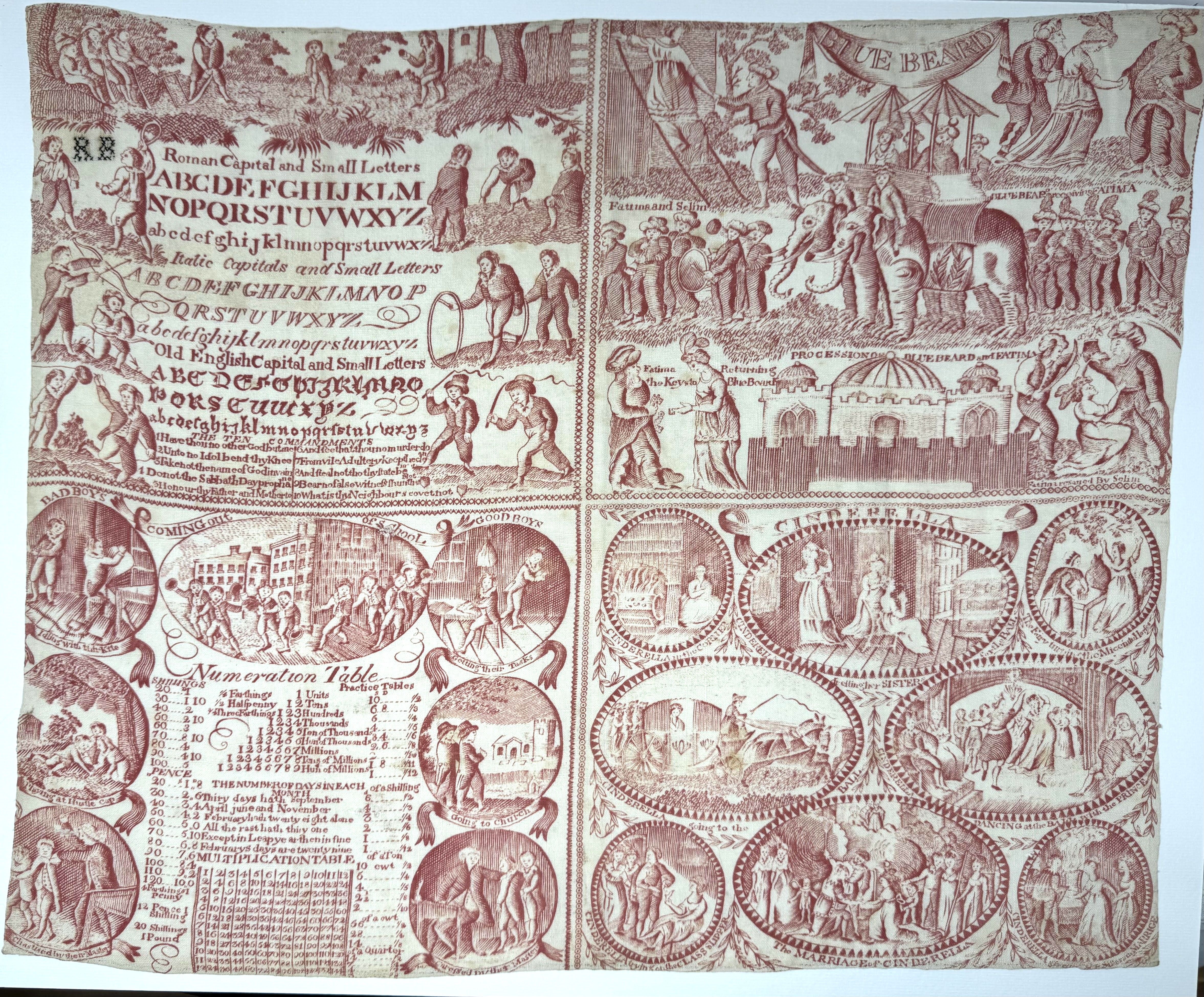
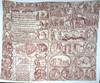
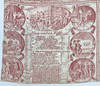
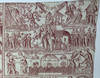
No date [c. first quarter 19th century, most likely 1810-1830]. (17 ¼" x 21") uncut sheet of four individual printed handkerchief panels each approximately (8 ½" x 10 ½"); printed in red ink probably by copper plate; the owner's initials cross-stitched in black in the upper left with some color migration; a few slubs of linen weave; a few light tan stains; near fine.
An uncut piece-good of finely woven cream-colored even-weave linen printed in red ink with four distinct children's bandanas or handkerchief designs. Intended to be cut and sold individually by a merchant, this uncut sheet is a rare survivor. The left and right side of the textile hold the narrow, tightly woven selvage, and the top and bottom have been carefully rolled and hand-stitched into a neat hem. The loss of print on the left side is not due to scissor trimming but a misalignment by the printer.
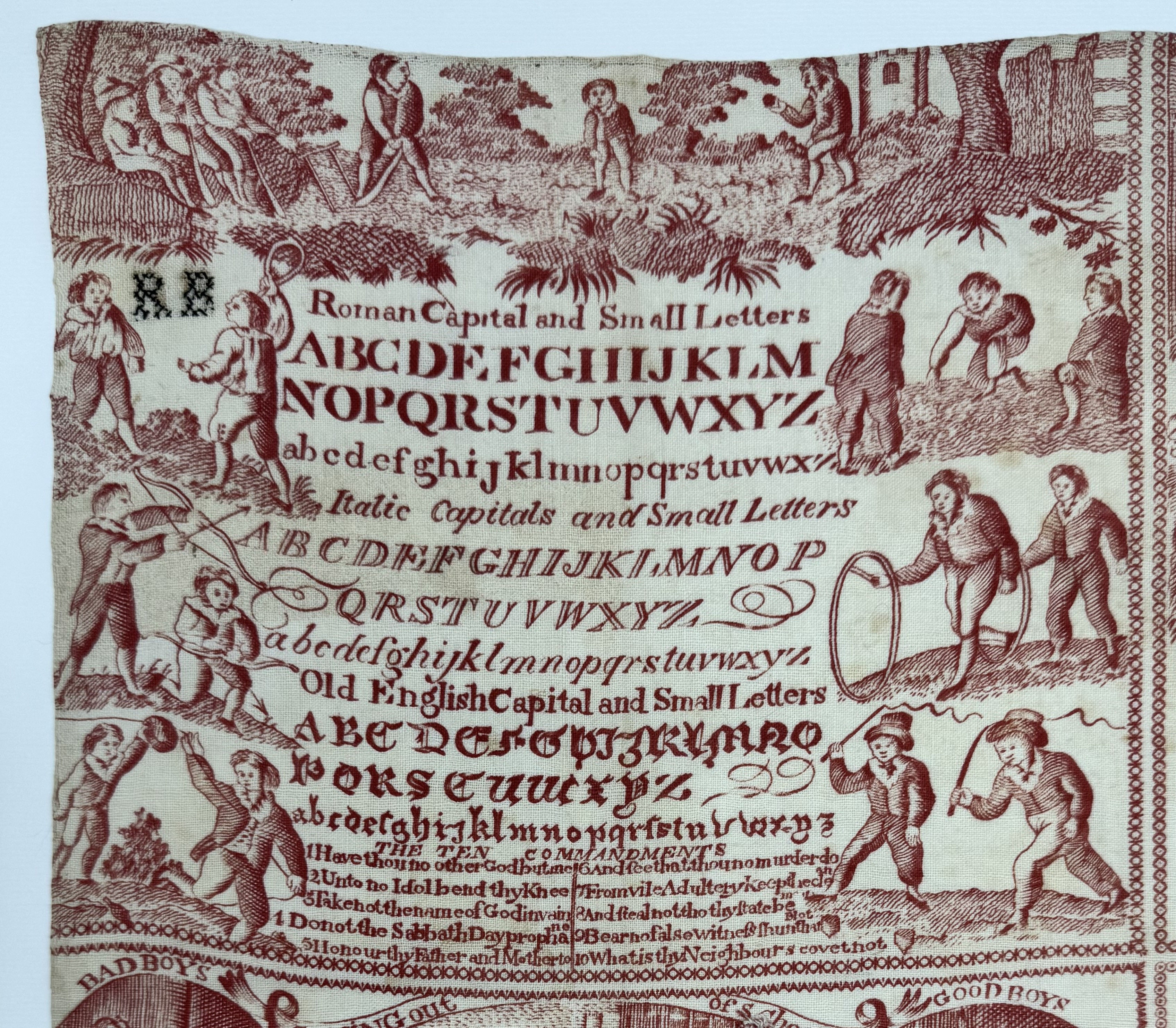
The small initials of a former owner, "R B," are cross-stitched by hand in neat black thread in the upper corner of the Alphabet panel.
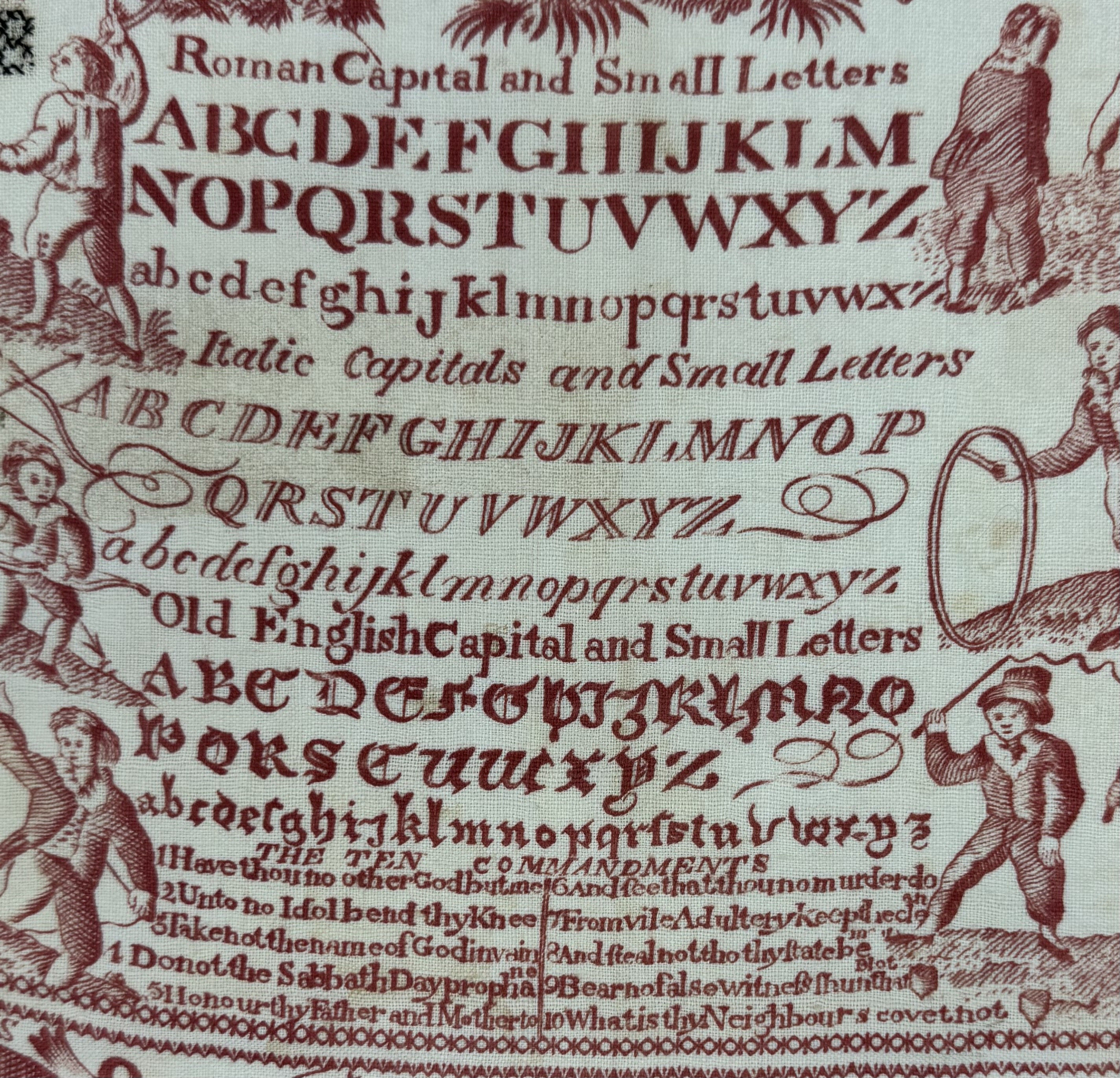
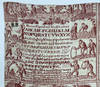
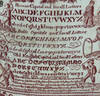
The Alphabet handkerchief features the alphabet printed in Roman, Italic, and Old English capital and small letters. Note that the letter "V" is not included in the Old English capital letters. The Ten Commandments are printed below the alphabets.
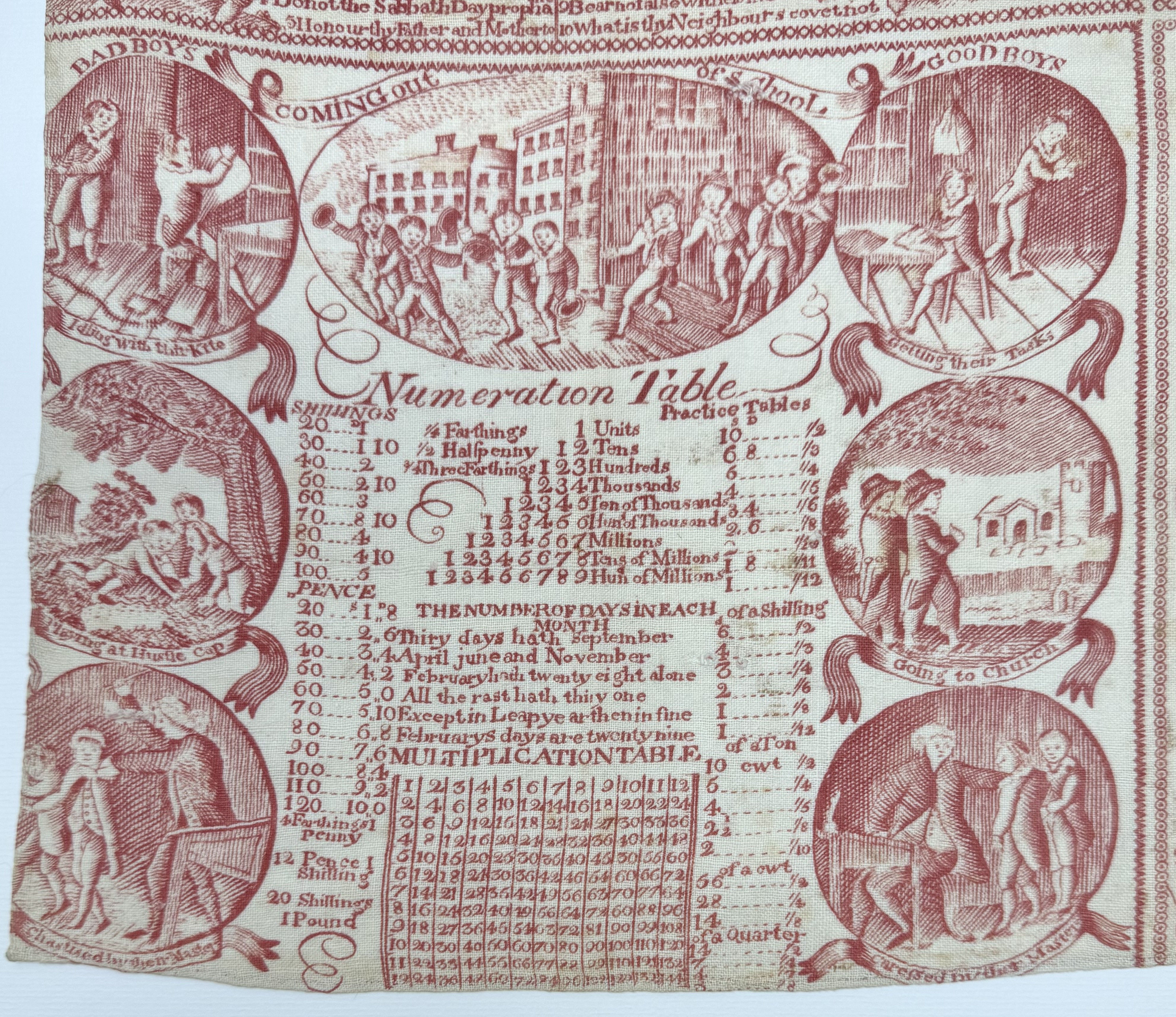
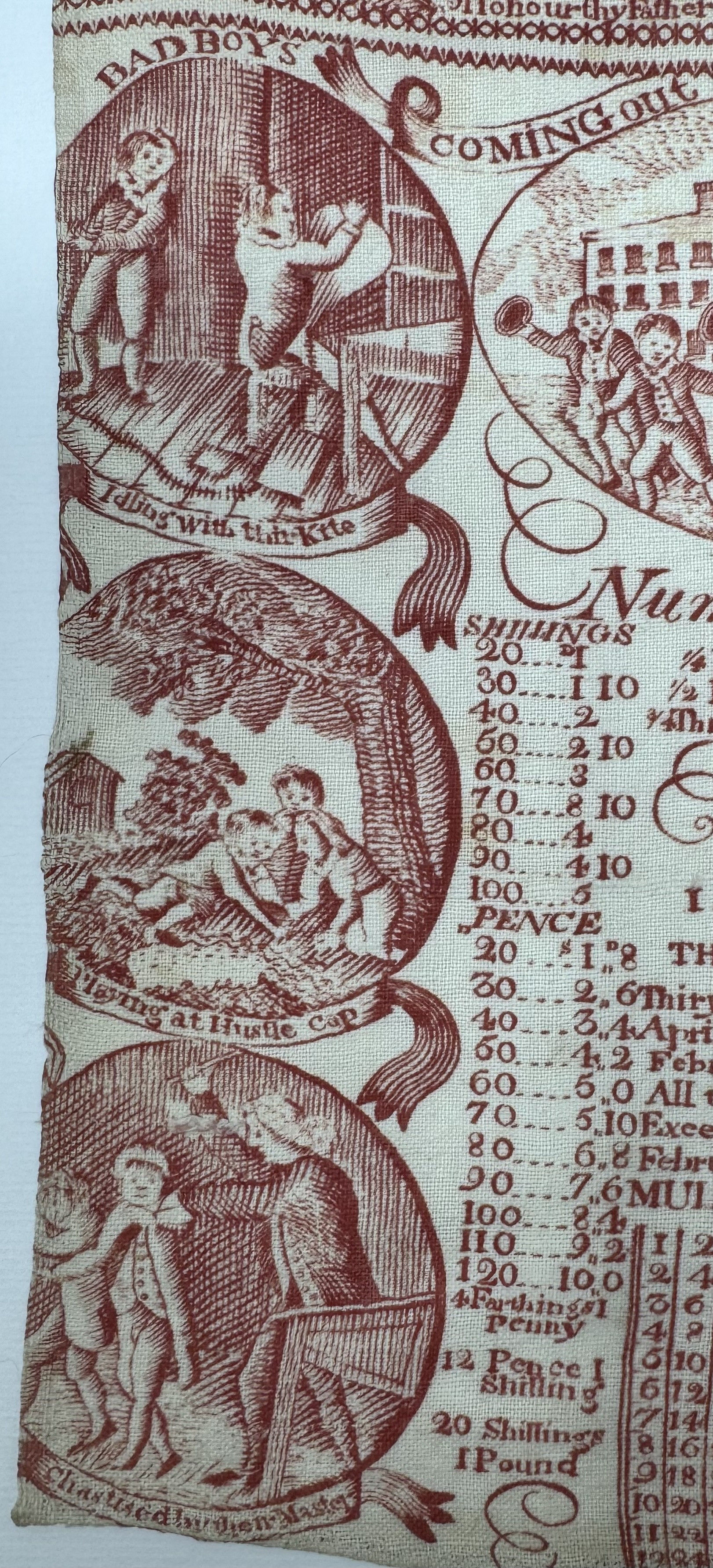
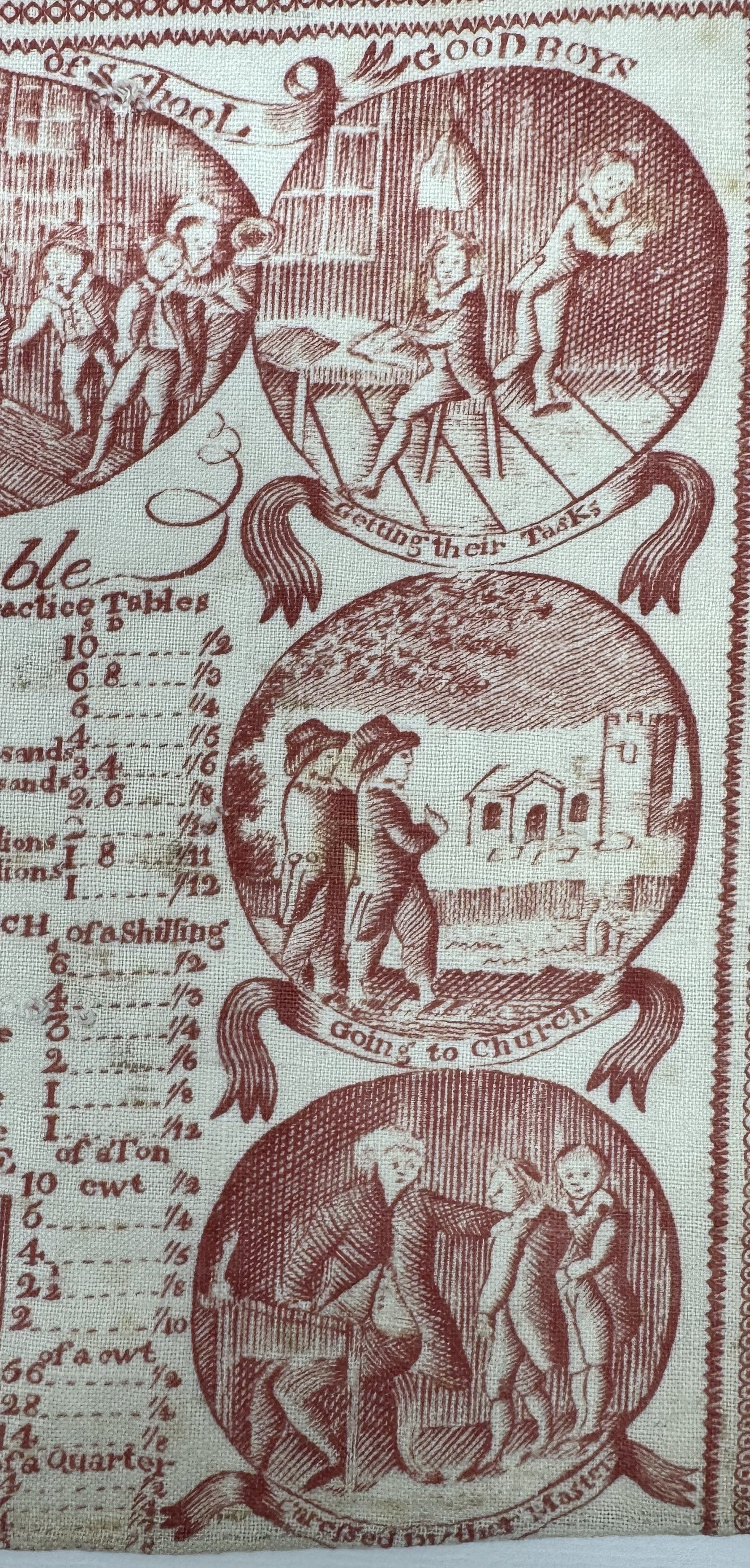
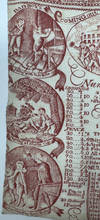
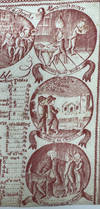
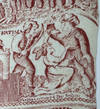
Below the Alphabet is the Bad Boys and Good Boys Coming Out of School with a Numeration Table. The Bad Boys are shown in small pictorials "Idling with the Kite," "Playing at Hustle cap," and "Chastised by the Master." The Good Boys are pictured "Getting their Tasks," "Going to Church," and "Caressed by the Master." This last pictorial would give one pause today, but it appears that the school master is only patting the student on the shoulder as praise for good work. The Numeration Table gives equivalents of shillings, pence, pennies, and pounds. Also, there is a listing of units, a practice table, and the mnemonic calendar rhyme. A multiplication table is at the bottom of the illustration.
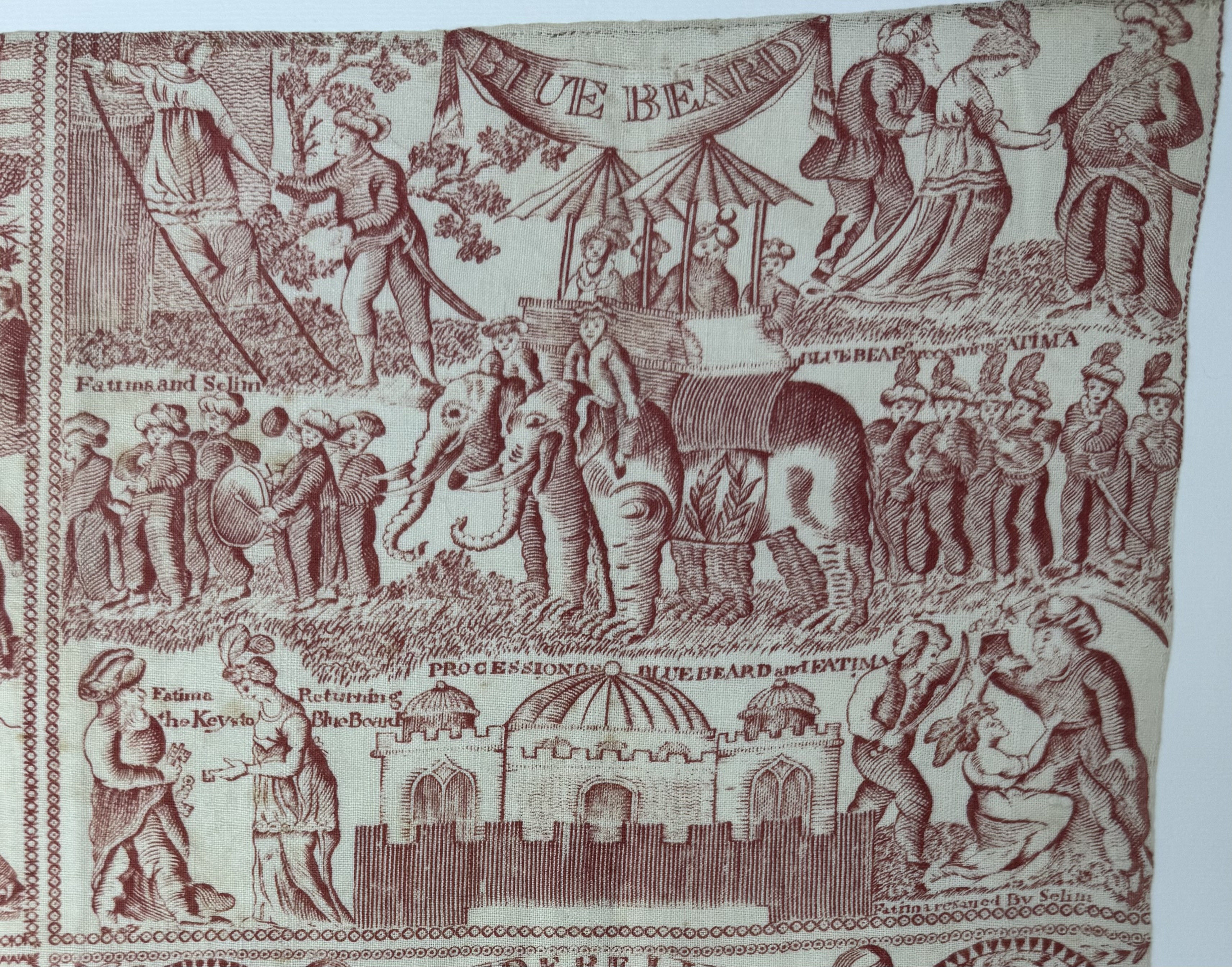
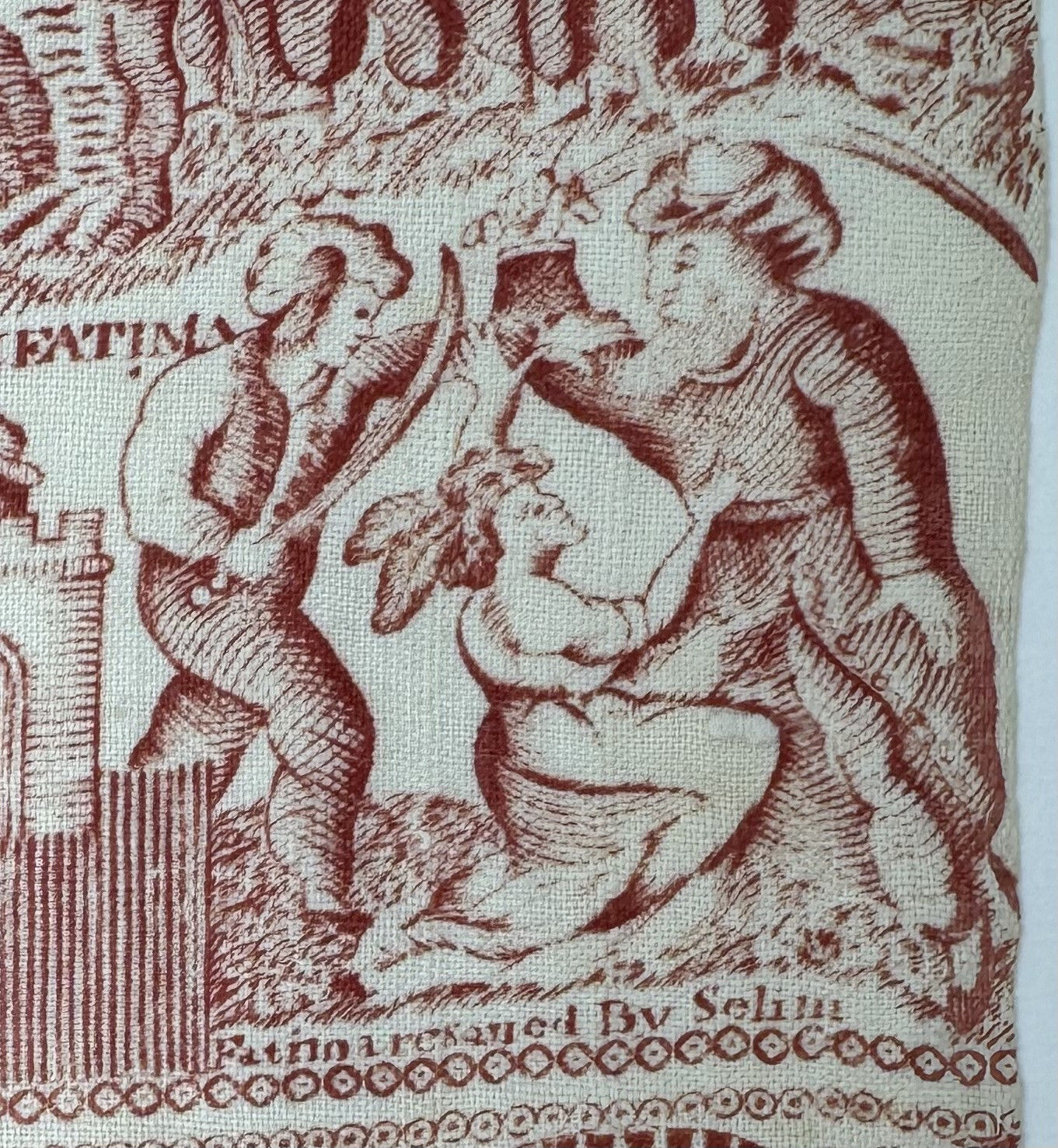
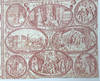
The handkerchief titled Blue Beard features eight small illustrations from the French folktale written by Charles Perrault in the 17th century. The pictorials are titled "Fatima and Selim," "Blue Beard receiving Fatima," "Procession of Blue Beard and Fatima," "Fatima Returning the Keys to Blue Beard," and "Fatima rescued By Selim."
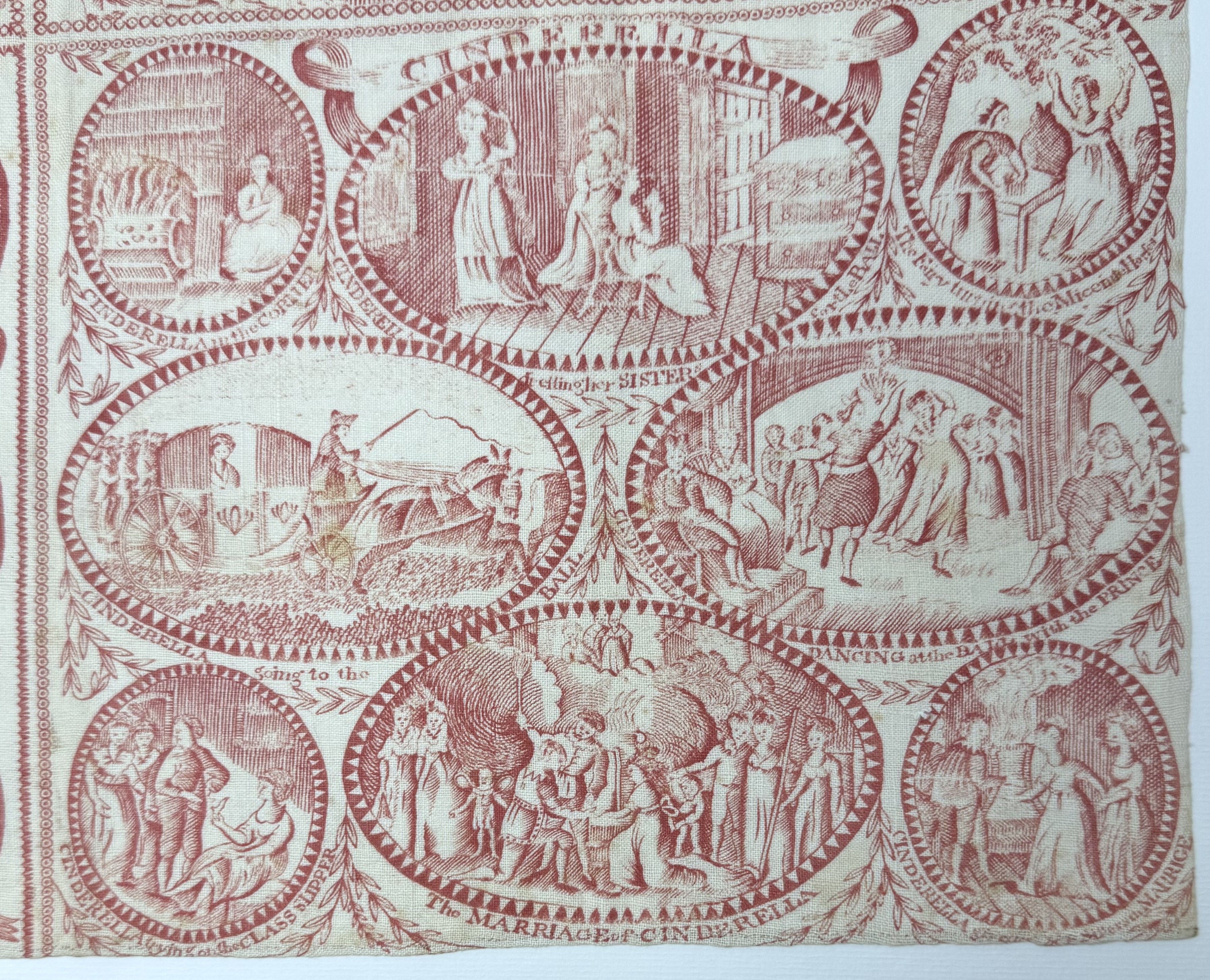
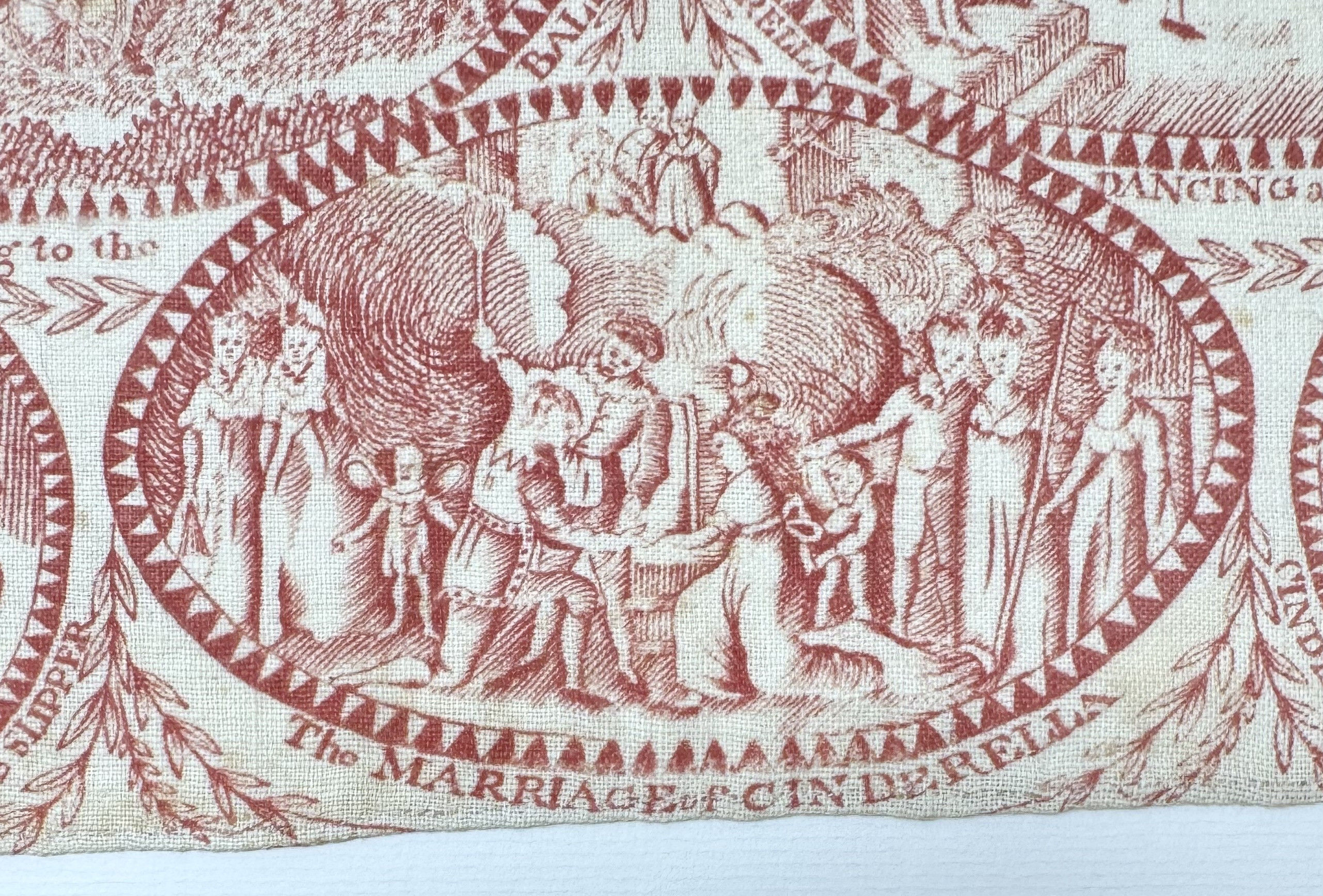
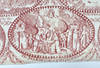
Another folktale written by Charles Perrault is Cinderella and The Marriage of Cinderella, here pictured in small sawtooth bordered ovals titled "Cinderella in the Corner," "Dressing her Sisters," "The Fairy turns the Mice into Horses," "Cinderella going to the Ball," "Cinderella Dancing at the Ball with the Prince," "Cinderella trying on the Glass Slipper," "The Marriage of Cinderella," and "Cinderella ________Marriage."
Children's handkerchiefs (also called bandanas or kerchiefs) in the early 19th century were often meant to be both educational and instructional in morals. Two of the handkerchiefs here do just this; the addition of the two fairy tale handkerchiefs is very pleasing.
(J.J. Murphy, Children's Handkerchiefs, A Two Hundred Year History and F. M. Montgomery, Printed Textiles, English and American Cottons and Linens 1700-1850)