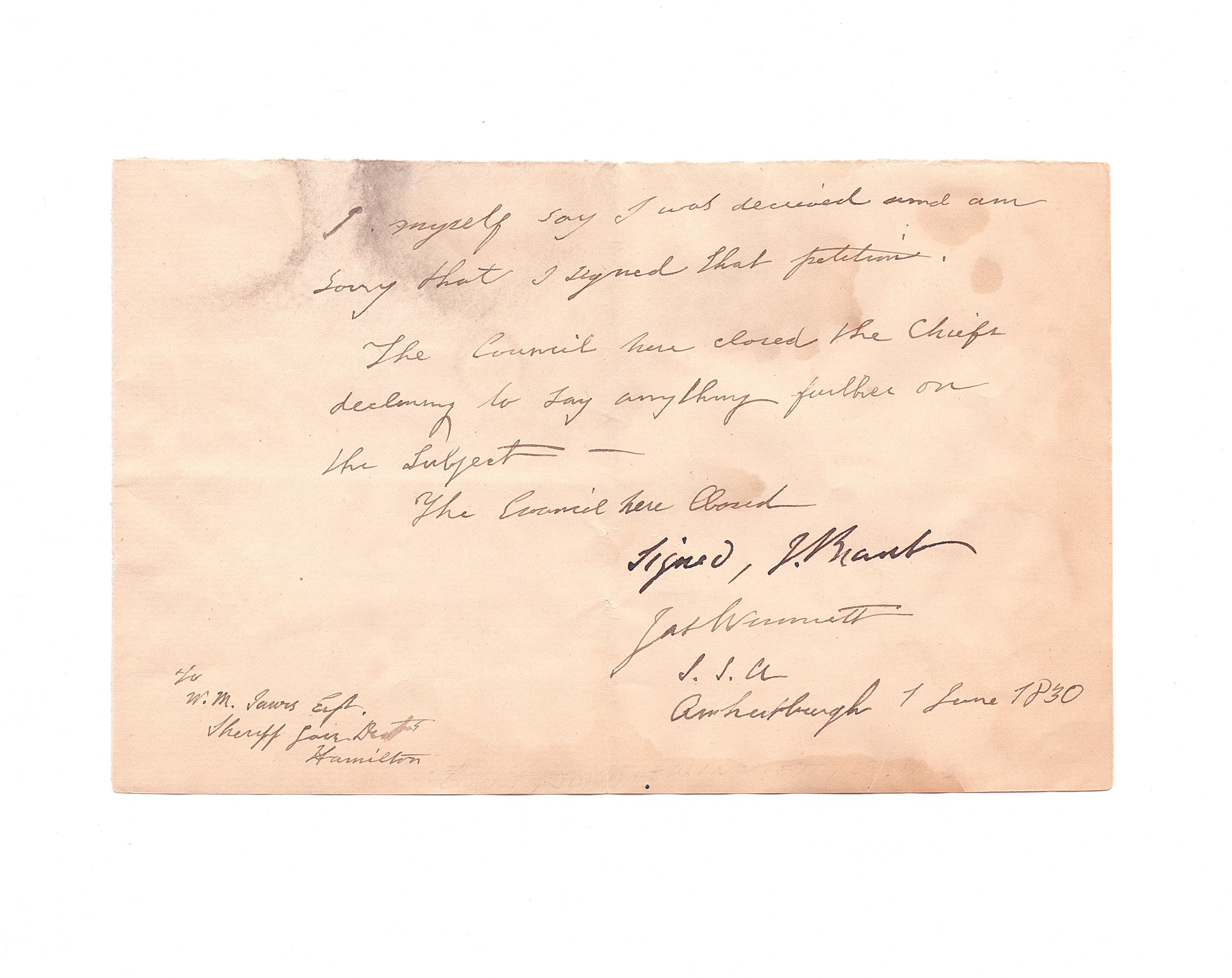
Note signed by Mohawk leader John Brant, then serving as Tekarihogen, the senior chief of the Six Nations, written around the time that he'd been elected to the Legislative Assembly as the first indigenous person to be sent to Upper Canada's parliament. The note appears to be primarily in the hand of Brant's collaborator, James Winniett, with Brant's signature below the body of text and above Winniett's.
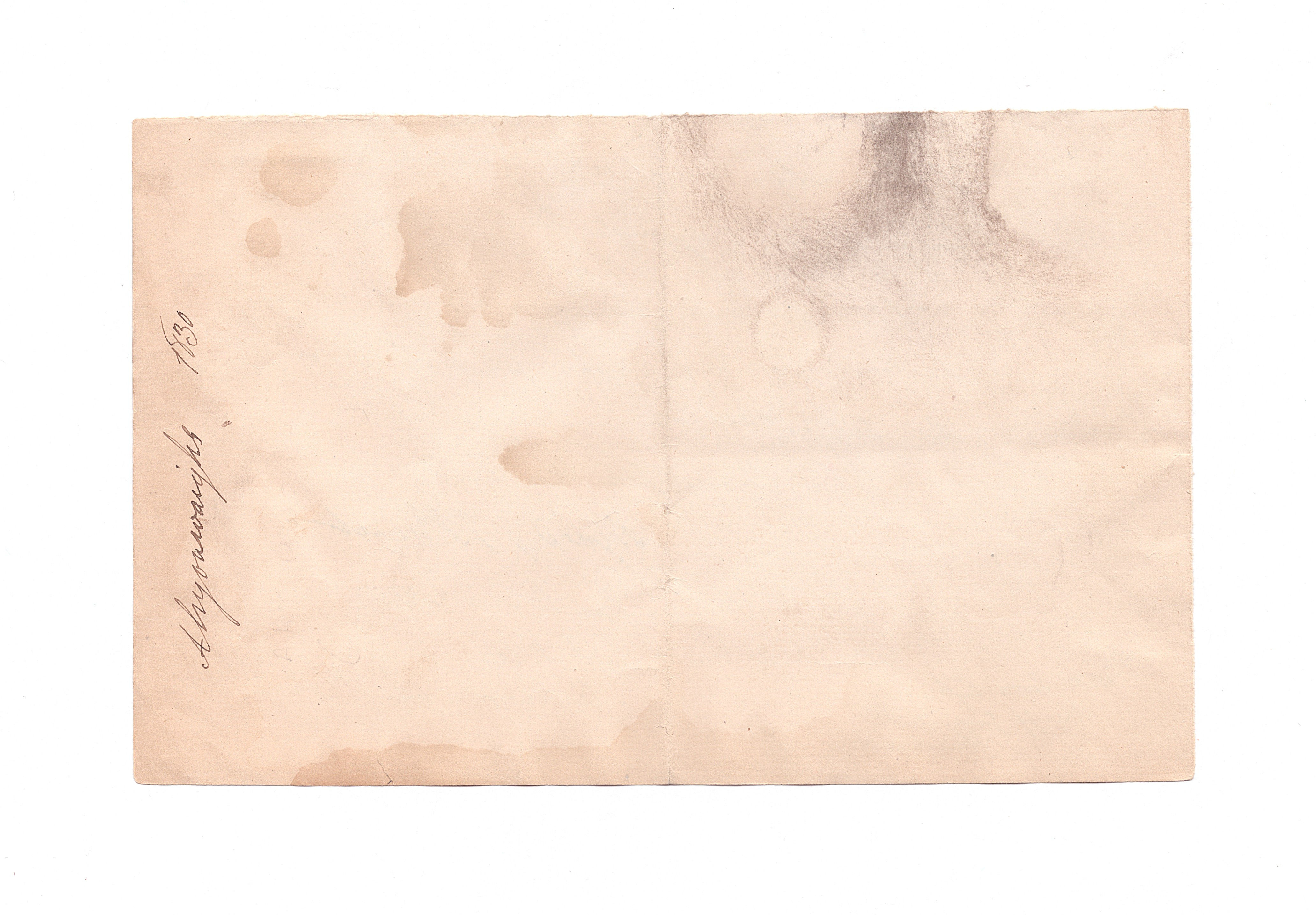
Single sheet, 8.25" x 5.25", with letter to portion to front and brief notation of Ahyonwaighs, a variant spelling of Brant's name in Mohawk, to the reverse. The note reads in part:
I myself say I was deceived and am sorry that I signed that petition.
The council here closed the Chiefs decling to say anything further on the Subject.
The council here Closed
Signed, J. Brant
John Brant's father, Joseph Brant (Thayendanegea), served as the primary leader of the Mohawk and the Iroquois Confederacy during the era of American Revolutionary War. Siding with the British troops during the conflict, in the aftermath the Mohawk were expelled from New York State and were given land in Upper Canada to replace the loss of their homeland. John Brant (1794-1832) was born in this land, now part of Ontario and, following his father's death, became an influential leader among the Mohawk, succeeding his uncle as Tekarihoga around the time that he was elected as Canada's first indigenous lawmaker in 1828, serving in the assembly as a representative for Haldimand. Due to his death during the cholera epidemic in 1832, manuscript material by the younger Brant is scarce, both in commercial history and in institutional holdings.