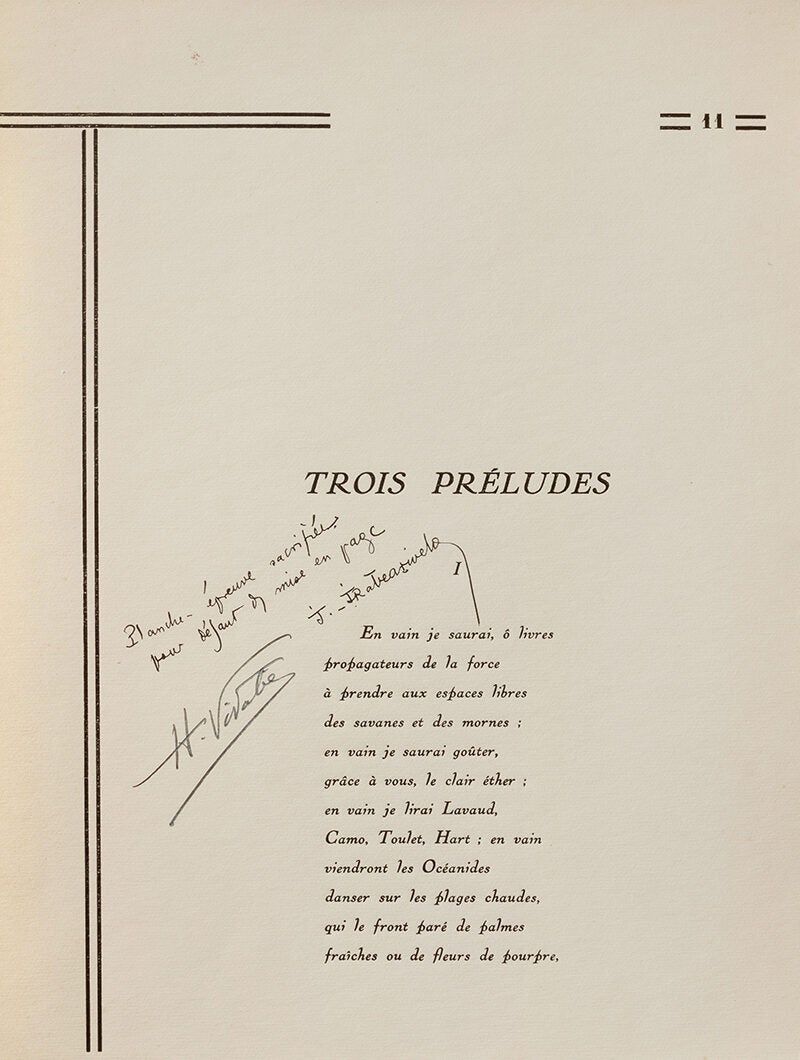
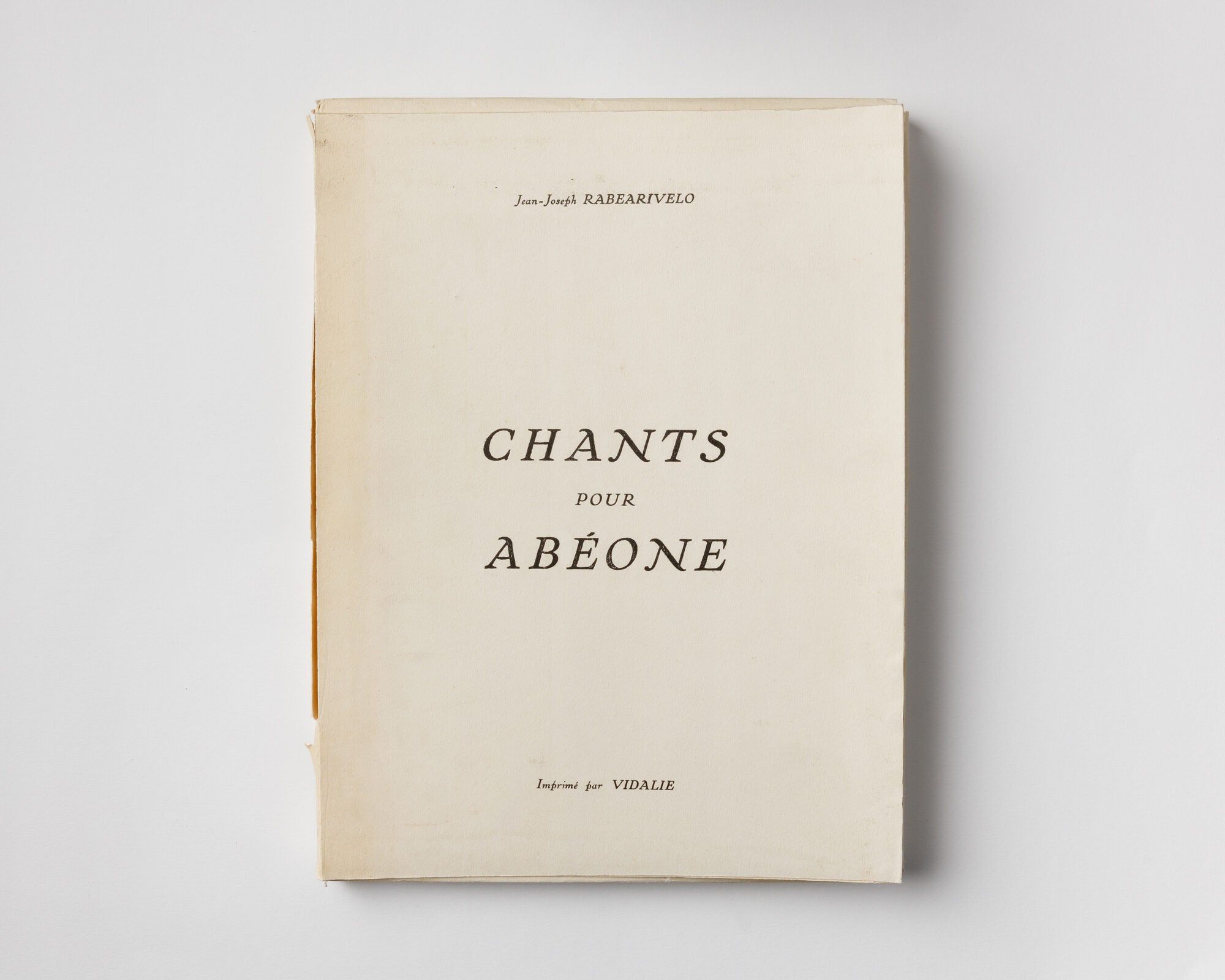
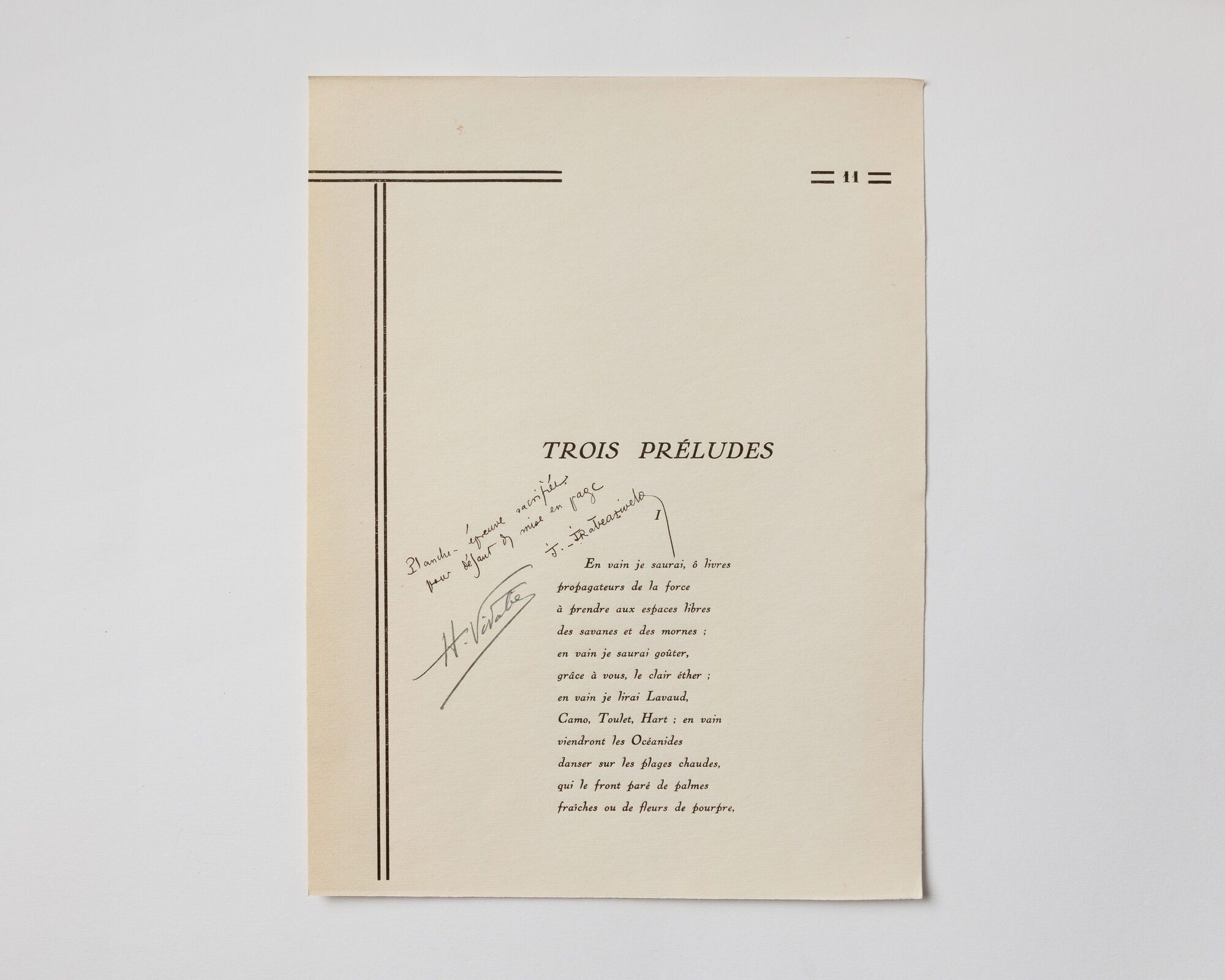
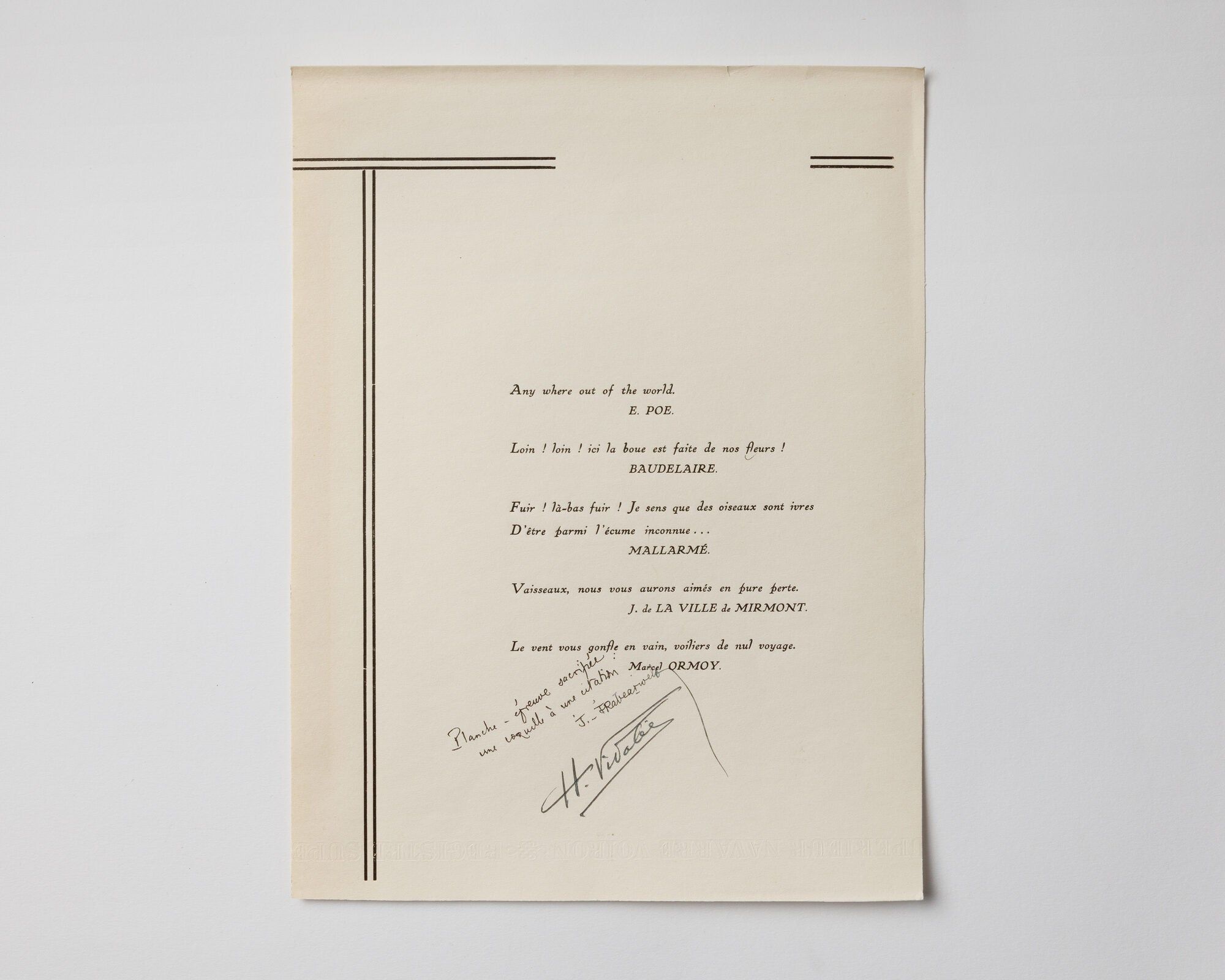
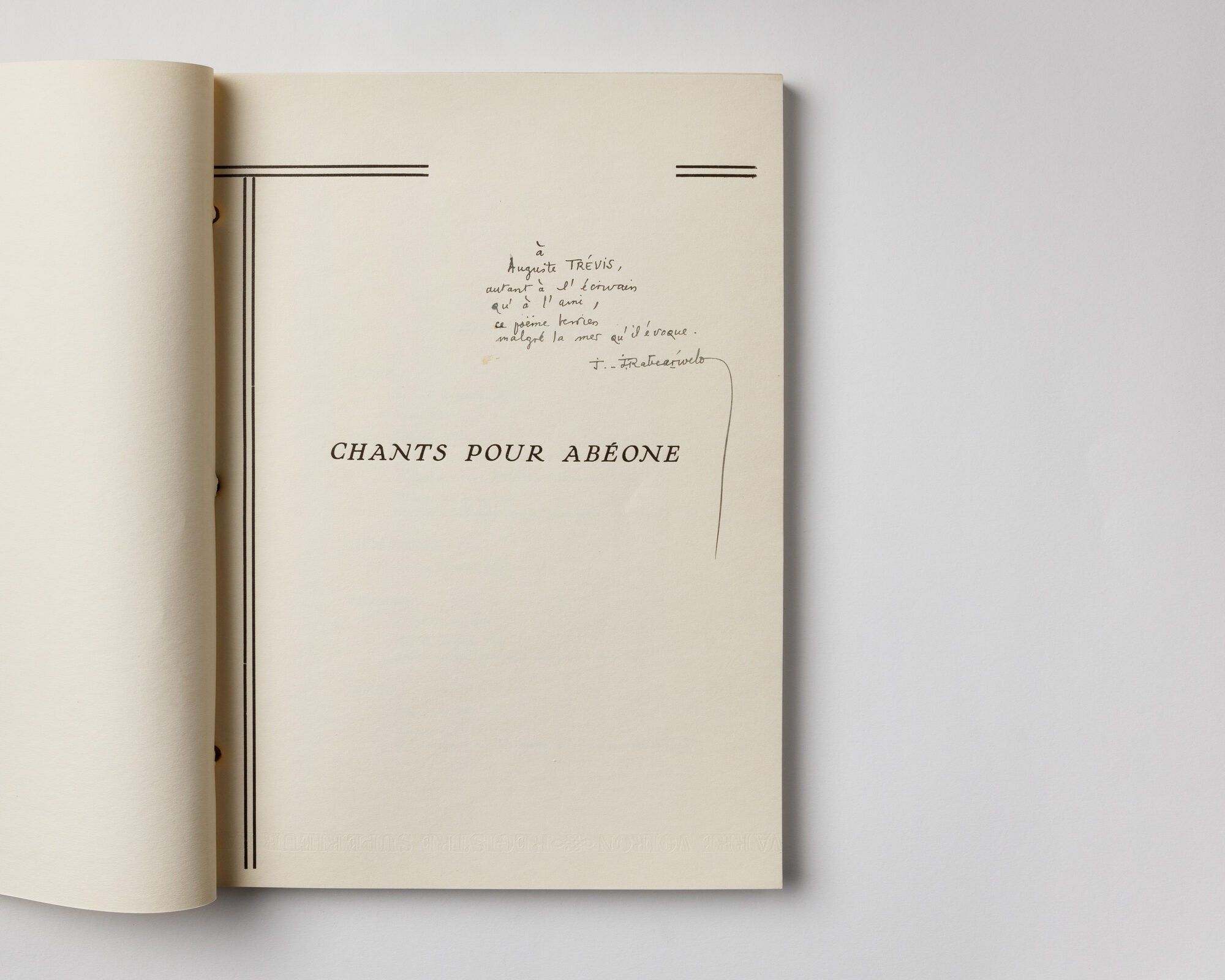
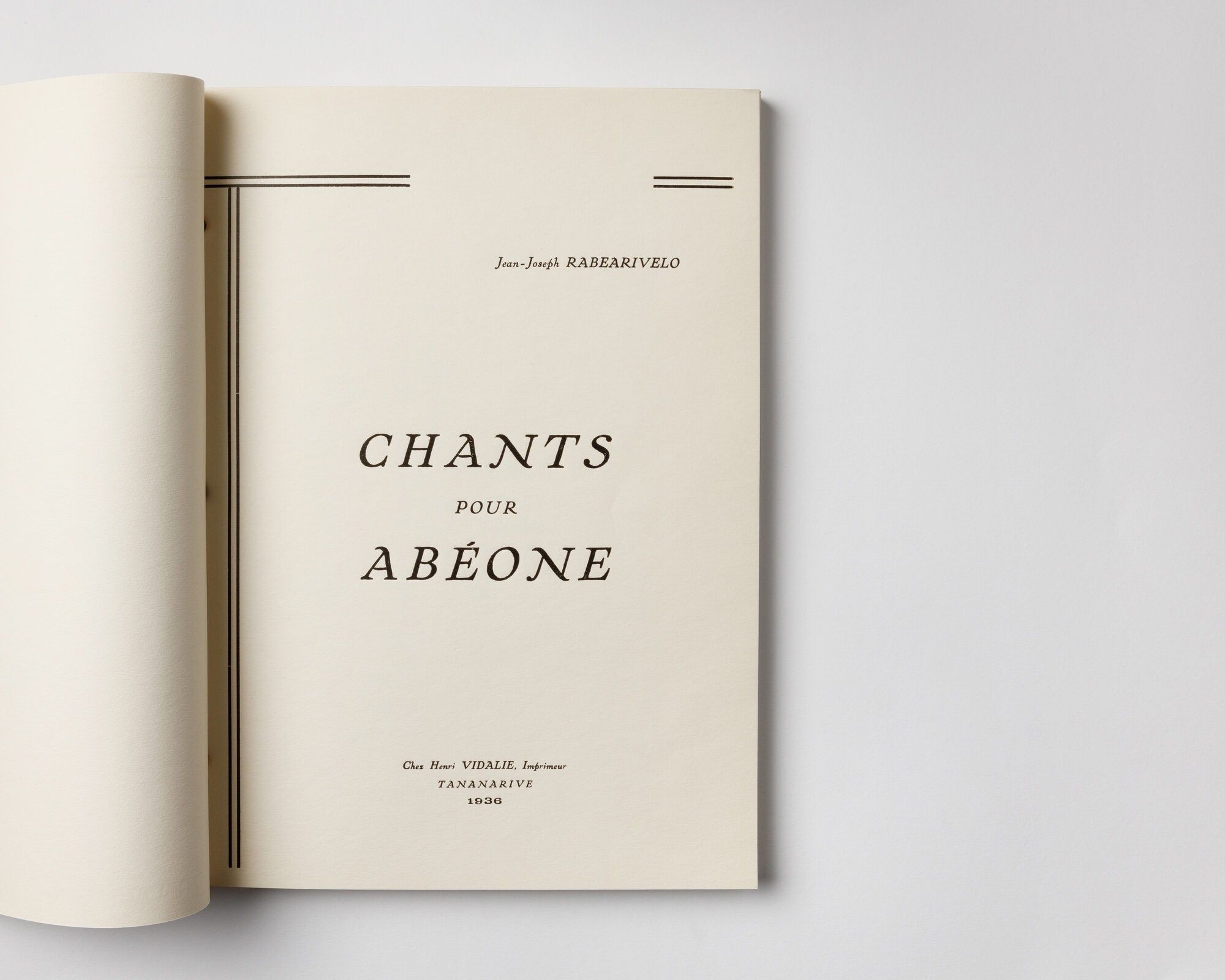
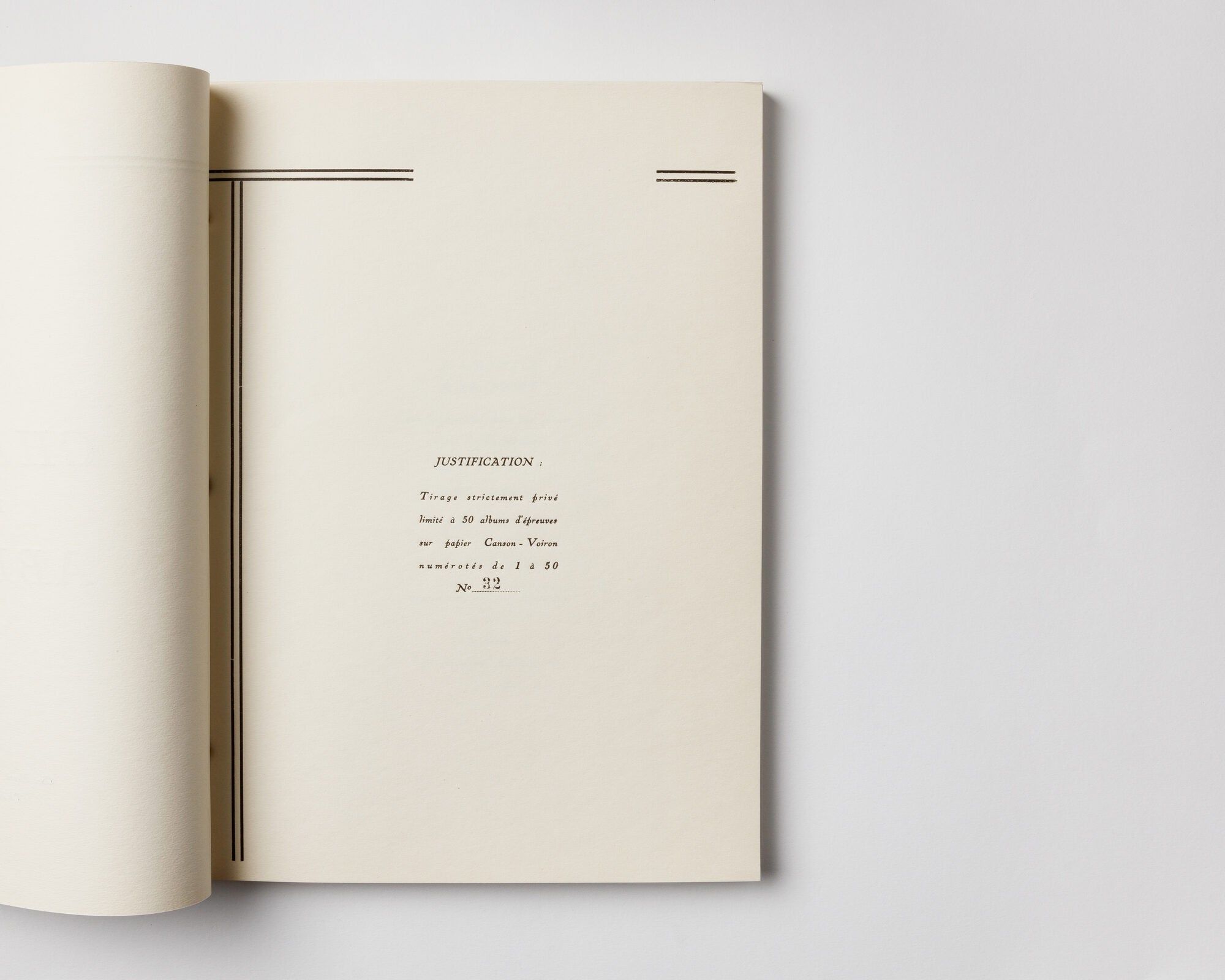
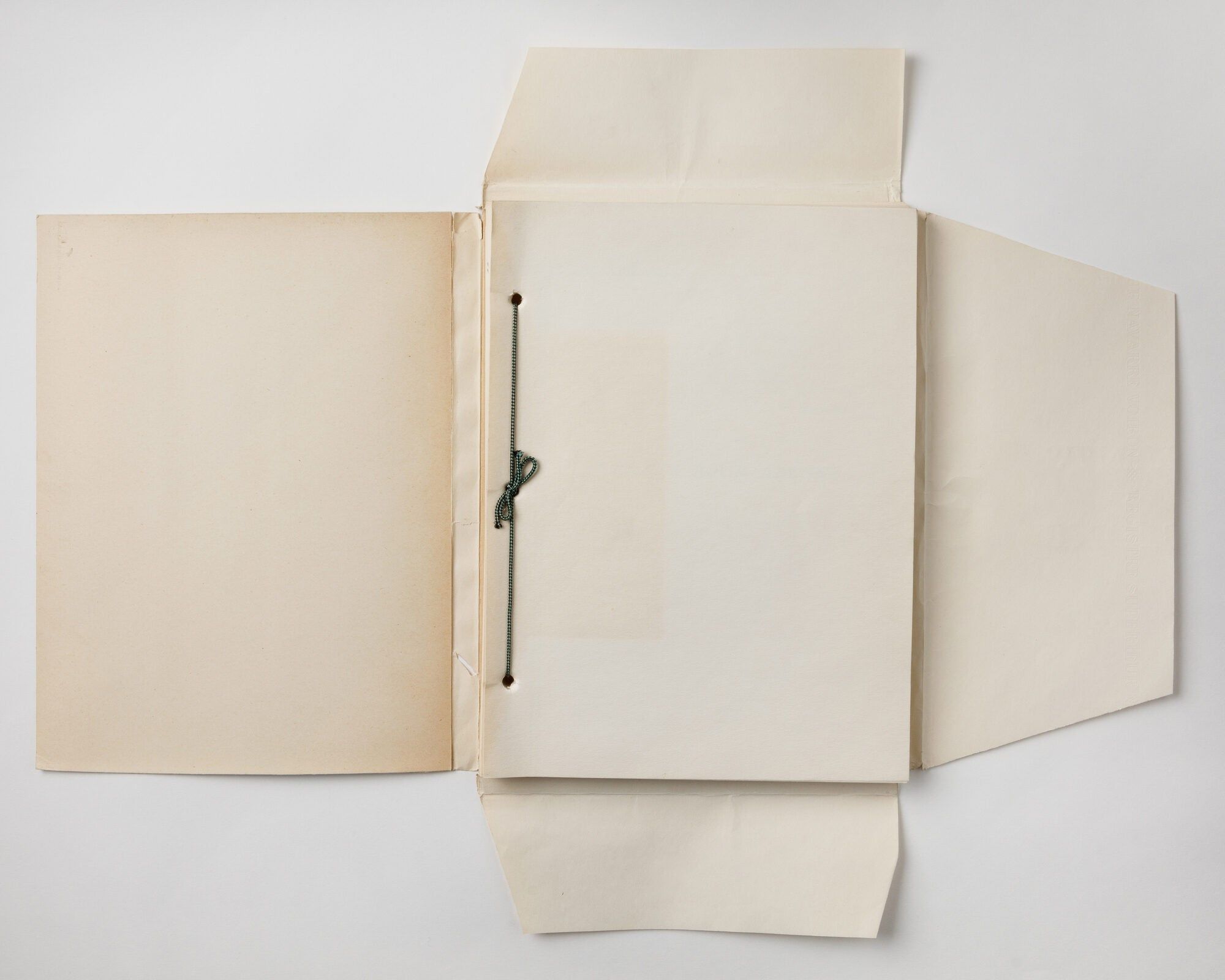
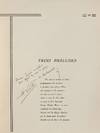
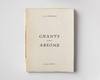
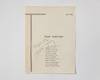
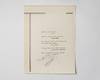
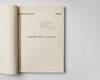
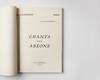
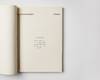
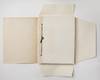
Tananarive (Antanarivo), Madagascar: Henri Vidalie, 1936. Quarto (31.5 × 23.8 cm). Original printed card folder with three flaps, housing a volume bound with braided green silk cord; 64 leaves printed to rectos on stiff cream paper (Canson-Voiron). Signed and inscribed with a four-line dedication by the author to Auguste Trévis to half title. Also laid in are two cancelled proof sheets (one with a typo, one with a layout mistake), each leaf with a brief written justification by the author, as well as his and the publisher's signatures. Tear to spine of slipcase; spine sun-tanned; else very good.
First edition, published in an extremely small print run, of a key work by Jean-Joseph Rabearivelo (1901-1937), widely considered to be the first modern poet in Africa and named the national poet of independent Madagascar in 1960. Born Joseph-Casimir, Rabearivelo descended from impoverished Imerina nobility and grew up among the first Malagasy generation under French colonial rule. Although sent to prestigious schools, he was soon expelled and took up unskilled labor in various trades, while developing a strong interest in both traditional Malagasy oral poetry (known as "hainteny") and classical French literature. Although prevented by the colonial authorities from traveling to France throughout his lifetime, Rabearivelo corresponded with major writers of his time, including André Gide, Paul Valéry, and Paul Claudel. The travel ban also made it impossible for him to establish himself as a professional writer with a larger readership than the largely illiterate local populace and a small circle of French colonial bureaucrats on the island. Rabearivelo was also prevented from publishing much of his work in his native Madagascar: "Barriers to publication functioned as a covert form of censorship for certain kinds of text in colonial Madagascar. For example, none of Rabearivelo's Malagasy-language works or his more critical French-language works were published in his lifetime" (Moradewun A. Adejunmobi, "Jean-Joseph Rabearivelo" in Postcolonial African Writers: A Bio-Bibliographical Critical Sourcebook, Routledge, 1998, p. 404)
In 1924, Rabearivelo took a job as proofreader at the Imprimerie d'Imerina, which he would hold until his death. He nevertheless devoted large sums of money to importing books and created the largest personal library on the island. In the early 1920s, Rabearivelo befriended Camo, the editor of journal "Latitude Sud" and postal magistrate on the island, who was himself a minor poet and who exposed Rabearivelo to symbolist and post-symbolist poetry. His writing would eventually evolve toward a surrealist-inflected vers libre, as Rabearivelo continued to grapple with the uneasy dual influence of French literature and the Malagasy oral tradition. In the end, "he synthesized Europe's prevailing urban surrealism with his own comparatively bucolic surroundings. In Rabearivelo, we are offered the best aspects of two poetic traditions: the wildly innovative imagery of modern surrealism, permeated with the essence of traditional oral poetry: clear communication" (Robert Ziller, introduction to "Translated from the Night", Pittsburgh 2007).
In addition to his extensive literary output, Rabearivelo also translated the works of Baudelaire, Rimbaud, Rilke, and Whitman into Malagasy. Much of his own poetics, too, revolved around translation and what he called "transcription", which often involved writing two versions of each text, in Malagasy and French. One scholar has asserted that he used the term "translated" to describe the complicated relationship between Hova and French, with neither language being used exclusively: "as if Rabearivelo was no longer writing directly in French or Malagasy, but in the perpetual passageway from one language to another" (Joubert, cited in Alain Ricard, The Languages and Literatures of Africa, p. 125).
After a series of personal setbacks, including the death of his daughter and of his lover, fellow Malagasy poet Esther Razanadrasoa (1892-1931), Rabearivelo committed suicide on June 22, 1937. Ziller notes that he "died just prior to the flowering of the Négritude movement in Paris, having never met Césaire, Senghor, and other African luminaries. Nevertheless, at the time of his death, Rabearivelo was recognized as Africa's first modern poet" (Ziller, p. x).
Regarding the present work, another scholar has noted that "[t]he most accomplished of [his] early works - in terms of mastery of the chosen model - is Chants pour Abéone. Even though it was published in 1936, it belongs with his earlier works composed in the 1920s. This collection explores in greater depth the motif of the journey away from the native land and the absence of home that inspires the poet to a greater love for the homeland. The state of alienation occasioned by colonialism thus acquires positive valuation as exile paradoxically results in a greater yearning for and attachment to the native land" (Adejunmobi, p. 403). The work was published in a small private edition limited to 50 albums on Canson-Voiron paper, numbered from 1 to 50 in ink. Laid in to this copy are two proof sheets, one with a typo in a Baudelaire quote, the other with a layout mistake, both signed by the author and the publisher: "Sacrificed proof sheet: a typo in a quotation"; "Proof sheet discarded due to layout error." The book itself is inscribed warmly to Auguste Trévis, one of the co-editors of the journal Latitude Sud 18° (1923-1924), which was one of the first to print the poet's works.
Also included is an ephemeral volume, most likely also printed at Antanarivo and published sometime between 1931 and 1934. Intended to promote the poet in the Francophone world, the little pamphlet gathers quotes from reviews and criticism about his work and contains a short biographical note at the end.
An exceedingly rare presentation copy by this central figure in modern African letters.
As of May 2026, KVK, OCLC show one copy each in France, Canada, and the United States.