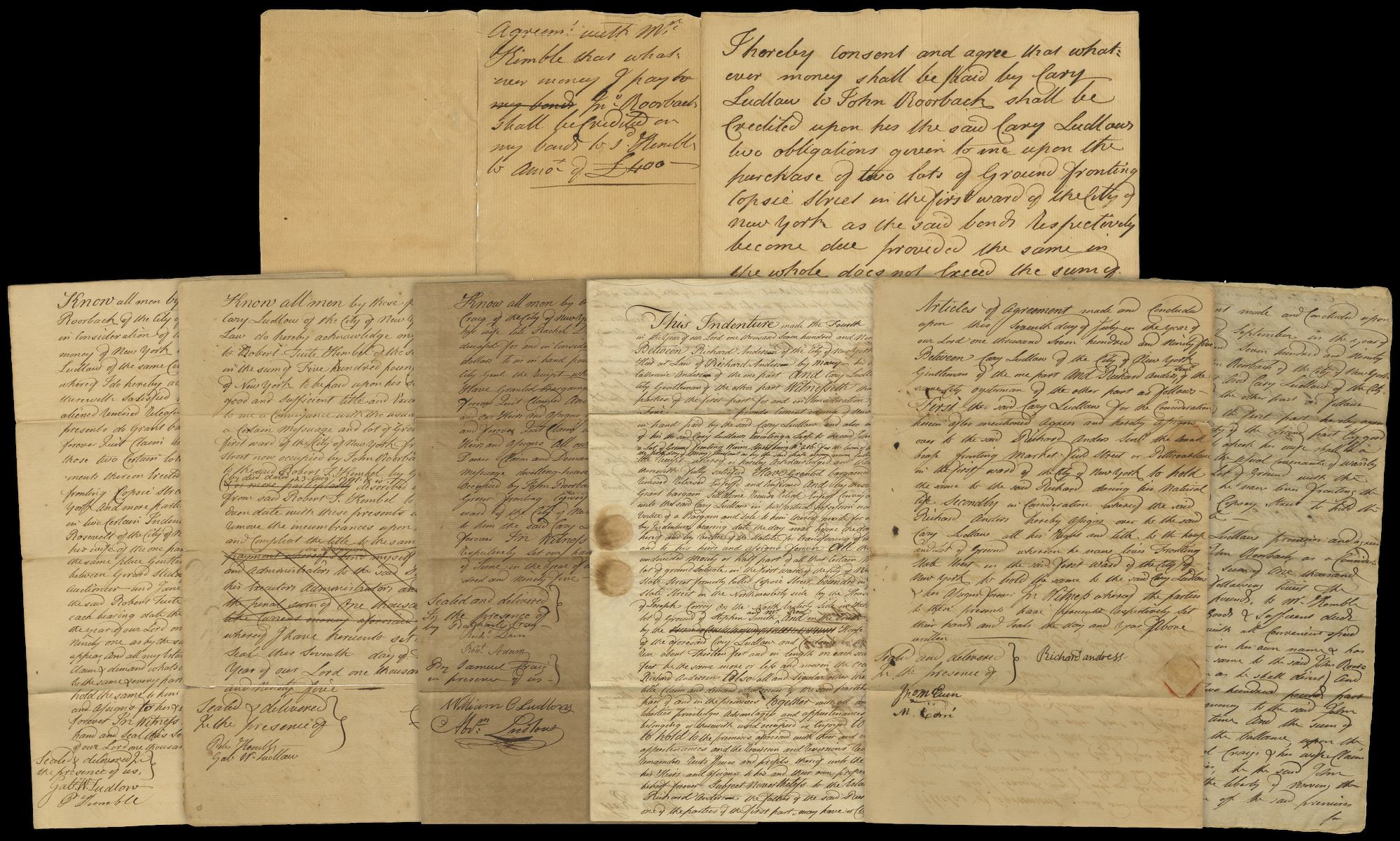
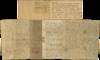
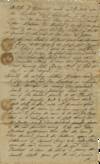
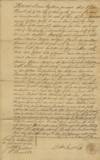
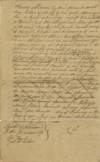
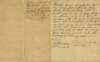
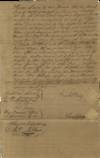
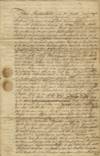
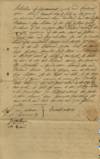
New York City, 1836. Twelve documents totaling fourteen pages. See description for full inventory. Generally very good to excellent.. Cary Ludlow (1736-1814) was a lawyer and merchant from the prominent New York City Ludlow family. In 1768, Ludlow had bought a property at 9 State Street, on the Battery, with plans to build a mansion there-lower Manhattan was becoming fashionable after the building of the Kennedy Mansion at 1 Broadway by Archibald Kennedy, 11th Earl of Cassilis.[1]
However, Ludlow was an ardently pro-Stamp Act Tory, and because of this had to flee with his family to England around the outbreak of the Revolutionary War. Upon his return in 1784, he began work on the 9 State Street mansion, which was completed around the mid-1790s, shortly after the marriage of his daughter Catherine (1767-1849) to Jacob Morton (1761-1836). Later New York City Comptroller and Major General of the New York Militia during the War of 1812, Morton-who also appears in these documents-had been the marshal at George Washington's first inauguration.[2]
After the Revolutionary War, many of New York's high society were moving to lower Manhattan, especially on Front Street, State Street, and Broadway, around Bowling Green and the Battery.[1] The collection of legal filings offered here document this process of gentrification: they show Ludlow purchasing multiple lots surrounding his property on State Street from members of the lower classes. In particular, Ludlow buys lots occupied by John Roorbach, a grocer, and Richard Anders, an oysterman. Roorbach and Anders may have been renters or partial owners, as the deals go through Samuel Craig (whose occupation is listed as "gentleman"), Robert Tuite Kemble, formerly an officer of the British Army,[3] Cornelius Rosevelt (likely of the Roosevelt family; also listed as "gentleman"), and others.
Following Cary Ludlow's death in 1814, the 9 State Street estate passed to Catherine and Jacob Morton, and became a social center for the well-to-do, epitomized by the 1824 ball the couple threw for the Marquis de Lafayette. However, after Jacob Morton's death in 1836, the house became a boarding house; by the 1870s the 26-room mansion was home to "twenty-six Irish families", and Battery Park had become a spot where "roughs played base-ball" and vendors sold "horrible sweetmeats, wormy apples, and villanous lemonade". [1]
The documents offered here illustrate several features of life for the elite during the Early Republic era: first, they are primary documents of the gentrification of a neighborhood, showing the displacement of its lower-class residents and the consolidation of property in the hands of a small number of wealthy owners; second, the names appearing in them-Ludlow, Morton, Kemble-indicate that, other than a small blip during the Revolutionary War, financial ties outpaced political ones.
State Street property documents:
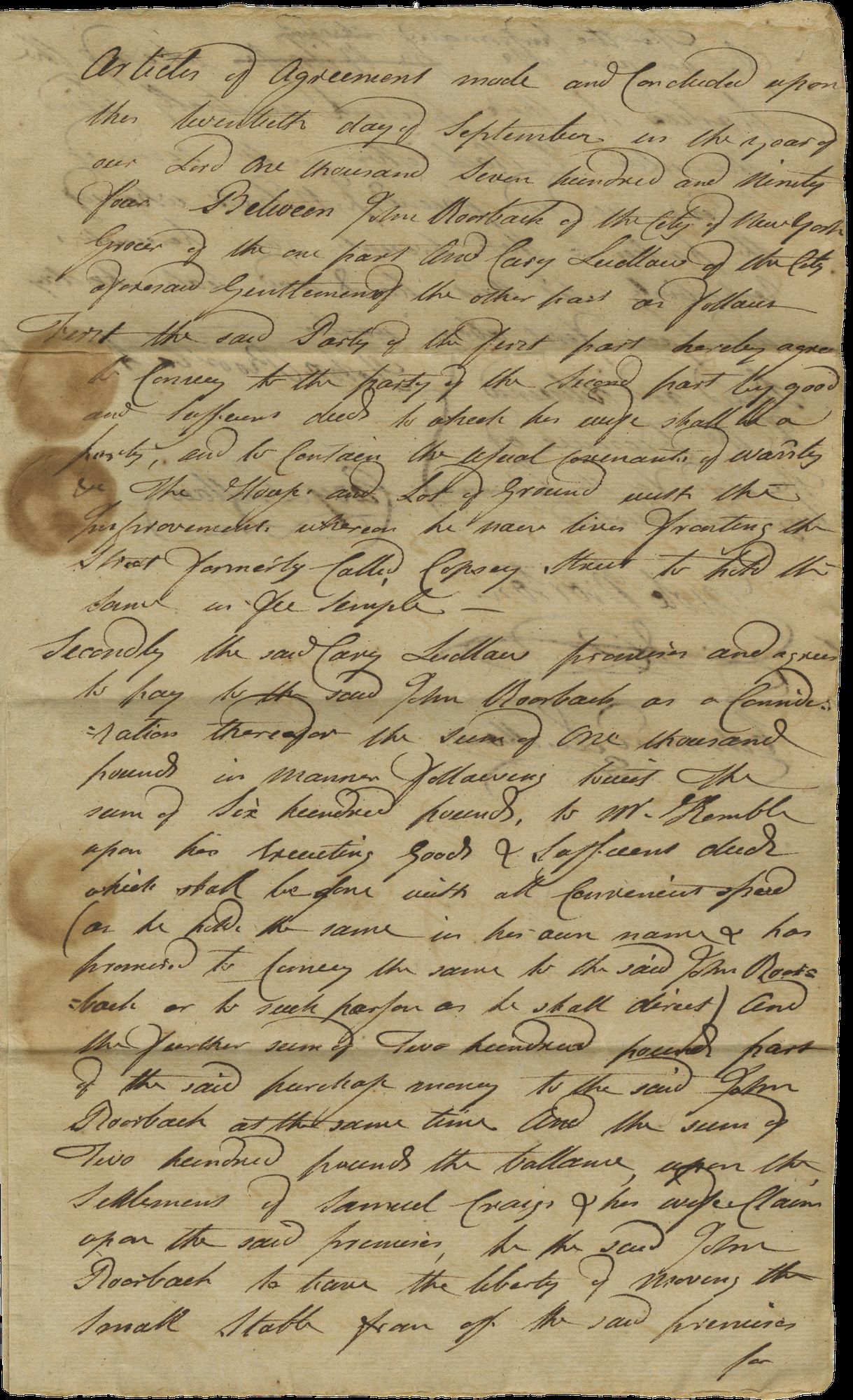
September 20, 1794. Purchase and sale agreement between Roorbach and Ludlow for a house and lot on State Street ("the street formerly called Copsey Street"). Of the £1,000, £600 goes to Kemble, £200 to Samuel Craig and wife, and £200 to Roorbach. 7 ¾ x 12 ½ inches, 2pp folded, Near Fine.
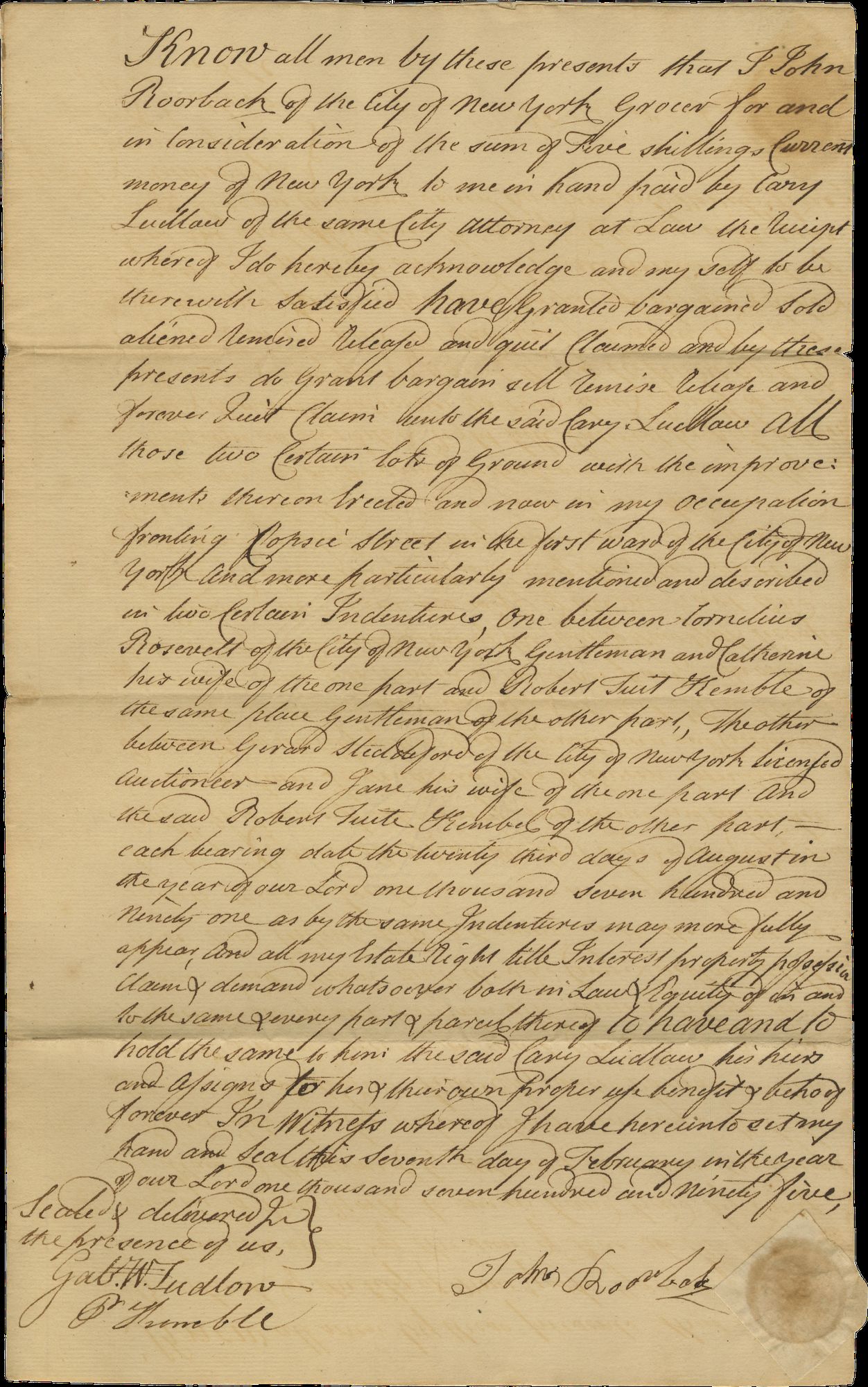
February 7, 1795. Release and quitclaim by Roorbach for two lots, "in consideration of the sum of Five shillings [...] paid by Cary Ludlow", which were "mentioned and described in two certain Indentures", one between Cornelius and Catherine Rosevelt and Robert Tuite Kemble and the other between Kemble and Gerard Steddeford. 7 ¾ x 12 ½ inches, 1pp folded, excellent.
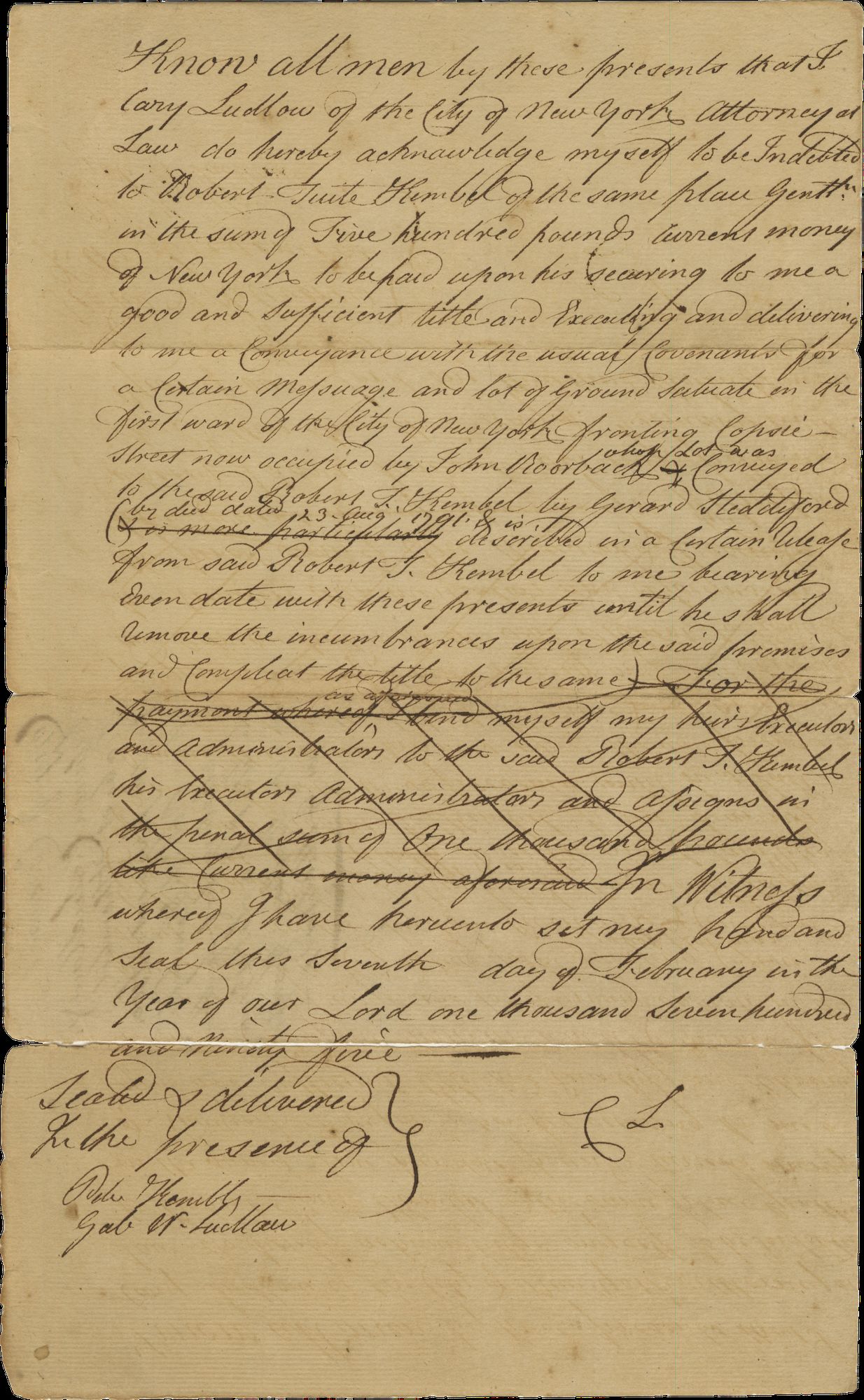
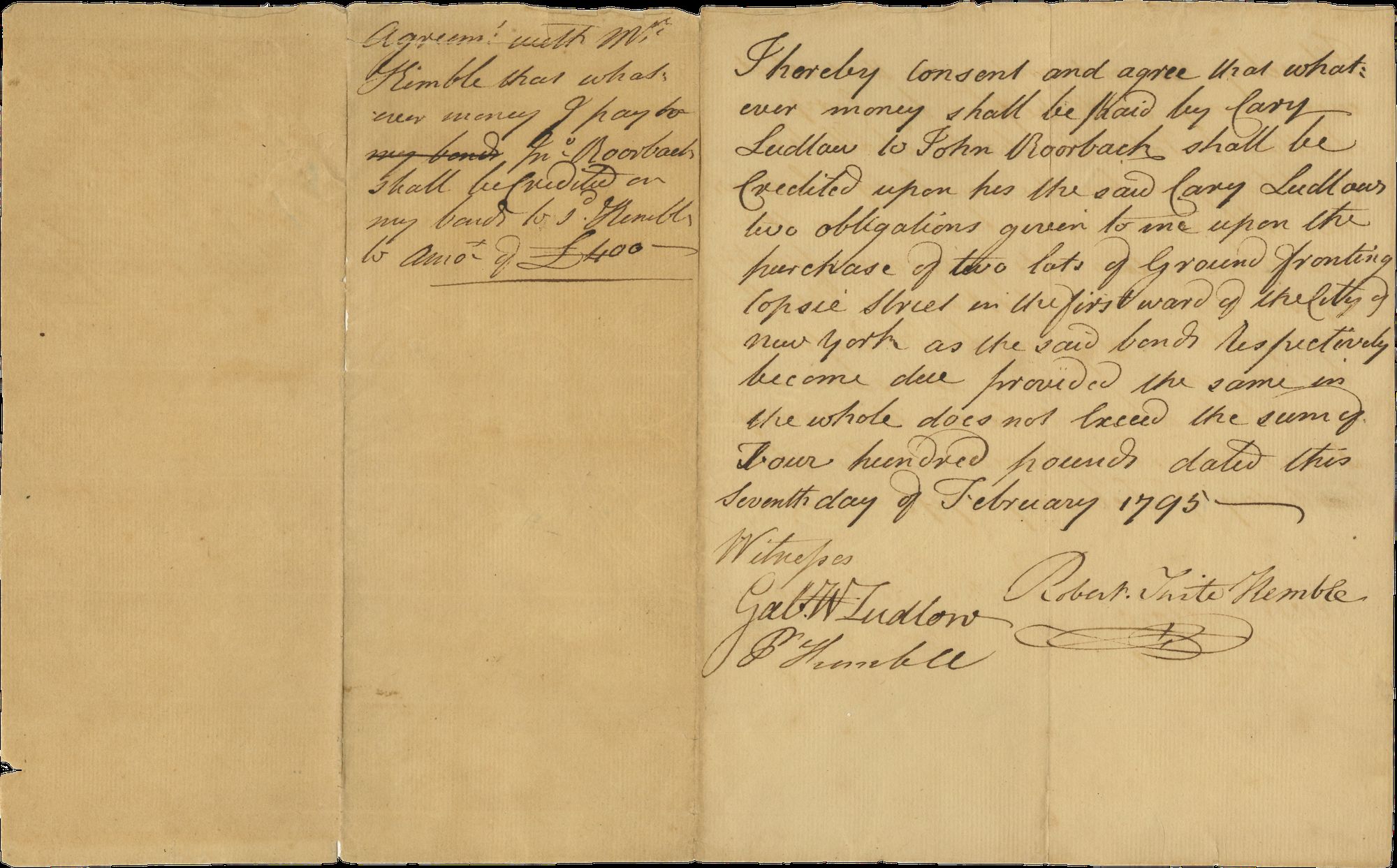
February 7, 1795. Agreement between Ludlow and Kemble, with £500 owed to Kemble for a lot on the Battery, bought by Kemble from Steddeford in 1791. 8 x 13 inches, 1pp, folded and separated at bottom fold with large tear at middle fold, very good.
February 7, 1795. A stipulation that any payments by Ludlow to Roorbach would count towards his debt to Kemble. 8 x 12 ½ inches, 1pp, folded with several large tears at folds, very good.
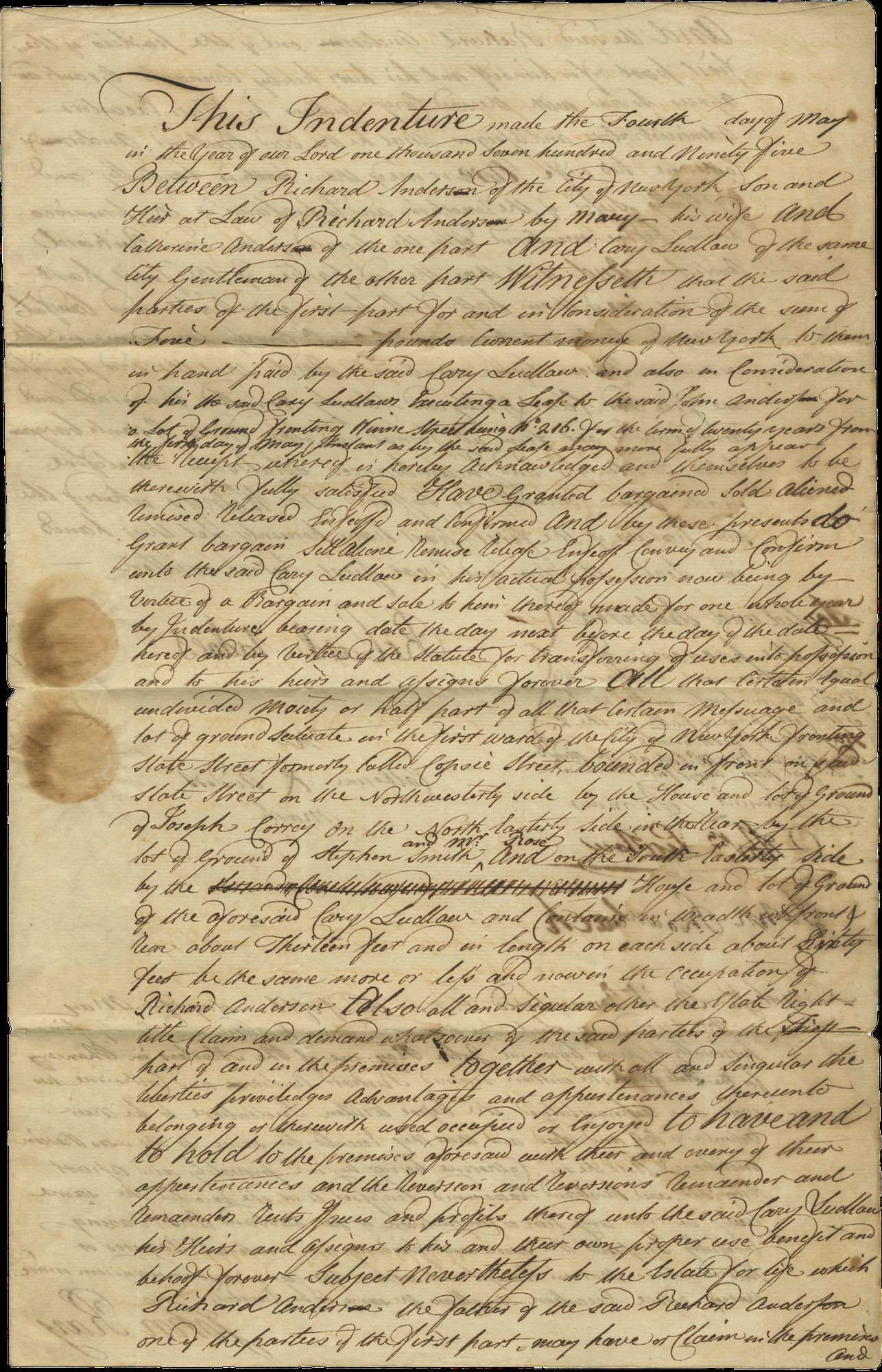
May 4, 1795. Indenture between Ludlow and Richard Anderson selling a "small lot" on State Street to Ludlow. The lot is specified as being bordered by the homes of Joseph Correy, Stephen Smith, and Ludlow (likely No. 9). 9 ½ x 14 ¼ inches, 2pp, folded with some water stains but legible, very good plus.
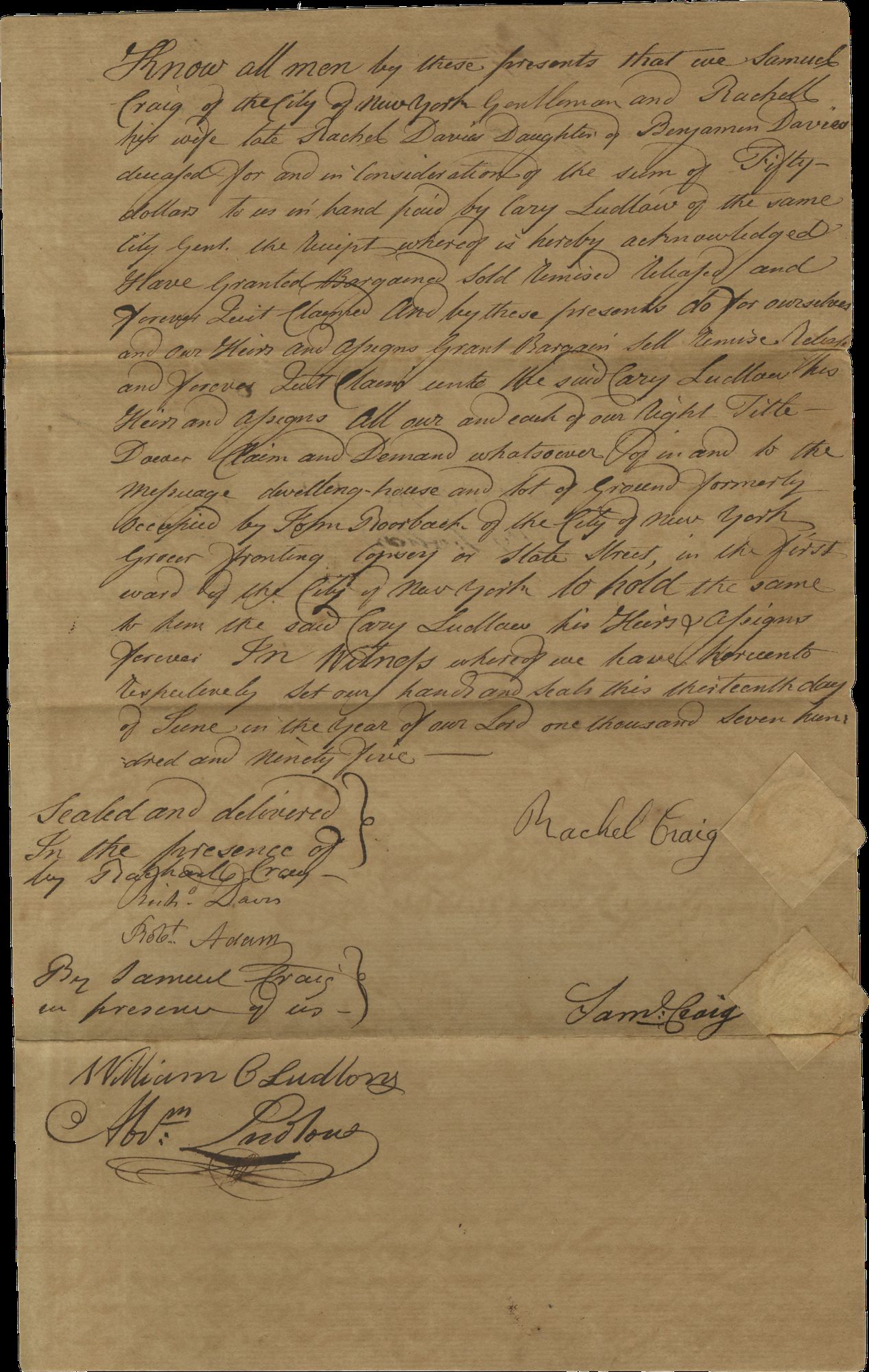
June 19, 1795. Release and quitclaim by Samuel Craig and his wife Rachel to Ludlow of a lot occupied by Roorbach. 8 x 12 ½ inches, 1pp, folded, excellent to Near Fine.
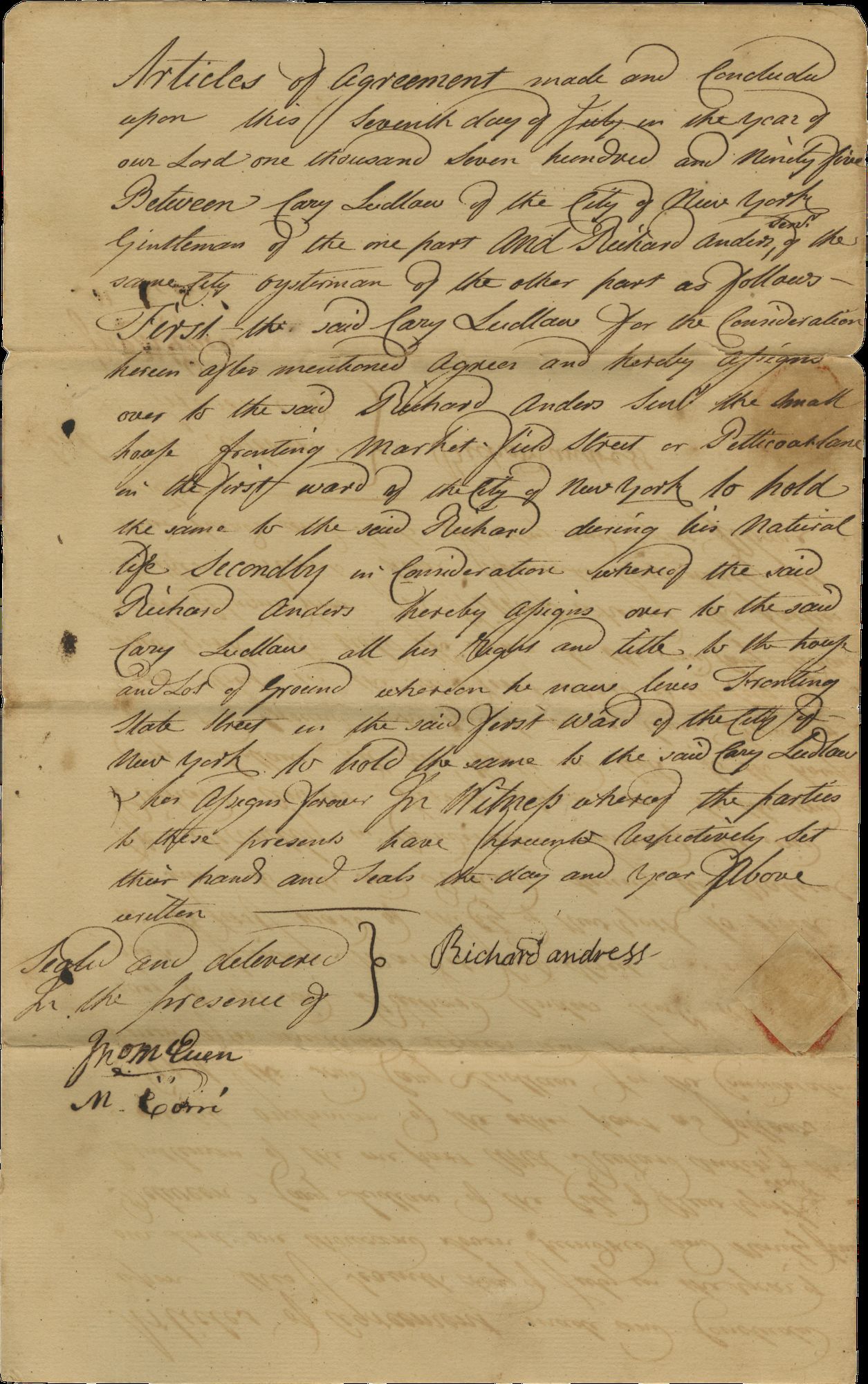
July 17, 1795. Agreement between Ludlow and Anders to trade a house owned by Ludlow on Petticoat Lane (Marketfield Street) for one owned by Anders on State Street. 8 x 12 ¾ inches, 1pp, folded, excellent.
Other family documents:
April 1775. Legal document signed by Ludlow as plaintiff's attorney in a debt case between Nicholas Ray and Benjamin Davis. 7 ½ x 5 inches, 1pp, very good plus.
January 17, 1818. Power of Attorney granted by Ludlow's widow Hester to John and George Morton, brothers of Jacob Morton. 8 x 12 ½ inches, 1pp, excellent.
February 28, 1825. Grant of commission by Hester Ludlow to John and George Morton on proceeds to Ludlow's estate. 6 ½ x 8 inches, 1pp, excellent to Near Fine.
January 21, 1831. Receipt for sale of six shares in Butchers' and Drovers' Bank to Jacob Morton. 3 ½ x 7 ½ inches, good.
December 1, 1836. Title to Vault 136 in the New York City Marble Cemetery, for Jacob Martin. 7 x 9 ½ inches, excellent.
Of interest to historians of development and demographic change in New York City during the Early Republic era.
[1] Rodolphe E. Garczynski, "Some Old Houses (illustrated)," Appleton's Journal 8, no. 195 (Dec 21, 1872), 696-699.
[2] "Jacob Morton (1761-1836)," American Aristocracy, https://americanaristocracy.com/people/jacob-morton, accessed April 23, 2026.
[3] "Robert Kemble (1755-1820)," American Aristocracy, https://americanaristocracy.com/people/robert-kemble, accessed April 23, 2026.