Skip to content
Have questions? Penka Rare Books and Archives is online now!
Virtual Book Fair Exclusive

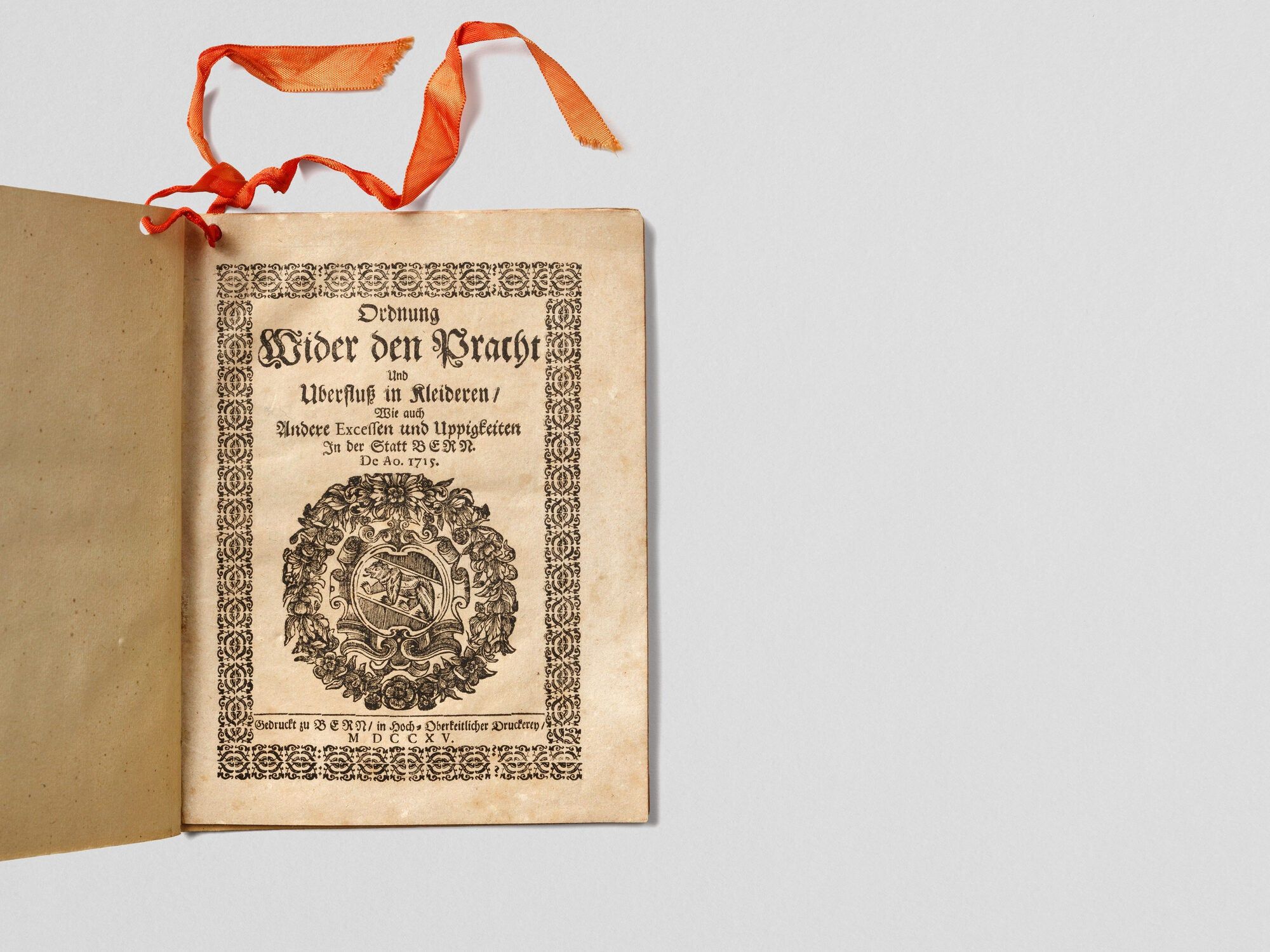
[VELVET, SILK, LINEN, GOLD AND SILVER - A PROTECTIONIST AND ZWINGLIAN ORDER OF MATERIALS] Ordnung wider den Pracht Und Uberfluß in Kleideren, Wie auch Andere Excessen und Uppigkeiten In der Statt Berm [Order against pomp and extravagance in clothing, as well as other excesses and extravagances in the city of Berm]

Cantzley Bern [State Chancellery of Bern]

1,500
  • Binding: Paperback
  • Publisher: Hoch-Oberkeitliche Druckerei
  • Location: Bern
  • Date: 1715
  • Seller SKU: 55769

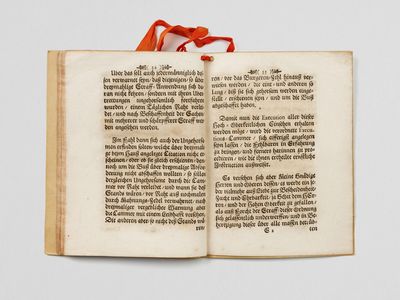
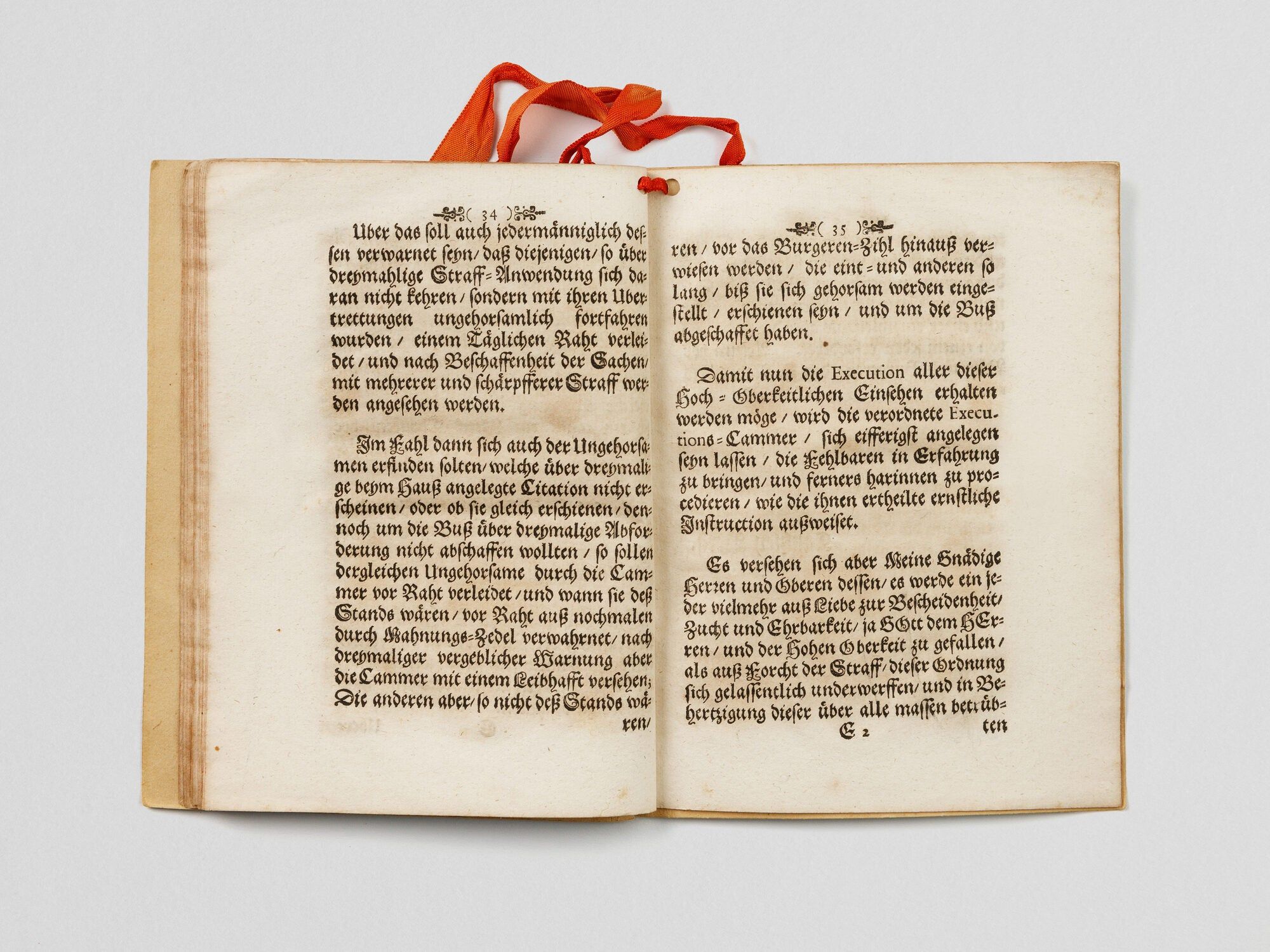
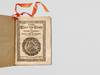
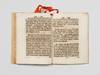
Bern: Hoch-Oberkeitliche Druckerei, 1715. Small quarto (19.9 × 15.6 cm). Later colored paper wrappers; 44 pp. with a title woodcut of the Bern coat of arms. Toned and slightly fox-stained, with punched hole along the top edge and a silk ribbon threaded through.

Early printing of this Bernese regulation on clothing, interior furnishings, and festivities, which is to be understood as a Zwinglian response to the Baroque, first enacted in 1691 and subsequently revised on multiple occasions to keep pace with changing fashions. The stated aim of this catalogue of penalties was that "splendour and extravagance shall thereby be curbed." Accordingly, the very first paragraph of the ordinance provides that the wearing of velvet, as well as "costly" silk and cotton exceeding a certain price - whether plain or with a floral pattern - is prohibited "at all times and in all places" whenever such fabrics exceed specified dimensions. The level of the fine depended on where on the garment these materials appeared. Thus the ordinance provides that the penalty was lower when precious textiles were used only on certain details - such as trimmings on berets, men's coats, gowns, and cloaks. The wearing of wool and less expensive silk was permitted, though black was prescribed for certain occasions in church. The style of wigs was likewise restricted. The ordinance then also addresses in detail specific rules for women, men, and children.

The use of gold and silver threads, gilded or silvered buttons, and "all other such vain and costly things" is also prohibited in detail, both within and outside the city, except on certain prescribed occasions. Notably, however, solid gold and silver buttons were expressly permitted, thereby underscoring the distinction between ordinary and wealthy citizens. This rule extended to the furnishing of dwellings and houses, where the use of precious metals was likewise permitted only in the case of objects made of solid gold or silver. In tapestries, tablecloths, and bed linen, neither gold and silver threads nor silk threads were allowed. Certain weaving techniques (haute-lisse) were also prohibited.

The wearing of jewellery such as wedding rings was similarly regulated: a fine was imposed if the ring also contained a gemstone. The ordinance, however, also had an explicit element of economic policy. "Foreign" linen, for instance, was restricted to use in a limited number of specified garments. The use of lace, which came chiefly from Venice and Brussels, was likewise not permitted - not only because lace was regarded as "useless and serving only for display", but above all because it took "much money out of the country." In addition to these provisions governing fabrics and materials, the ordinance contains further rules concerning sledging, nocturnal dances, gambling, "nocturnal wandering in the alleyways," masquerades, and male and female servants.

As of May 2026, KVK, OCLC show two copies (1708 and 1728 respectively) in North America.

Offered by Penka Rare Books and Archives

Penka Rare Books and Archives
Specializing in Art And Architecture, Art And Design, Avant-Garde, Early Printing, History and Modern Art.

Established in 2012, Penka Rare Books and Archives specializes in art, architecture, visual culture and the avant-gardes — from early printed books to digital and computer art — supplying museums and research libraries as well as private collectors worldwide with rigorously researched, culturally significant material. With our expertise in most Slavic languages, a special focus is on Central and Eastern Europe. A secondary interest is the processing and sale of archival collections, especially artist archives.


As members of the Verband Deutscher Antiquare (VDA) and the Antiquarian Booksellers' Association of America (ABAA), and as affiliates of the International League of Antiquarian Booksellers (ILAB), we proudly abide by these organisations' strict code of ethics.


For more information, please visit www.penkararebooks.com or contact us at [email protected]. All shipping quotes are for FedEx worldwide. With our expertise in almost daily international shipments, we will facilitate smooth delivery of your purchase.

Contact the Seller
Philipp Penka
Gustav-Müller-Str. 40
Berlin, 10829
Phone/Text: +491781694138

Orders are processed in the order of receipt and all items are offered subject to prior sale. Our books are carefully described, with minor flaws not always explicitly stated, but always reflected in our prices. All prices are in EURO. Any item is returnable within thirty days for any reason. We kindly ask that you notify us before returning your purchase by email or phone. Returns must be carefully packaged and shipped by registered mail only. If a returned item is received in significantly worse condition, the customer is liable for compensation. Invoices are to be paid within fourteen days, without further discount. Place of delivery and exclusive place of jurisdiction for both parties for any disputes is Berlin, Germany.

tracking-