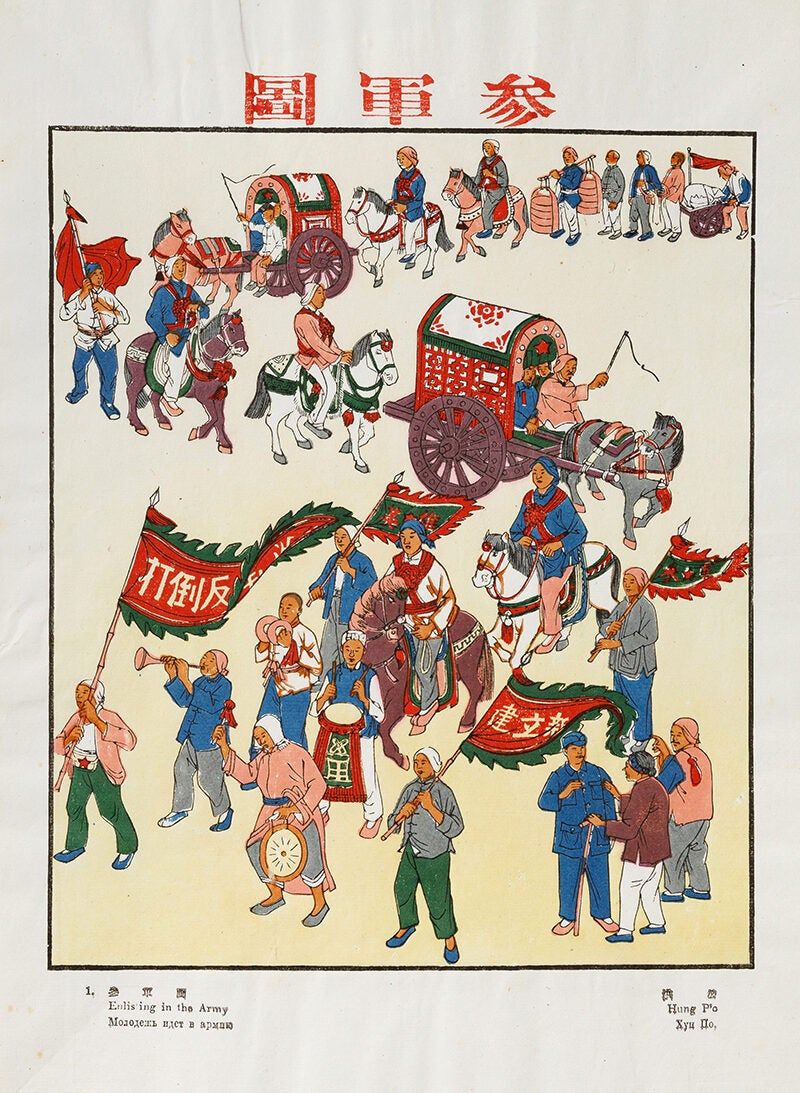
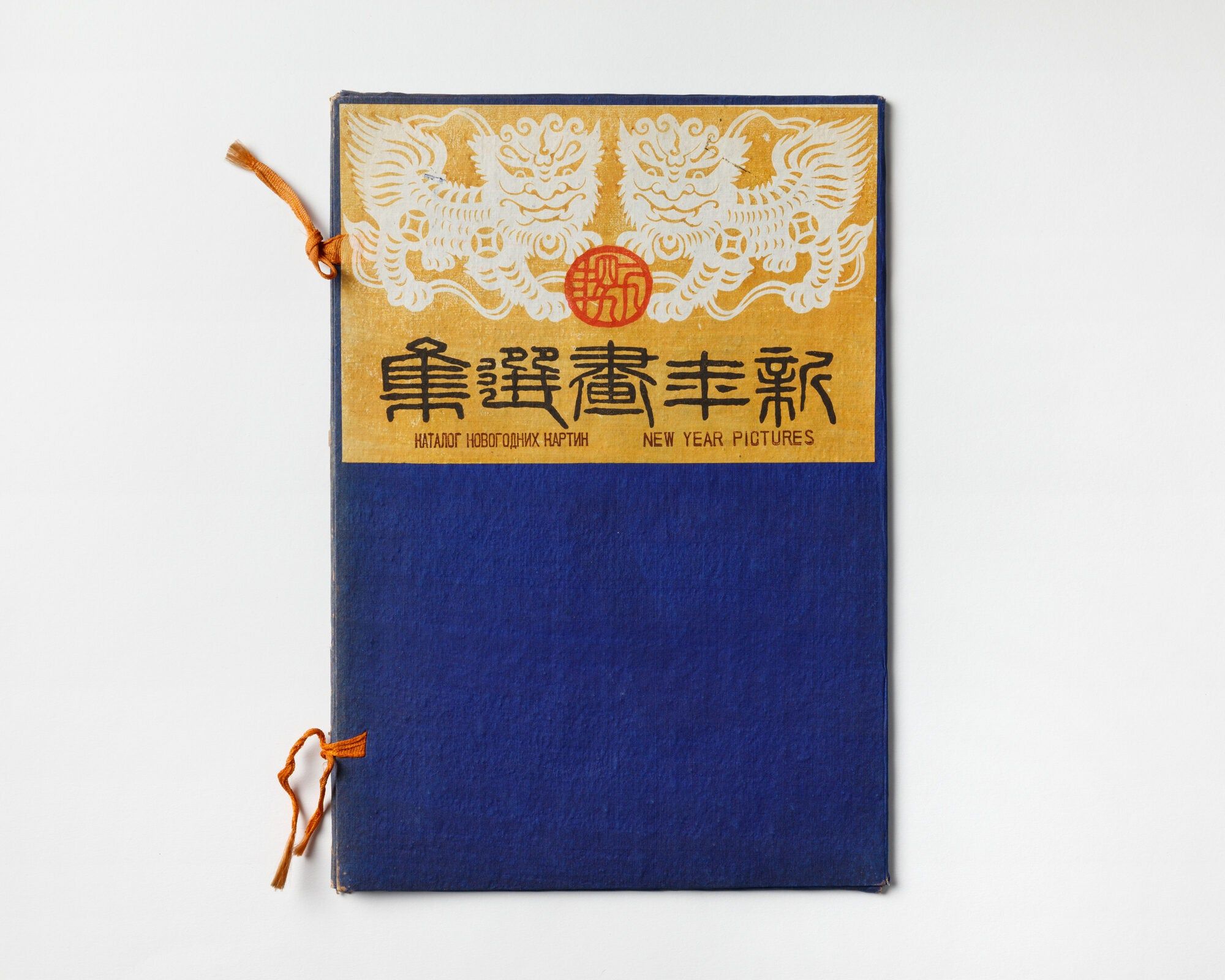
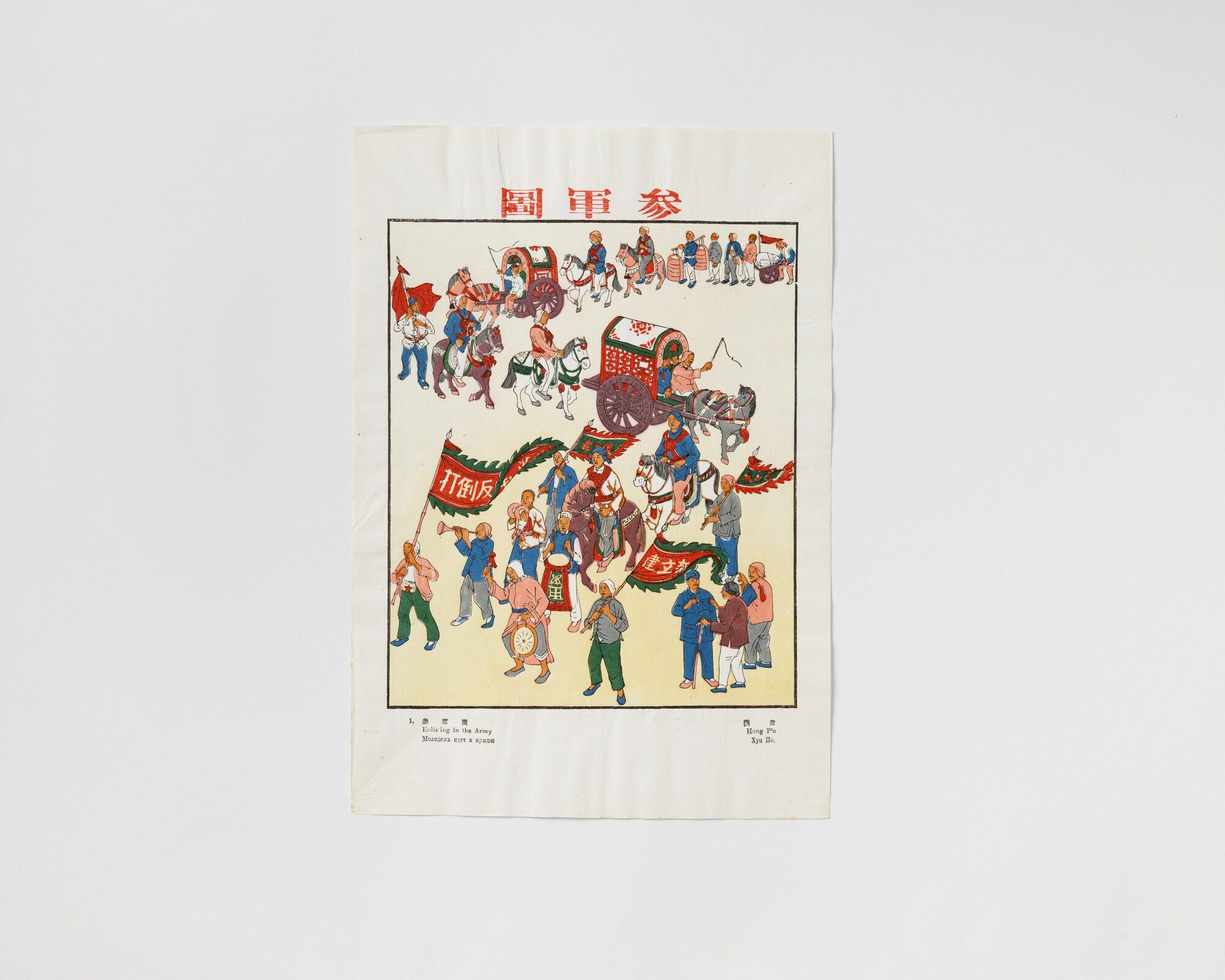
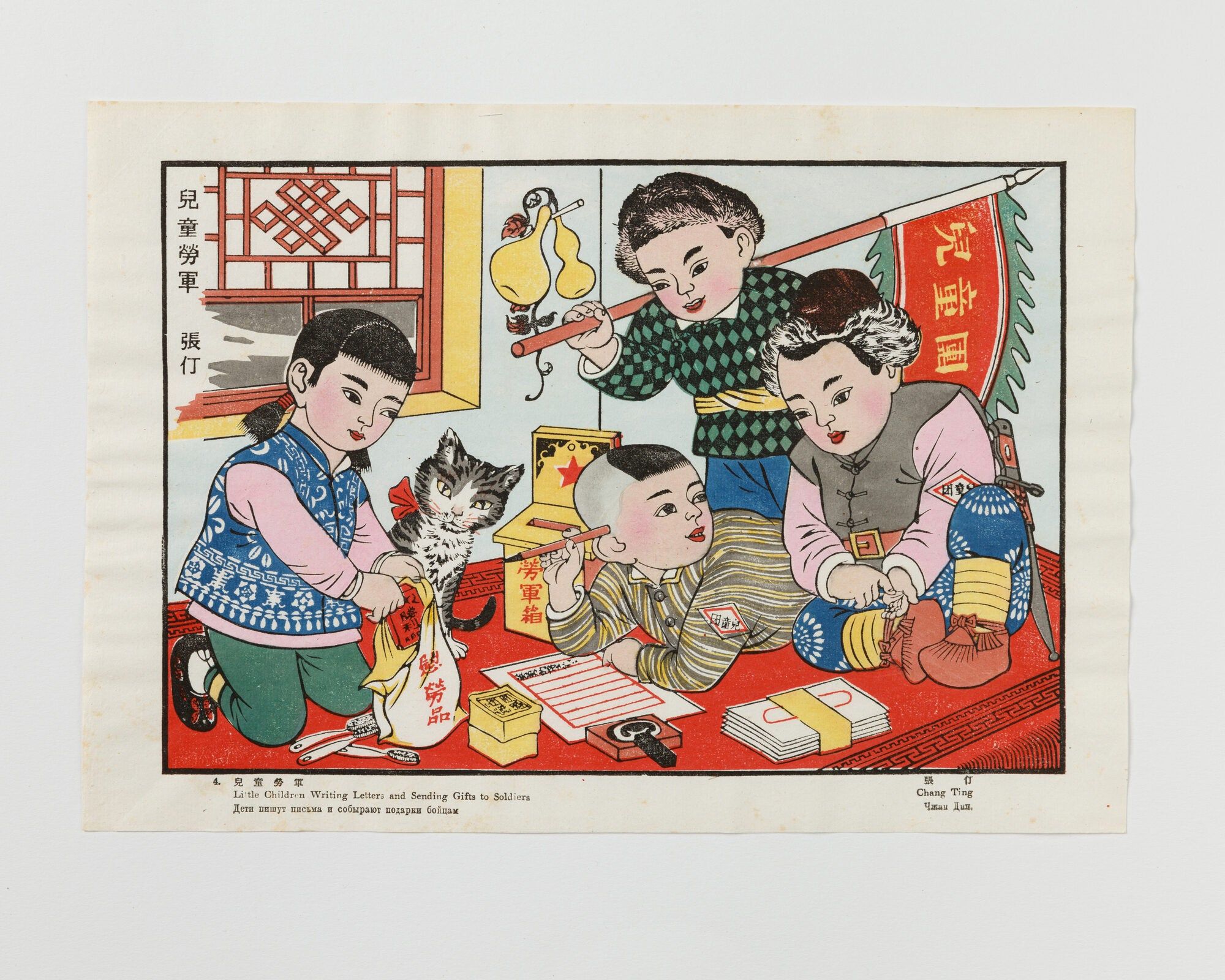
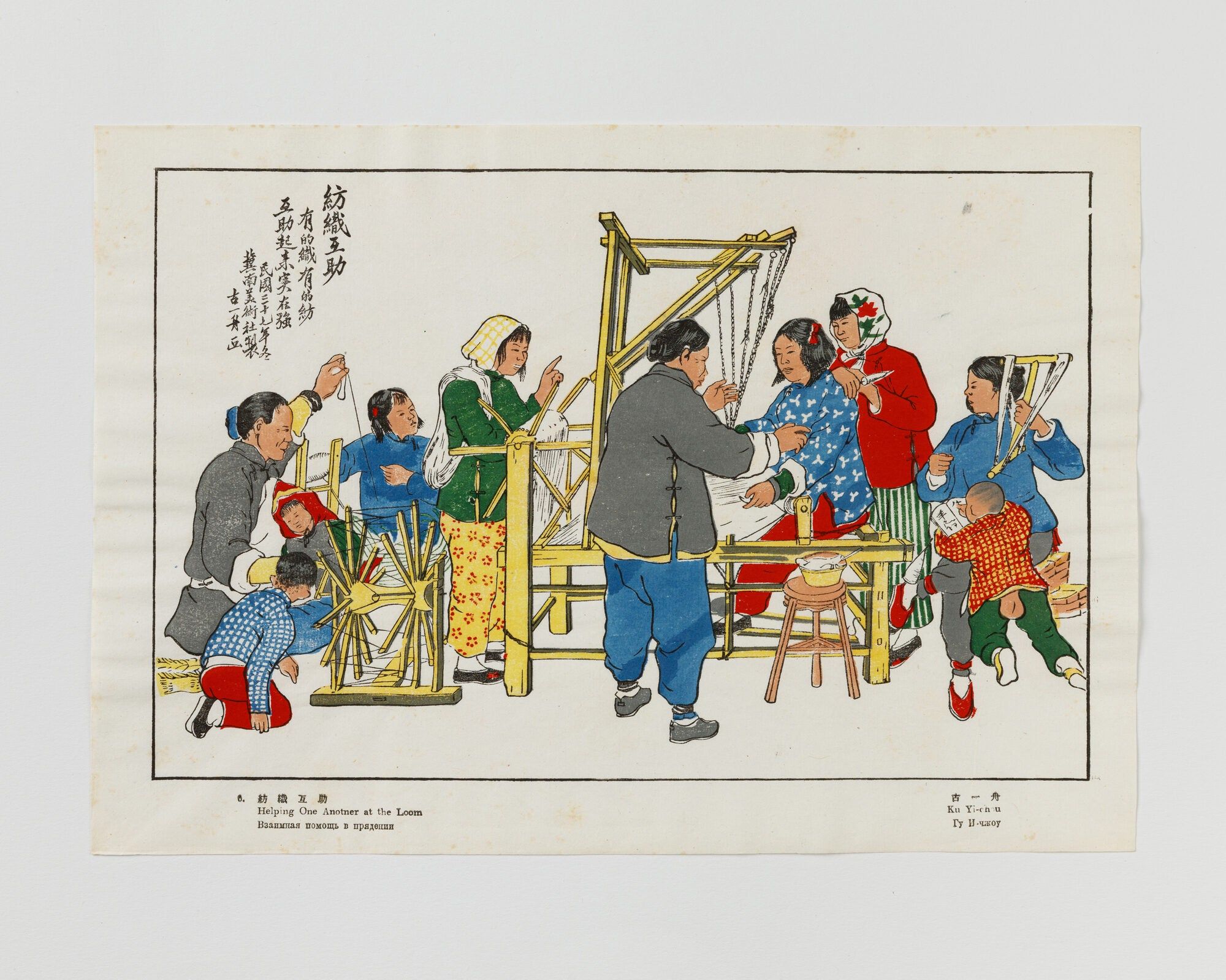
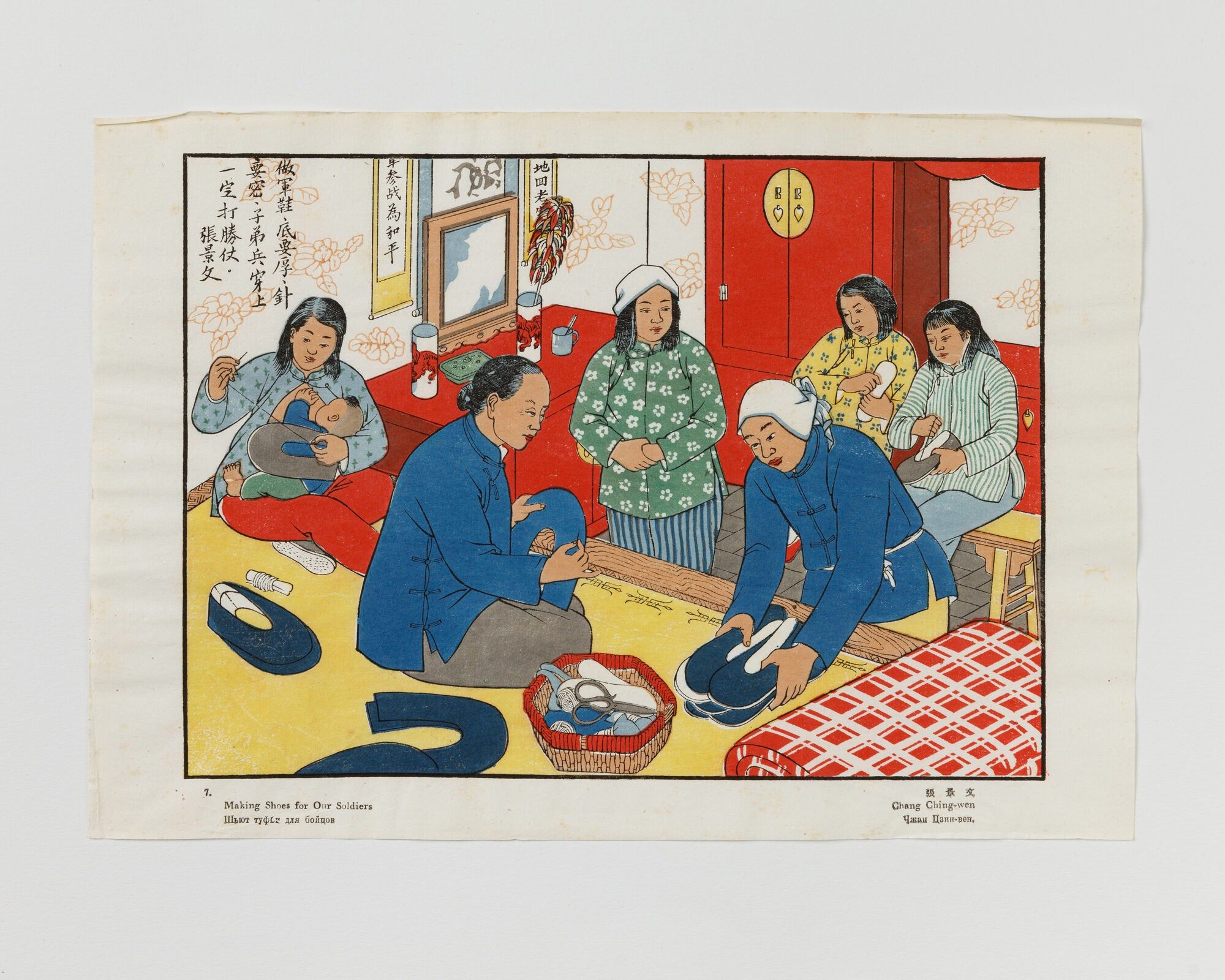
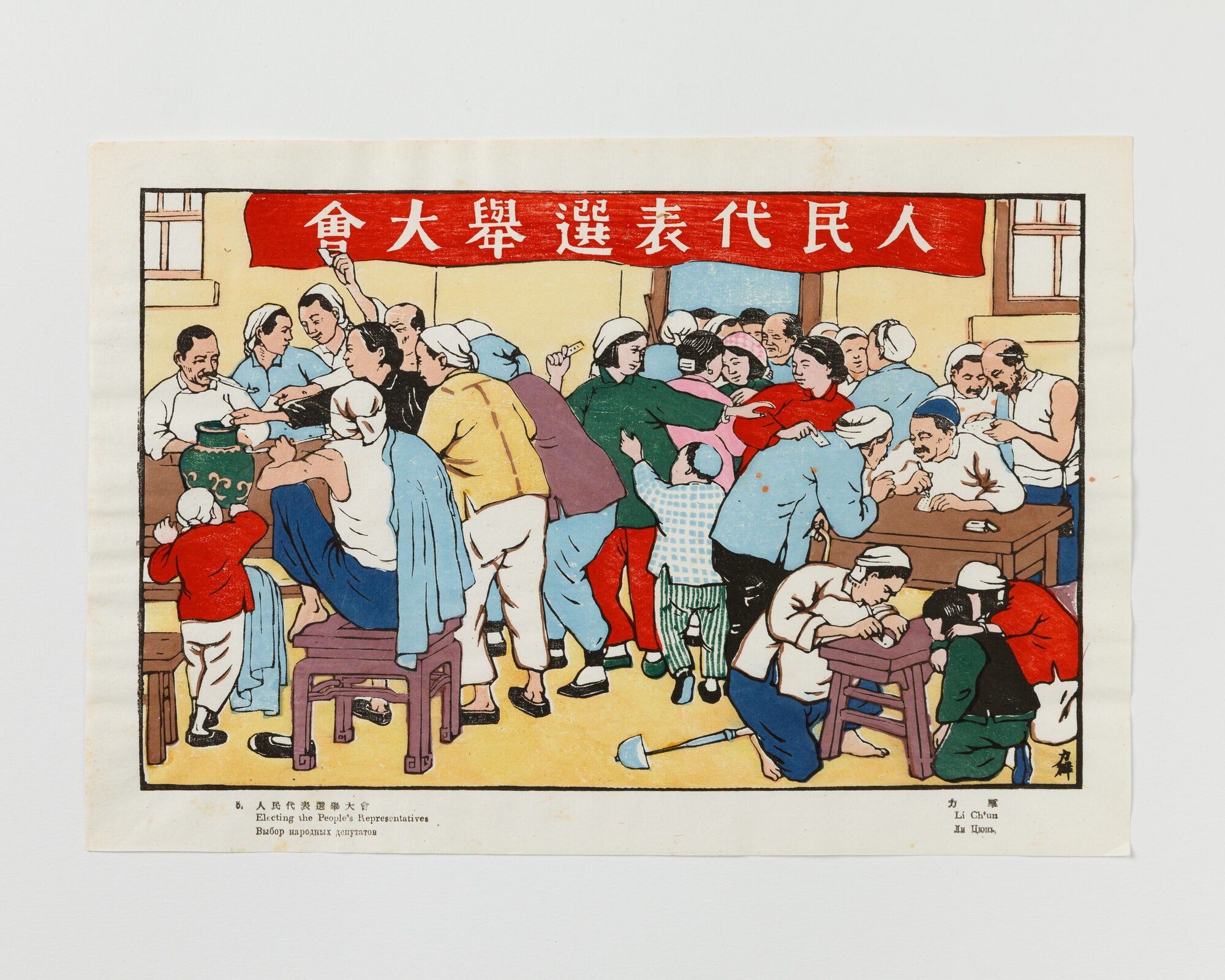
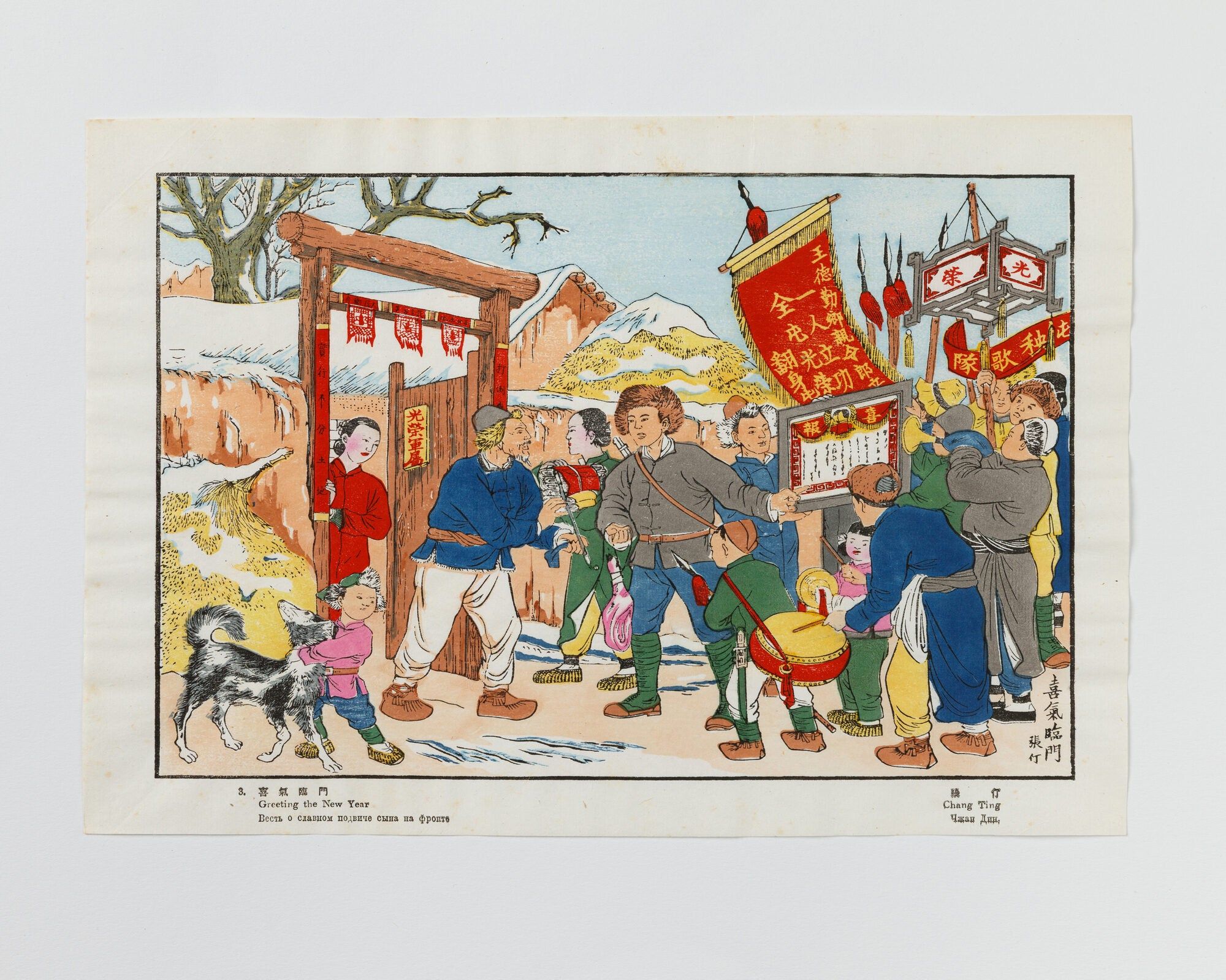
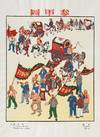
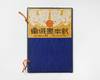
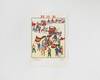
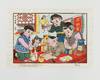
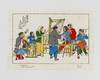
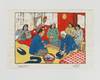
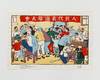
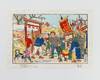
Beijing: Rong Bao Zhai (Jung Pao Chai Hsin Chi), 1950. Quarto (29.7 × 20.7 cm). Original blue silk folder with mounted color woodcut title label; 16 color woodcut prints. The introductory text leaf is only included in photocopy; a small number of woodcut sheets with slight foxing, mostly outside the plate; one leaf with a small hole in the image; folder with minor signs of wear, especially to corners; still about very good.
Complete suite of color woodblock prints, made for the first annual exhibition of Chinese New Year prints under the then-new Communist government. The preface provides a brief and concise overview: "From time immemorial the Chinese peasant, after a year of hard toil, has celebrated the Lunar New Year by pasting brightly colored pictures on the walls and doors of his house. Such pictures are known as "Nien-hua", or New Year pictures. The "Nien-hua" are woodcut prints designed, carved and printed by Chinese folk artists. For centuries they have adorned the homes of Chinese peasants everywhere - in mountain villages as well as in settlements along river banks In the course of the present revolutionary struggles of the Chinese people, progressive artists have begun to reform and enrich both the content and form of the New Year pictures. They replace the old images of Door Gods or guardian spirits by themes reflecting the new age of liberation and, through constructive criticism, develop this art form further. The new works are still called "Hsin nien hua" (New Year pictures) and have now become a powerful means of educating and influencing the broad masses of New China. (...) The pictures reproduced here are in themselves works of art. Skilled folk woodcutters first make printing blocks which, though much reduced, are faithful copies of the originals. Water colours are then applied to these woodblocks and the prints are made by pressing paper on them. Thus this traditional and unique form of Chinese folk art is presented to the world in this selection in all its clarity and concentrated expression."
The tradition of New Year's pictures was so important for propaganda purposes that the new communist government issued "guidelines" for their creation almost immediately upon taking office. Among other things, it stipulated that the new "Nianhua" should "emphasize the new, happy, and hard-won lives of the working people and their healthy, heroic appearance," while at the same time "fully utilizing folk styles" and adopting the "customs of the masses." The distribution of the prints was to continue to utilize the established networks of incense shops, small bookstalls, and itinerant vendors. The strategy of adopting old cults and forms to achieve rapid popularization of the Communist Party and its policies is emphasized repeatedly. Thus, the new iconography was to be deliberately placed in locations where, for example, popular "door god" images, Yuefenpai images, were otherwise displayed. Experiments in form that deviated from the visual habits of the rural population were rejected. (For this and the following, see: James A Flath, The Cult of Happiness: Nianhua, Art, and History in Rural North China, Vancouver 2005.)
In February 1950, the first annual Nianhua exhibition was held in Beijing's Zhongshan Park. On display were 309 new Nianhua contributed by 17 regional production units from across China. The color woodblock prints in the portfolio are a selection of the images exhibited there. Not least, the exhibition was intended to subject the images to criticism in order to adapt them even more closely to propaganda needs. Some of the New Year's prints included in the portfolio received awards and were highlighted, with corresponding texts, as groundbreaking for Chinese visual propaganda. Nevertheless, propaganda in China - especially during the "Cultural Revolution" - struggled with the appropriation of traditional visual forms. For a short time, their production was suppressed. Yet this tradition never completely died out and flared up again and again. Even the old gods are once again part of New Year's images, which, thanks to modern reproduction techniques, are now featured in the mass media. The tradition of woodblock printing and the village printer has also been preserved. Today, the government supports research institutes dedicated to the history of this tradition.
As of June 2026, OCLC only locates two copies in Germany, with none found in North America.