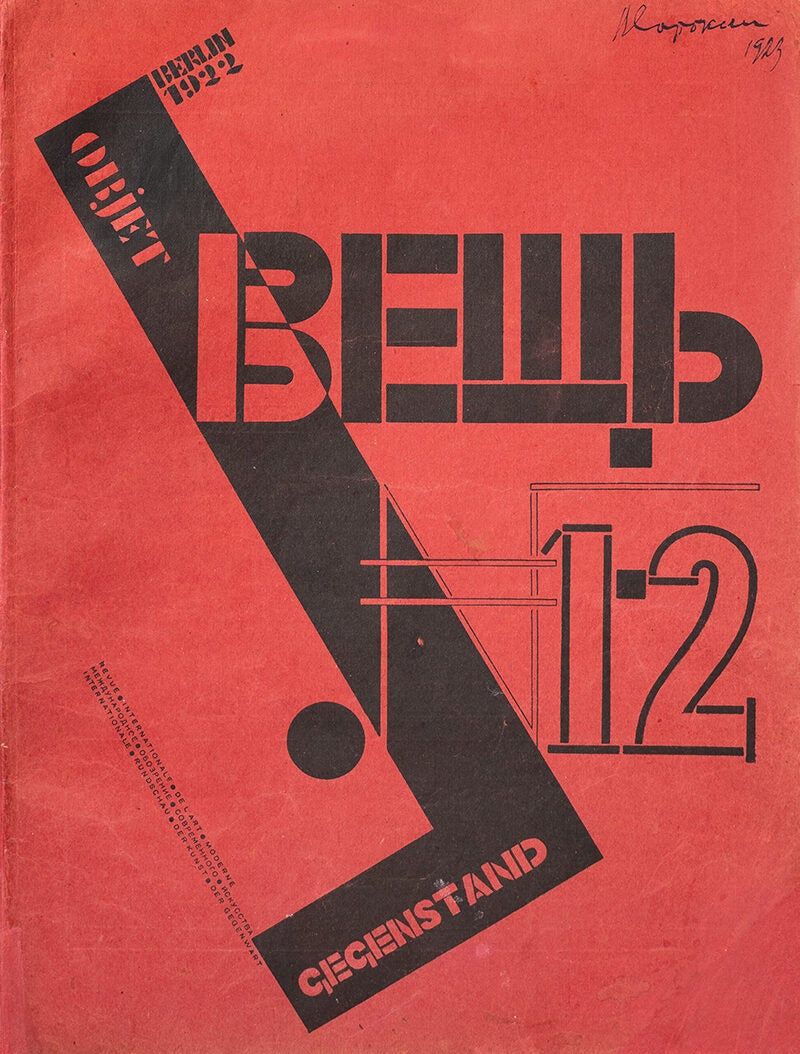
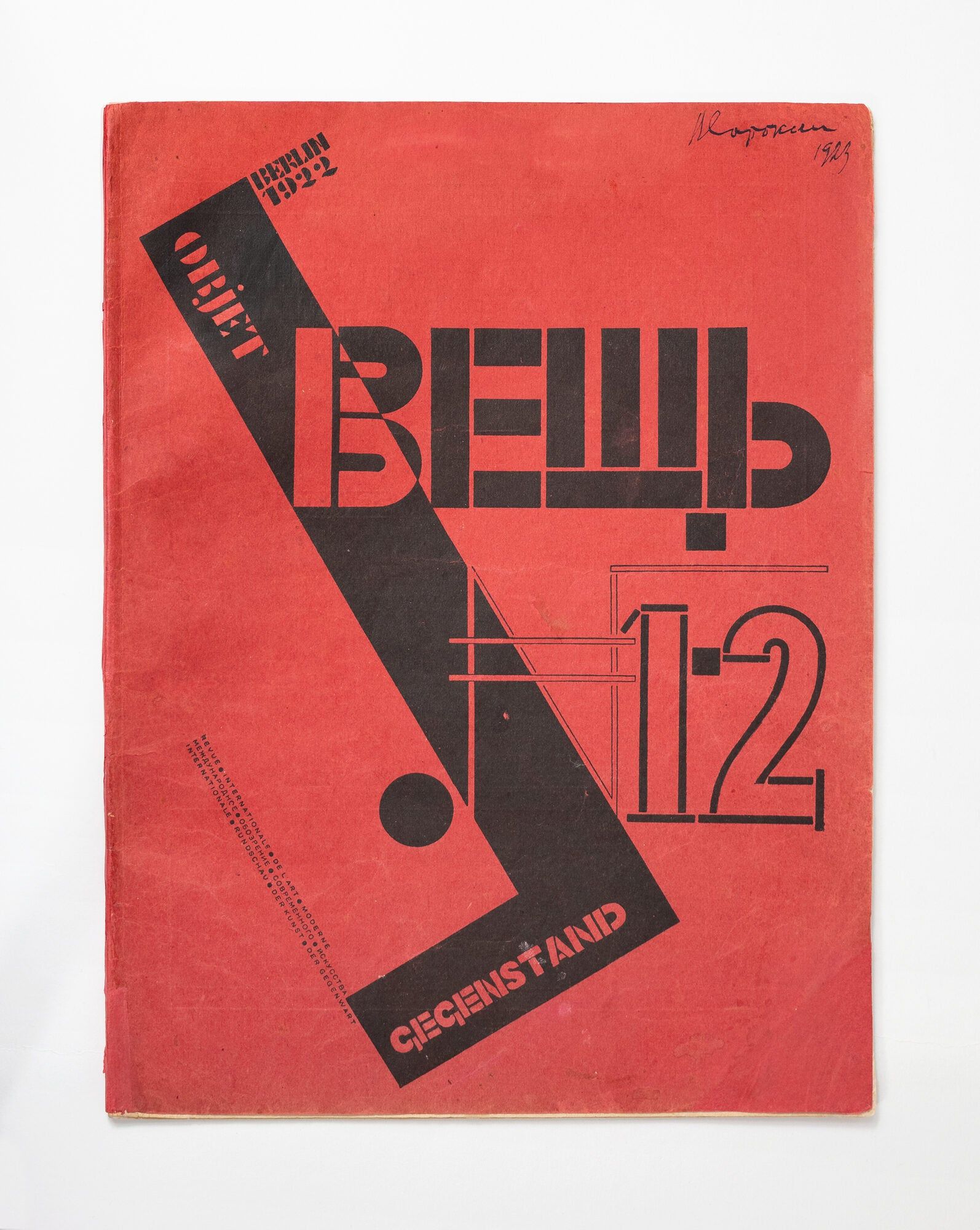
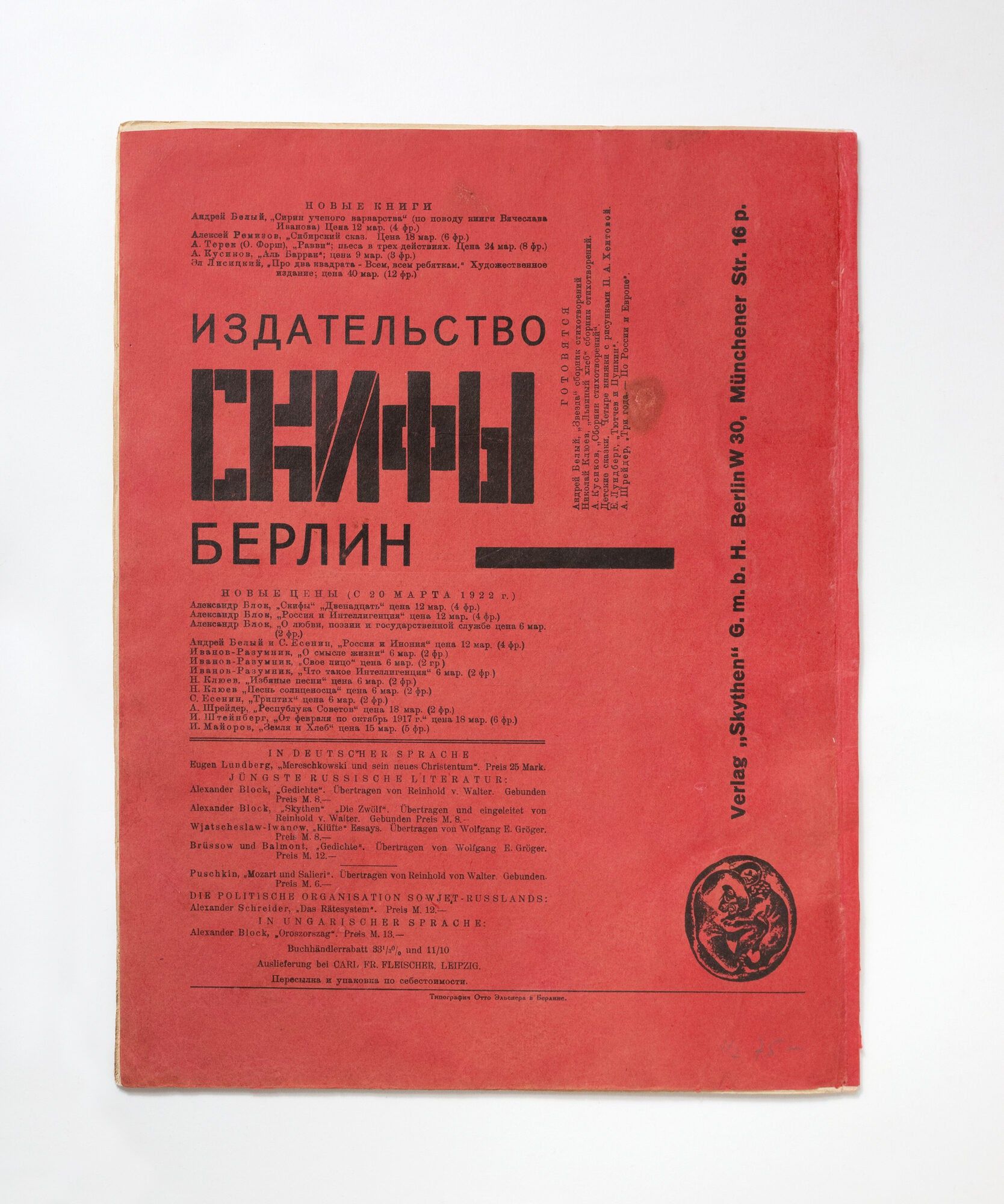
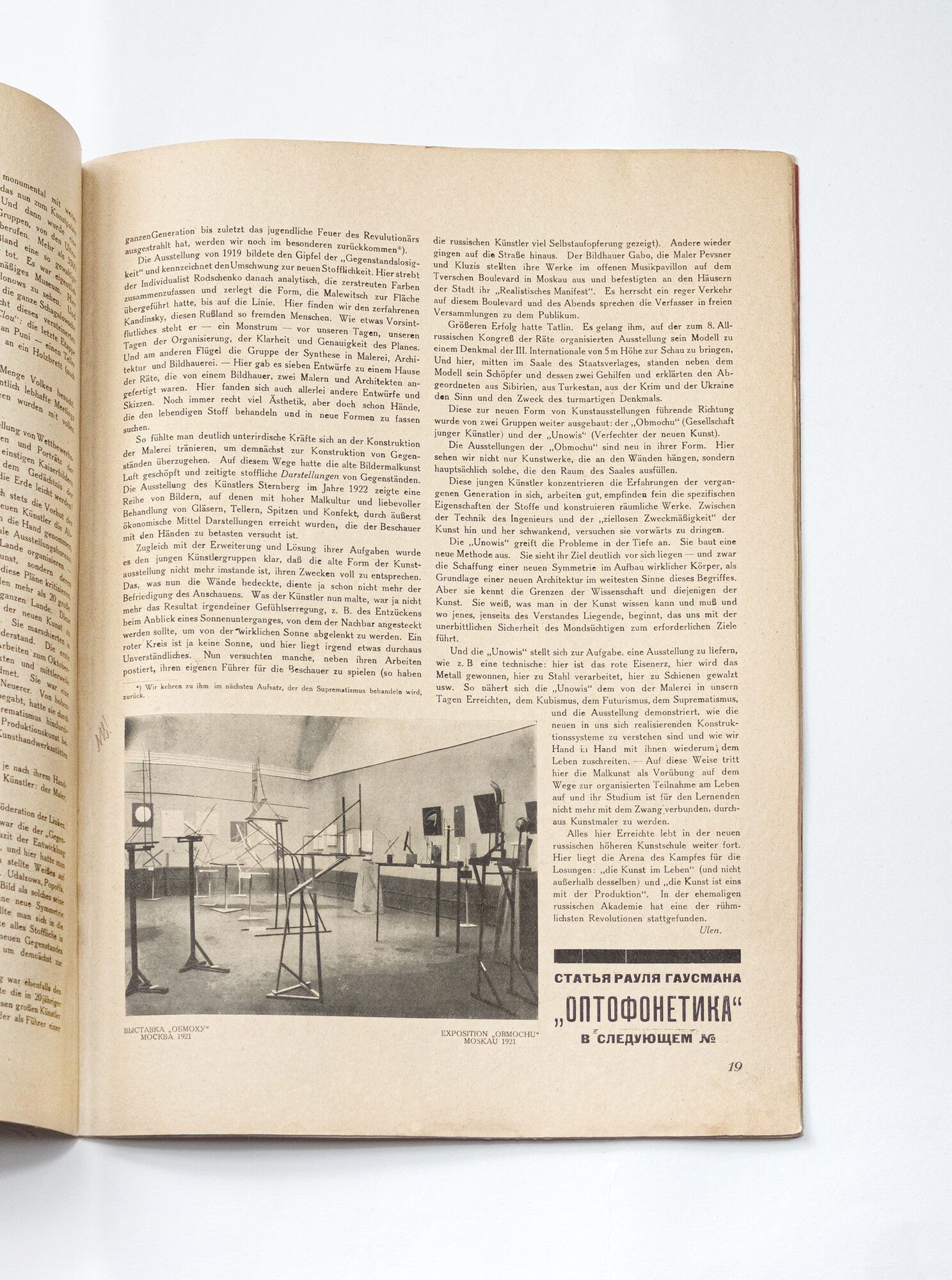
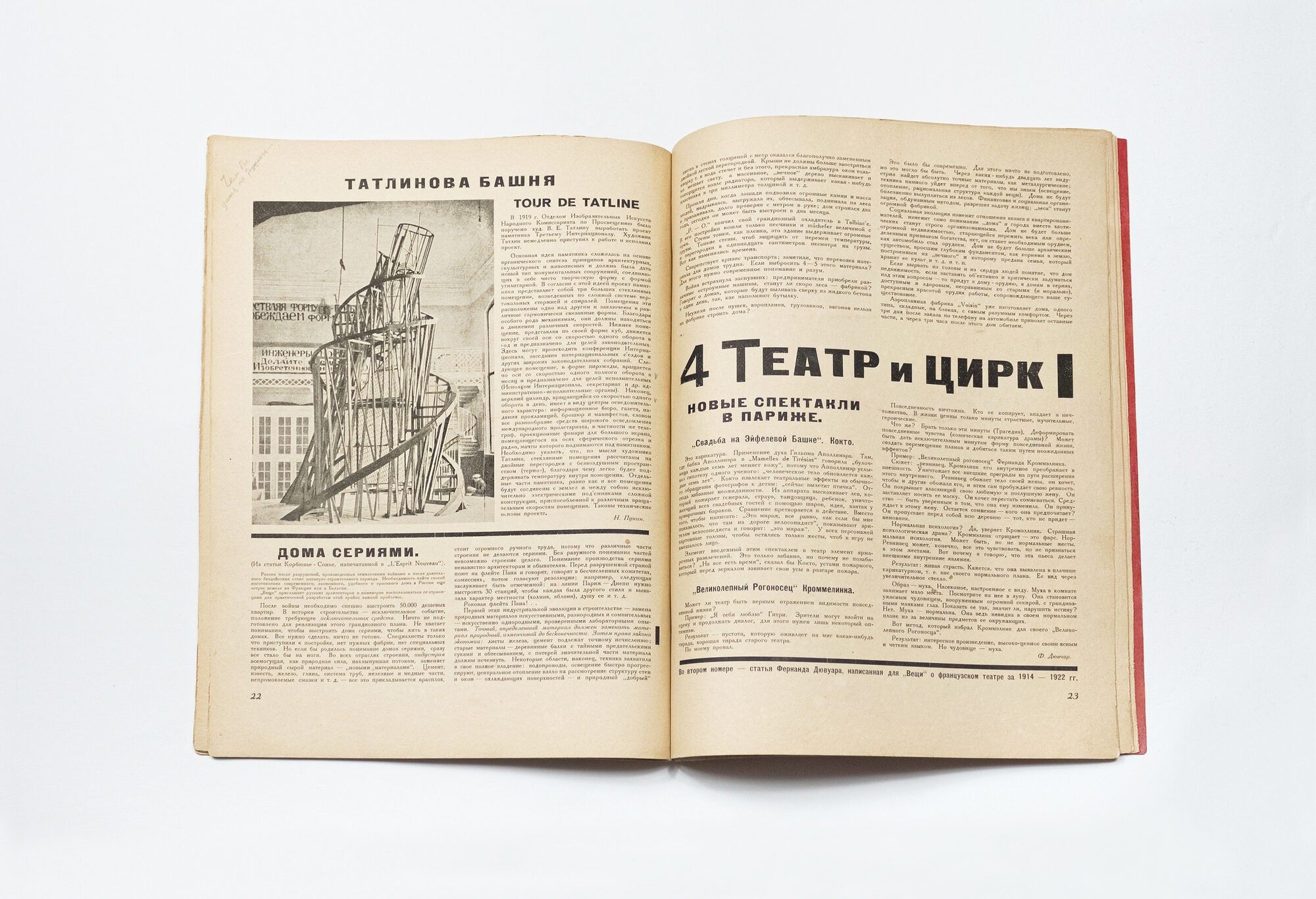
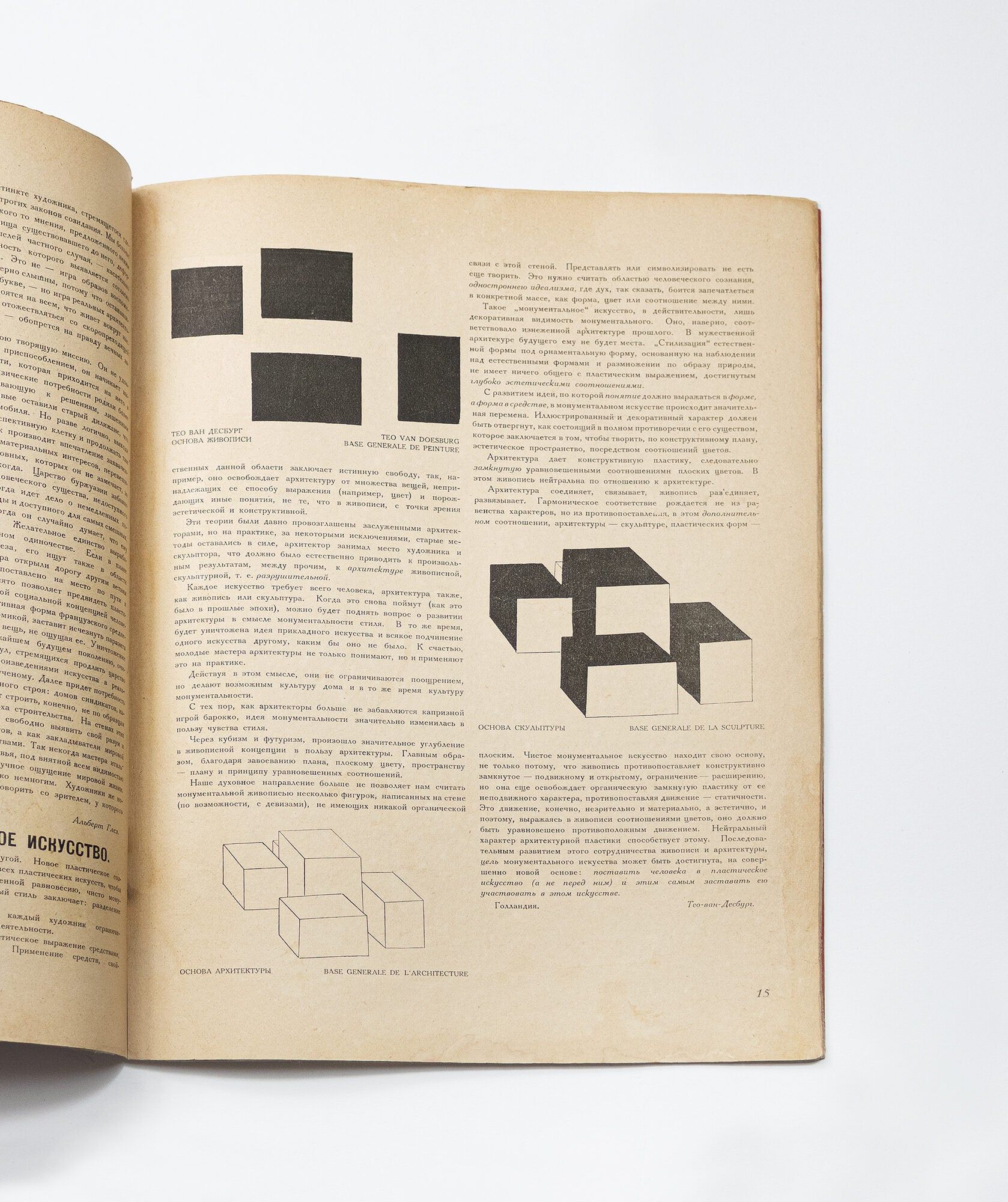
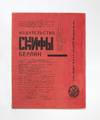
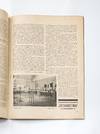
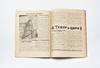
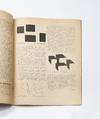
Berlin: Skythen, April 1922. Quarto (31 × 23 cm). Original staple-stitched wrappers with a Constructivist design by El. Lissitzky; 32 pp. Reproductions of paintings, sculptures, and works of graphic design. Spine professionally restored; cover with contemporary private ownership note ("Sorokin 1923"); leaves slightly toned due to material and age; a few leaves with careful and discrete retorations to edges; else very good.
First of two published issues of one of the first avant-garde journals that saw itself as the organ of an internationally networked group of Constructivists. "Veshch' - Gegenstand - Objet" laid the foundation for numerous other Constructivist-oriented avant-garde journals, which would eventually appear throughout Europe over the 1920s. When the architectural association ASNOVA was founded, El Lissitzky was on his Grand Tour of Europe, officially sponsored by the USSR, promoting Russian Constructivism. During this time, he was able to establish a large network and win over various artists to his cause. The promotion and founding of journals, which supported each other with articles and references across the continent, was of central importance in this regard.
An important starting point for this was Berlin, where Lissitzky was involved in organizing the "First Russian Art Exhibition," gave numerous lectures, and played a leading role in attending various meetings. The journal "Veshch' - Gegenstand - Objet" was founded as a Constructivist-Soviet voice in Berlin, a hub between East and West. Lissitzky also initiated Hans Richter's periodical "G. Material zur elementaren Gestaltung" (G. Material for Elementary Design). Kurt Schwitters invited the Proun designer to collaborate on issues of the magazine "Merz", and together with Theo van Doesburg and László Moholy-Nagy, Lissitzky planned a collaboration between "De Stijl," "Veshch' - Gegenstand - Objet," and "Ma" that transcended all language barriers. There was also cooperation with "Blok" in Poland and "Zenit" in Yugoslavia, among others.
The networking of the Constructivists was also clearly emphasized by mutual publications. For example, Lissitzky and Ehrenburg's "Declaration to the First Congress of Progressive Artists" did not appear in "Veshch' - Gegenstand - Objet," but in "De Stijl." The Düsseldorf Congress became an initial catalyst for international Constructivism, with a considerable influence on the development of the Bauhaus. In the first point of the declaration, the two editors proclaimed their journal "Veshch" to be the "organ of an international spirit (...) uniting the leaders of new art in almost all countries." (Asholt and Fähnders, Manifeste (...), Stuttgart, 2005, p. 277f.) This was followed in September by a congress of Dadaists and Constructivists in Weimar, attended by Lissitzky and van Doesburg, as well as Moholy-Nagy, Hans Arp, Max Burchartz, and others. Theo van Doesburg was living in Weimar at the time and attempted to influence the Bauhaus through privately organized courses for students. Gropius rejected van Doesburg's application for a permanent position, but in 1923 another Constructivist, Moholy-Nagy, became a master there.
The texts in "Veshch' - Gegenstand - Objet" are predominantly Russian. The main audience was Russian émigrés and artists in the Soviet Union. Only a small portion of text was also printed in German. An exception is the manifesto placed at the beginning, which, among other things, contains a clear demarcation from Futurism and Dadaism. Thus Lissitzky and Ehrenburg emphasize that it is no longer a matter of destroying tradition, but of a reappropriation of "the eternal laws of clarity" in the present. As "fundamental" to this present they understand the "triumph of the constructive method," which is to be found above all "in the development of industry." Art, too, is subjected to industrial purposive rationality; it is no longer to "decorate," but to "organize".
This is also meant to be made clear by the title of the journal, because art would be "nothing other" than the production of new "objects". Yet Lissitzky and Ehrenburg distinguish themselves from the Productivists in that they do not wish to see the concept of the "object" reduced to "utilitarian objects", even though for them "naturally (...) utilitarian objects manufactured in factories - airplanes, for example, or automobiles - must also be regarded as products of genuine art." However, they expressly do not wish to restrict their concept of art to this (unlike, for instance, Rodchenko). Accordingly, the manifesto also contains the pointed remark: "Primitive utilitarianism is alien to us". For them, a painting too is a "functional object" that contributes to "organization" by standing in "a reciprocal relationship" with science and technology. Not least, art is to be a field of experimentation and research.
Cat. El. Lissitzky, Sprengel Museum, no. 52; Heller, Avant-Garde Magazine Design p. 86f.