Skip to content
Have questions? Liber Antiquus is online now!
Virtual Book Fair Exclusive

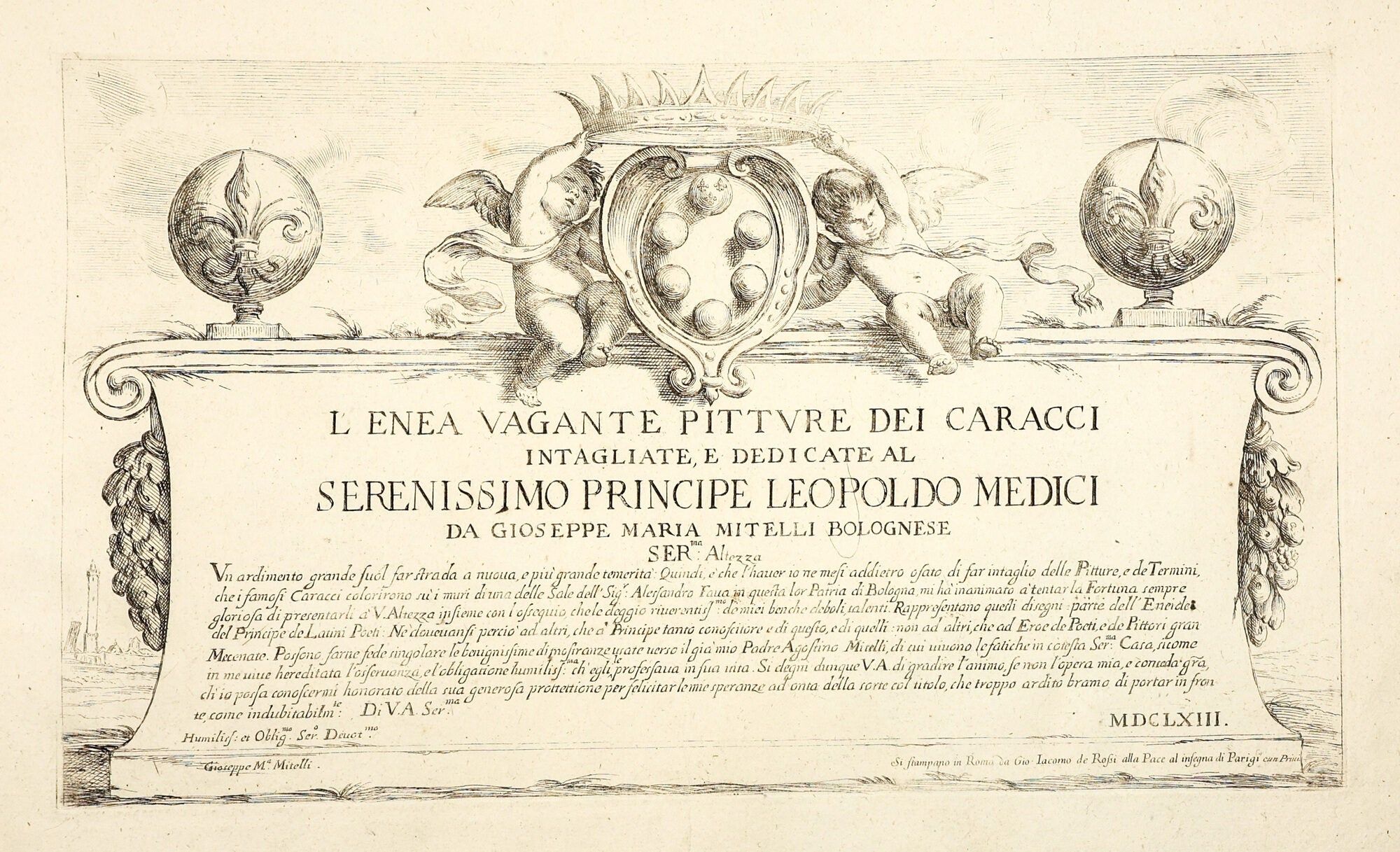
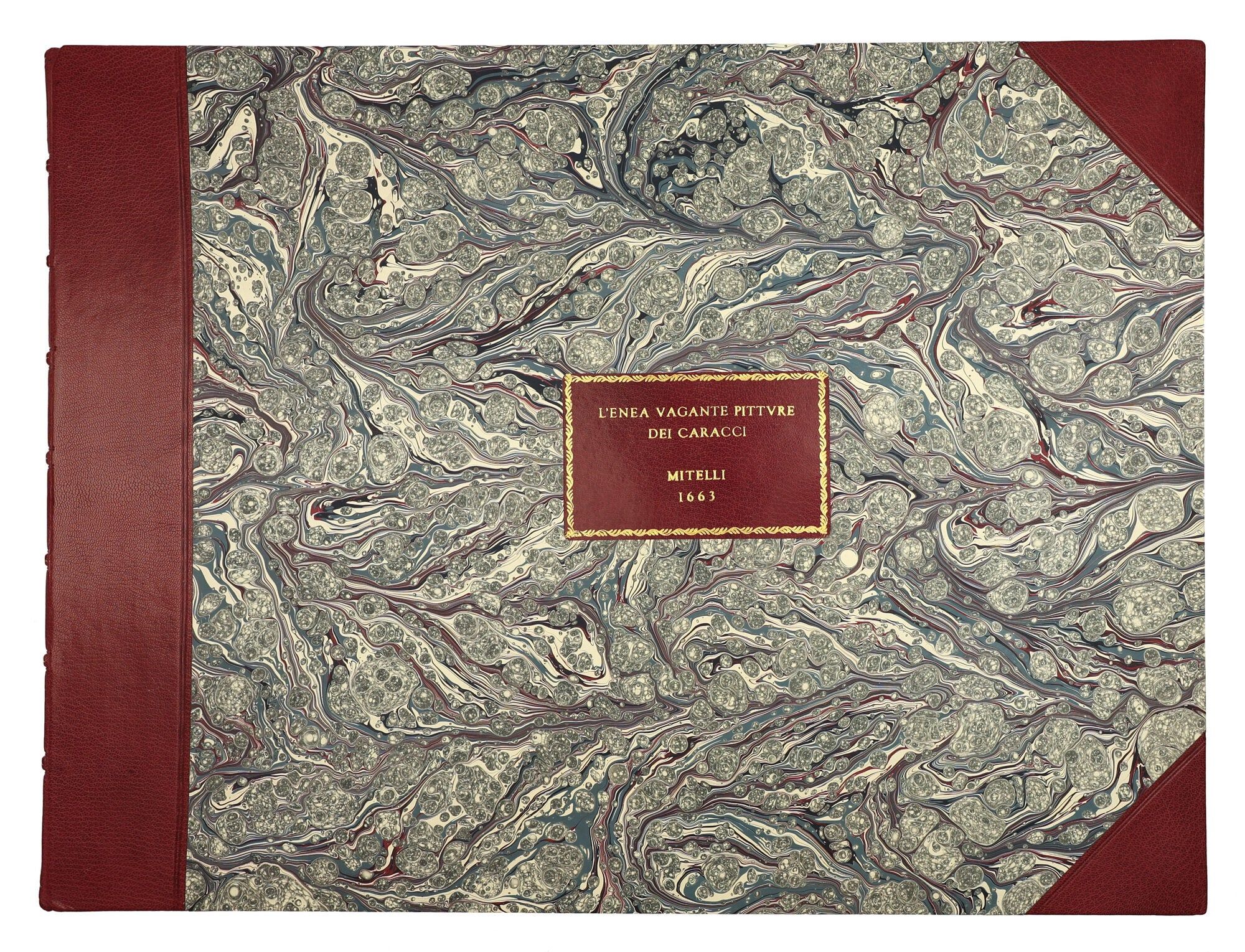
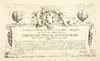
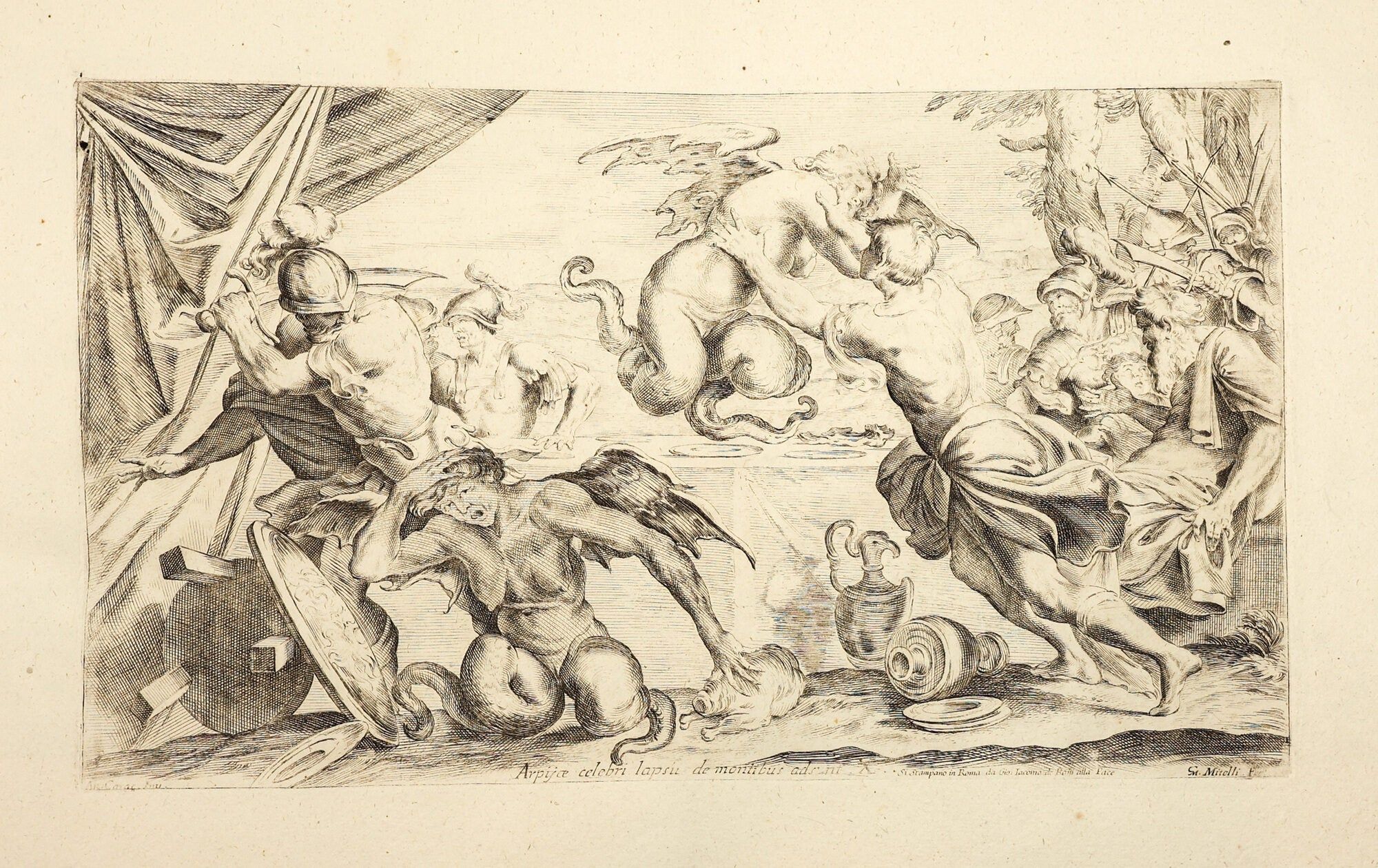
L'ENEA VAGANTE PITTURE DEI CARRACCI/ INTAGLIATE E DEDICATE AL/SERENISSIMO PRINCIPE LEOPOLDO MEDICI/DA GIUSEPPE MARIA MITELLI BOLOGNESE/ ....MDCLXIII

VIRGIL. Mitelli, Giuseppe Maria (Bologna, 1634 - 1718); Carracci - Annibale (1560-1609), Agostino (1557-1602), and Ludovico (1555-1619)

$9,500
Offered by Liber Antiquus
  • Condition: Fine
  • Edition: FIRST EDITION
  • Binding: Hardcover
  • Publisher: Da Gio. Giacomo de Rossi alla Pace al insegna di Parigi
  • Location: Rome
  • Date: 1663
  • Seller SKU: 4850

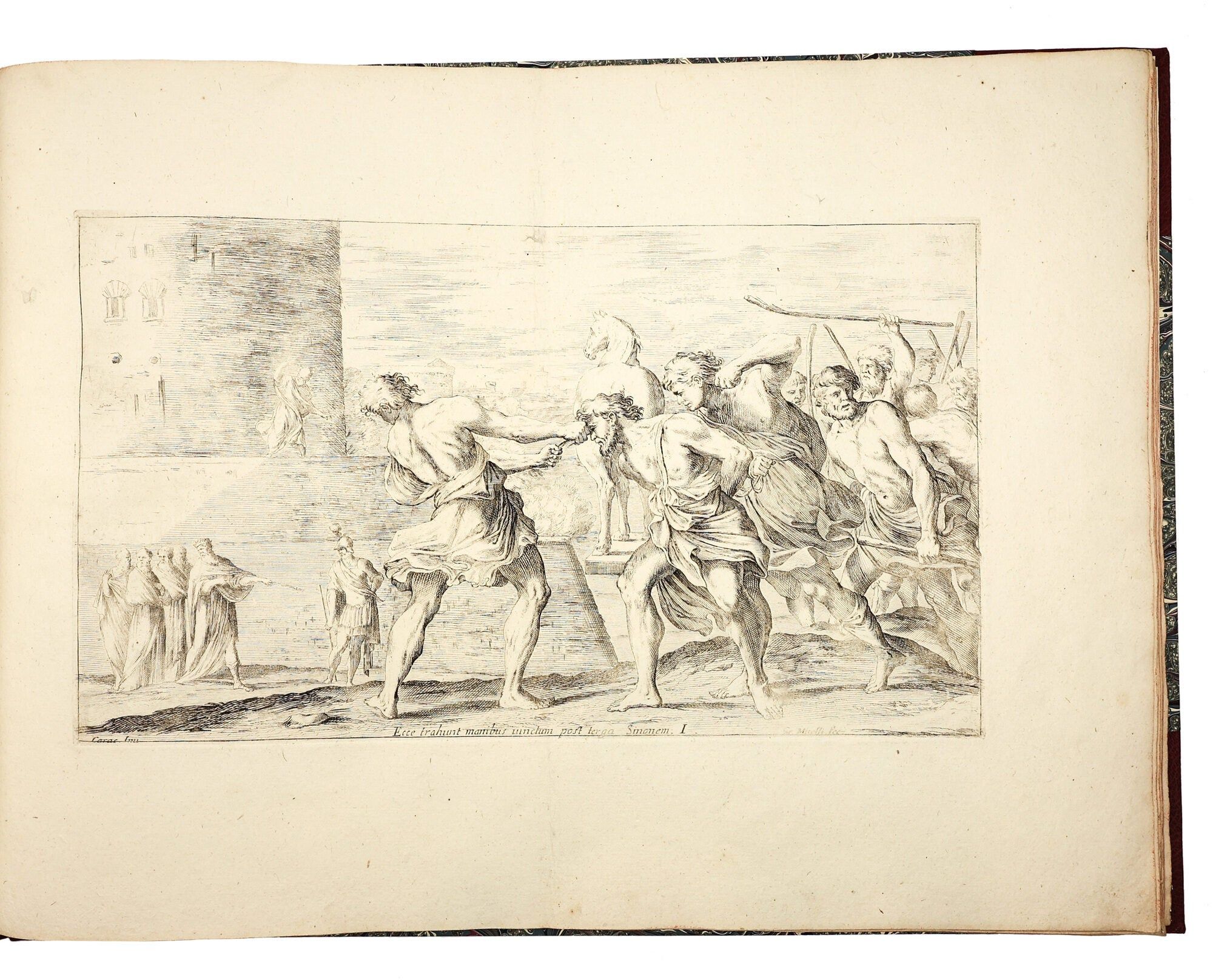
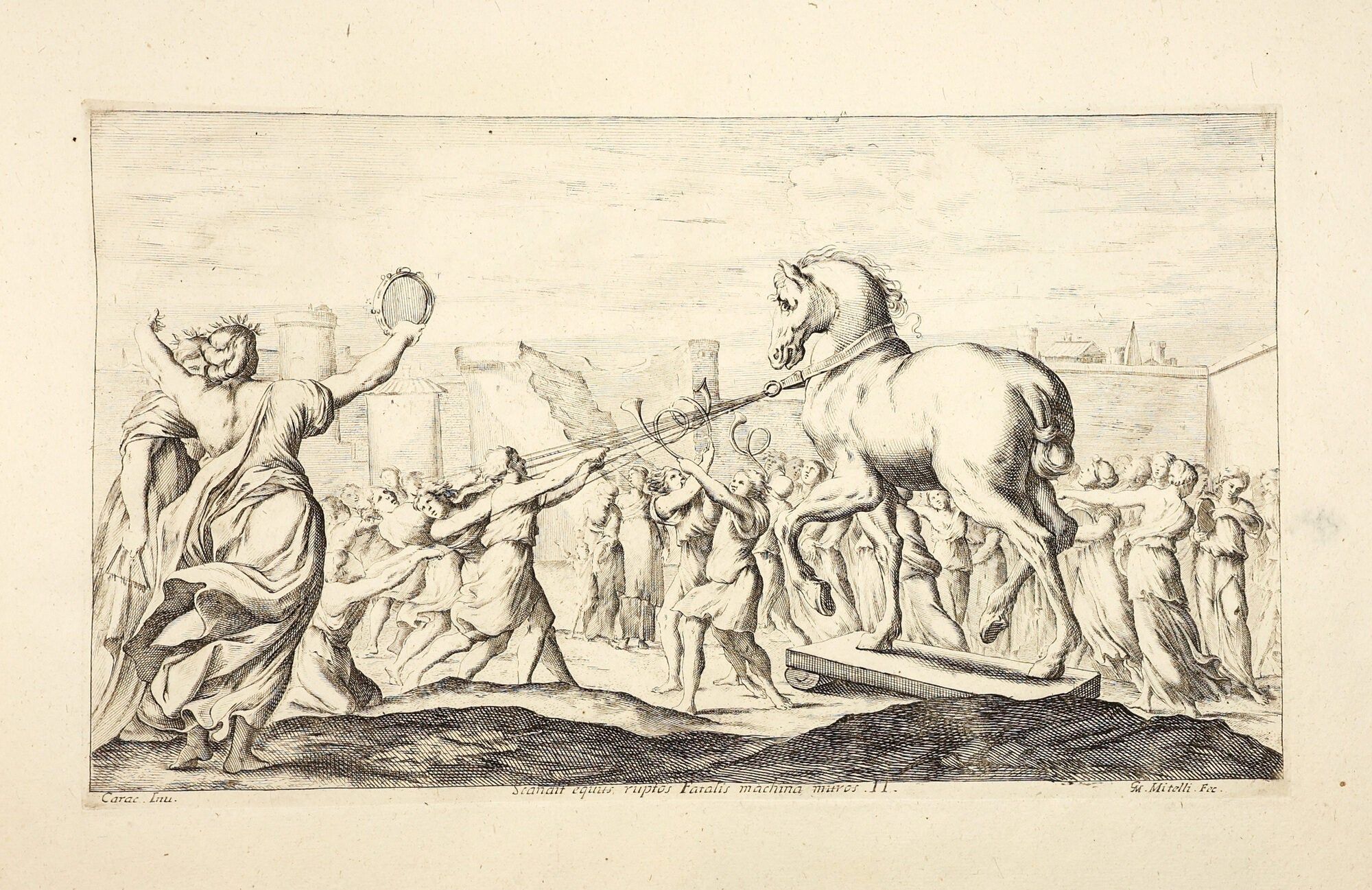
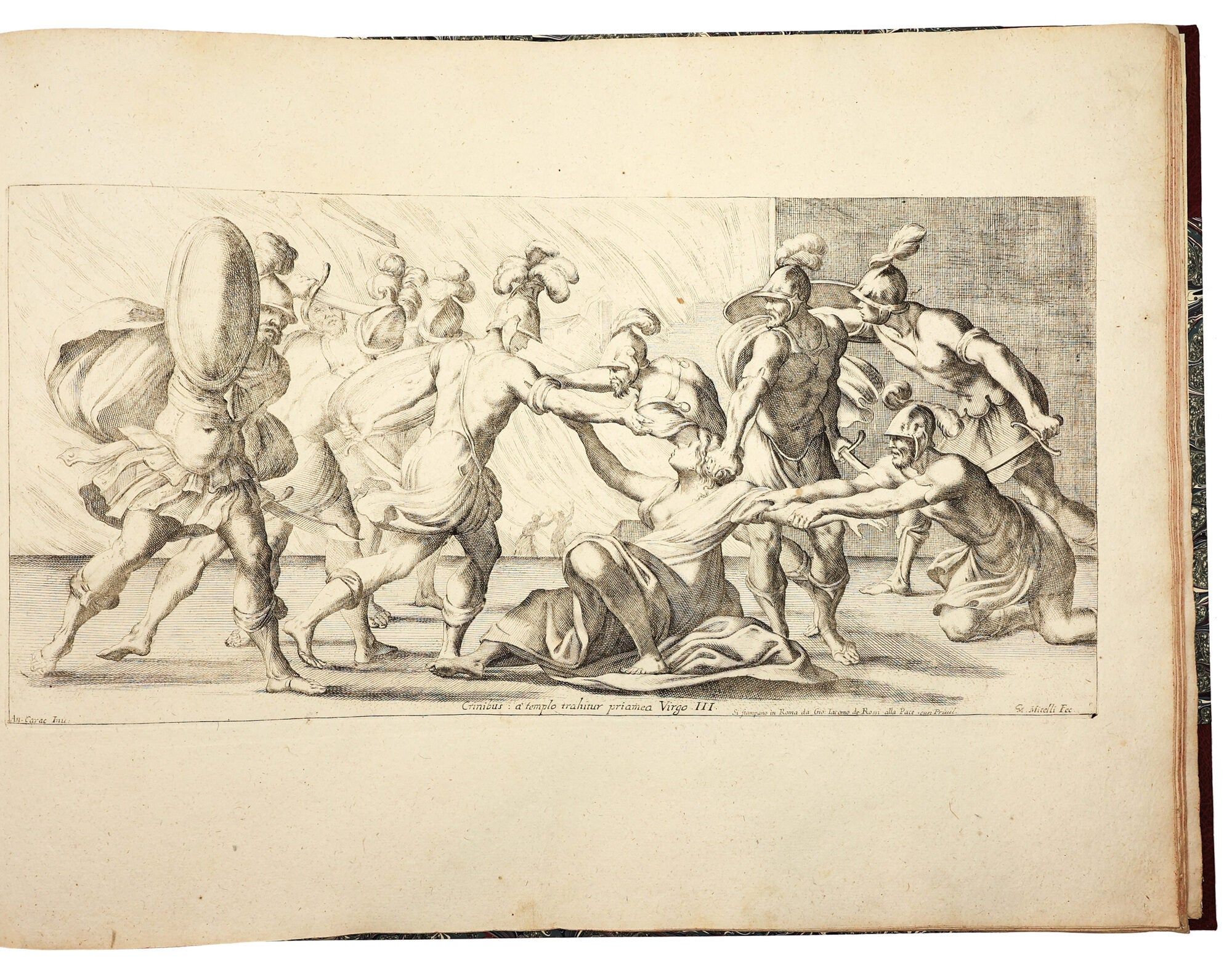
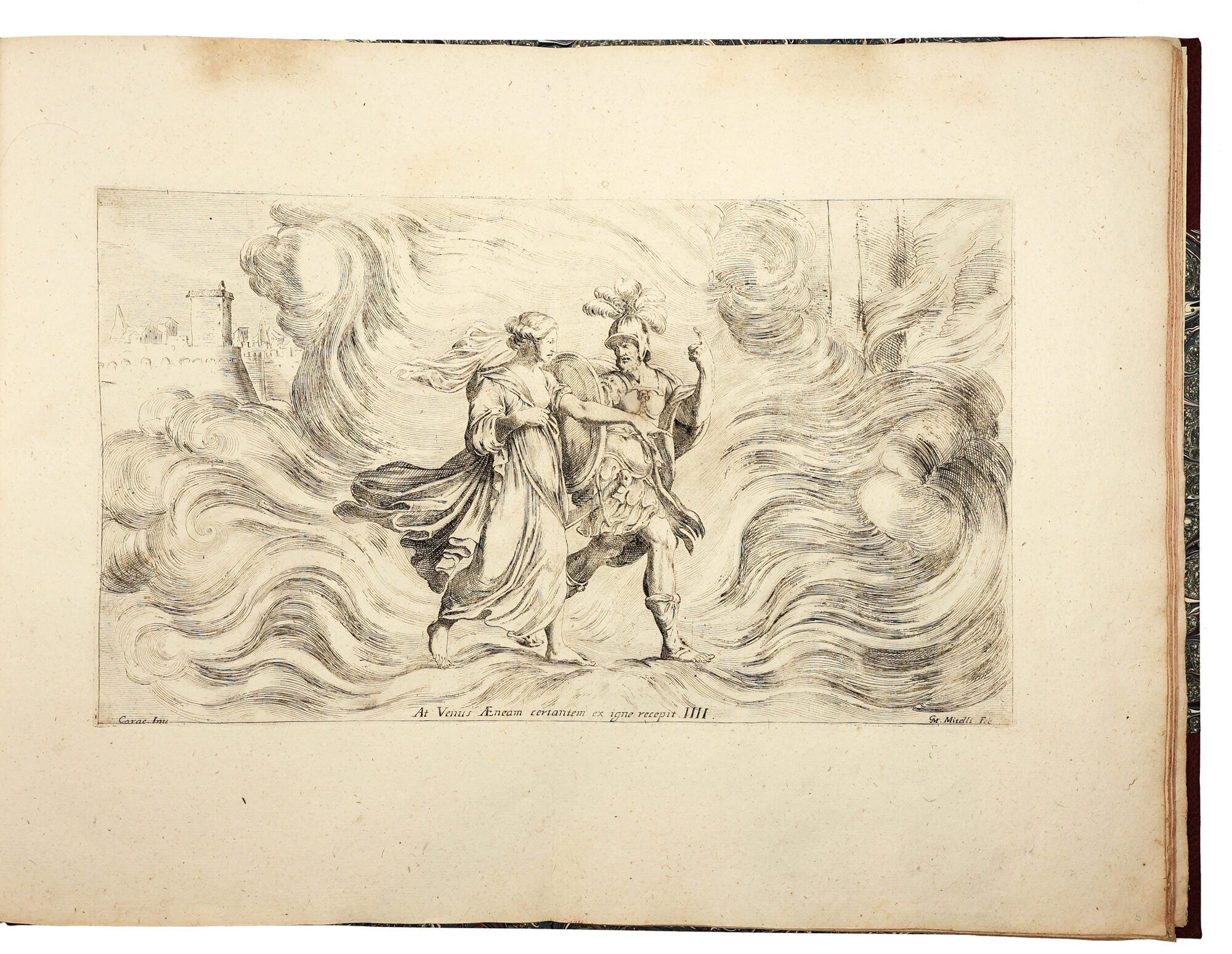
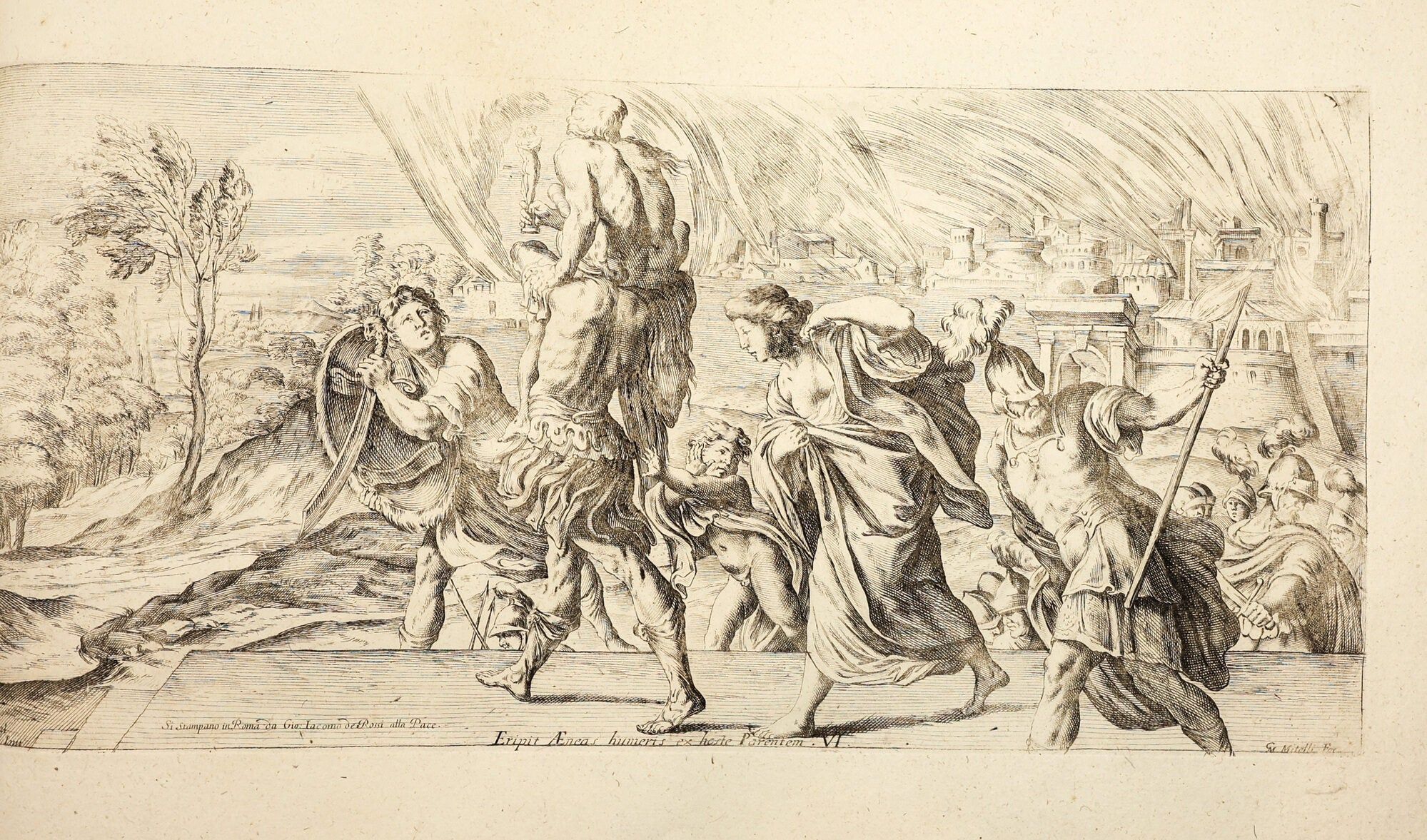
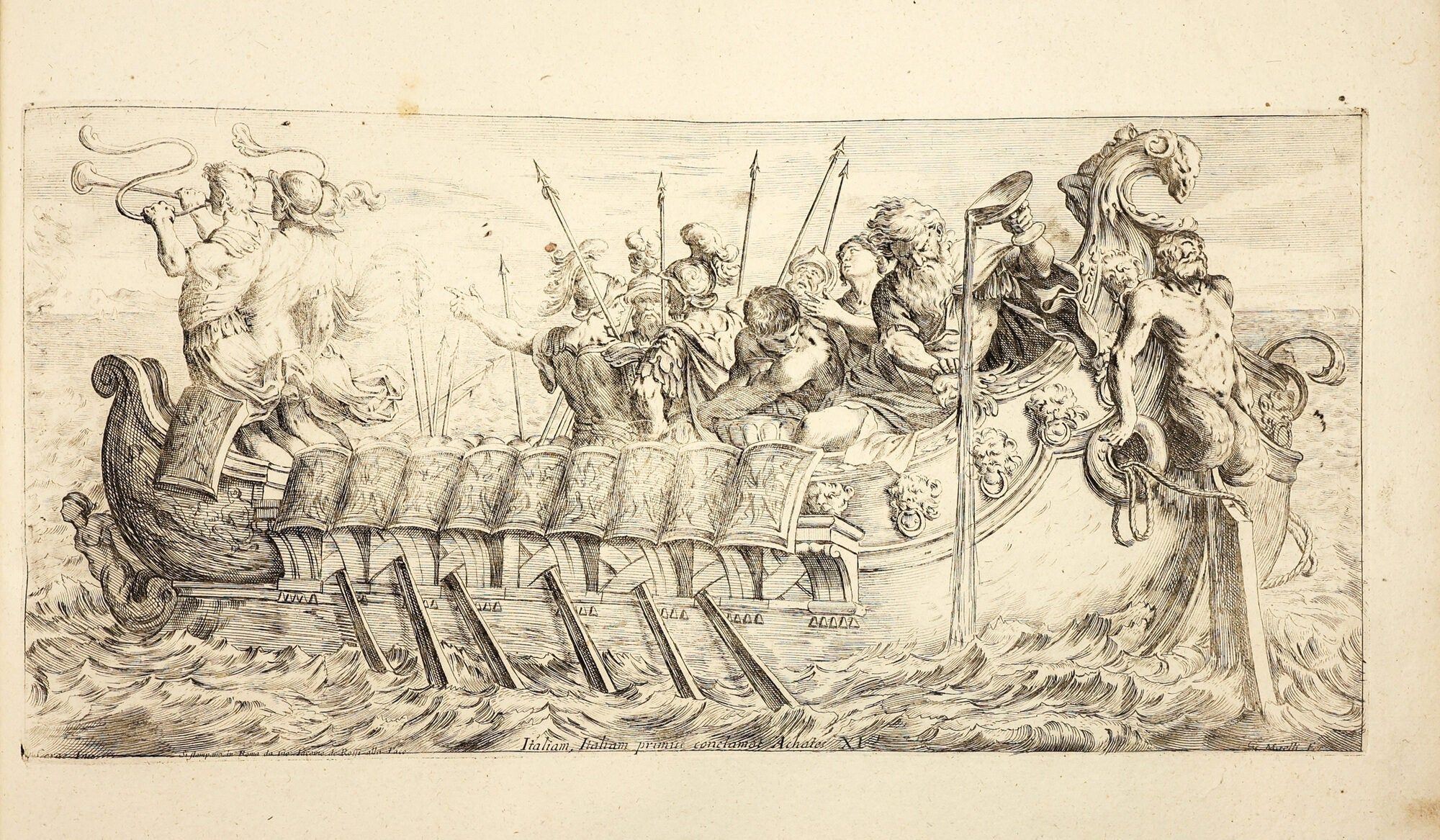
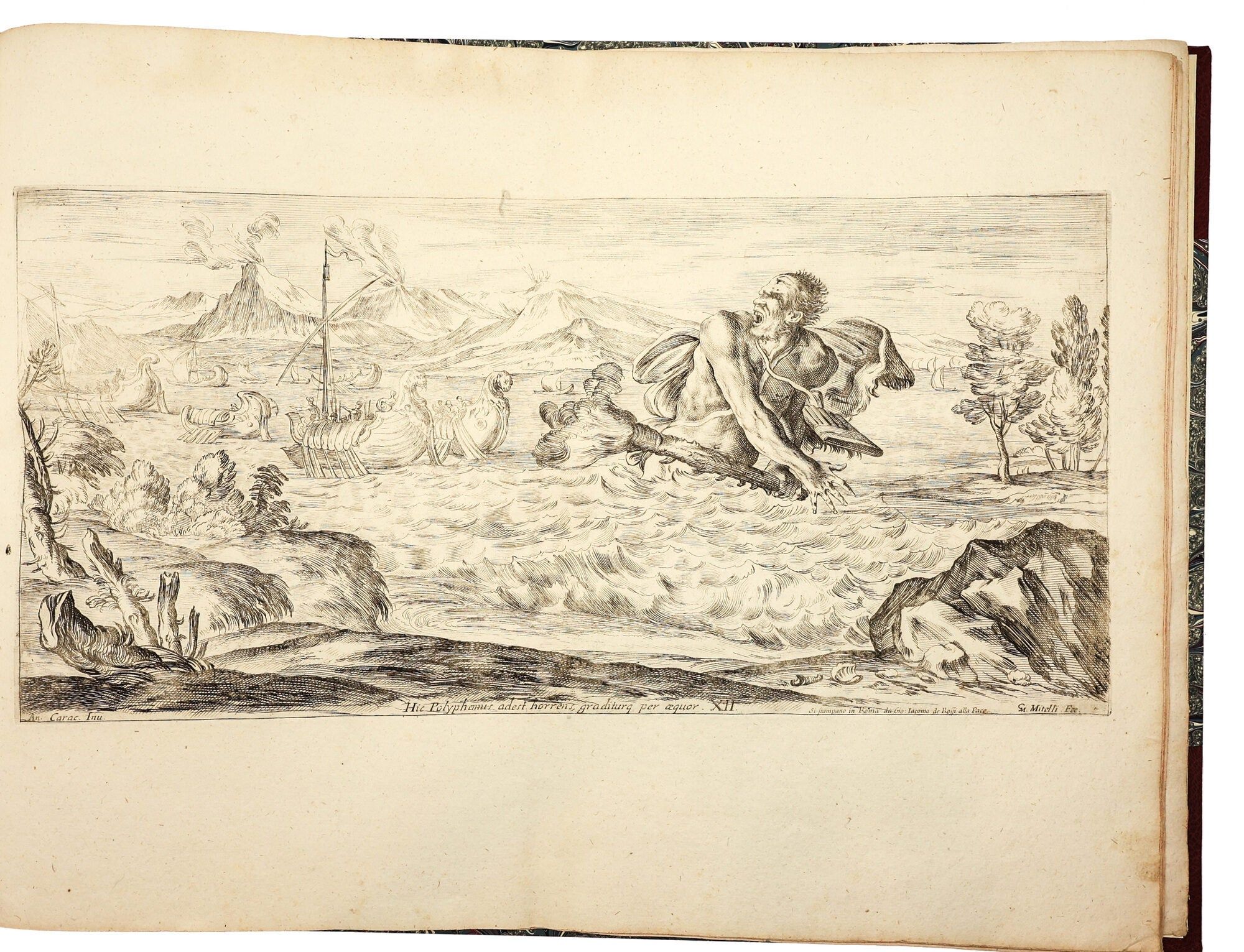
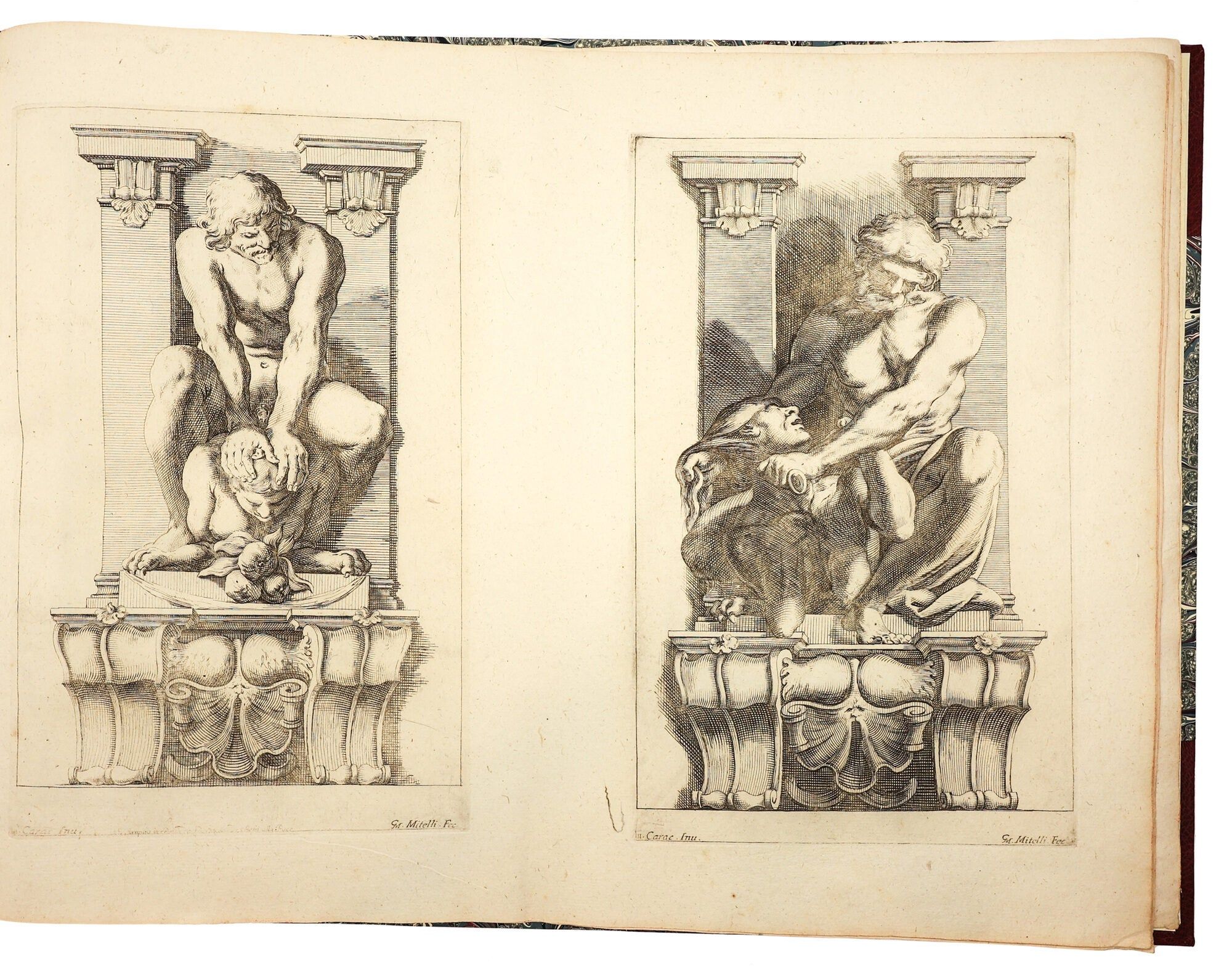
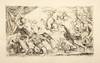
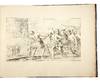
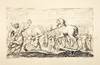
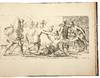
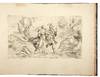
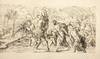
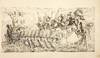
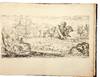
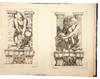
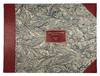
Rome: Da Gio. Giacomo de Rossi alla Pace al insegna di Parigi, 1663. FIRST EDITION. Hardcover. Fine. Bound in modern quarter red morocco over marbled boards. A very good copy of the complete set of etchings. Some mostly mild soiling and staining, a little heavier on two of the final plates, and one small defect in plate 4 (repaired). A complete set of etchings after the parietal frescoes in Palazzo Fava (Bologna), painted by the Carracci ca. 1593 depicting the story of Aeneas. The set comprises a title page, 12 etched plates, numbered from I to XII with the scenes of the cycle; and 4 additional sheets (with 2 etchings per sheet) reproducing the trompe l'oeil grisaille "statues" that divide the scenes. The title leaf includes the dedication to Lepoldo de Médici (1617-1675), with the Medici arms.

The frescoes, illustrating scenes from Books II and III of the "Aeneid", were etched by Giuseppe Maria Mitelli after drawings made by Flaminio Torri, whose untimely death had prevented him from executing the plates himself. At the foot of the plates, Mitelli attributes the individual scenes to one or another of the Carracci (Annibale, Agostino, or Ludovico), but these individual attributions do not always correspond to the conclusions of the most recent criticism. According to the Carracci biographer Carlo Cesare Malvasia ("Felsina pittrice, 1678), the frescoes were executed under the direction of Ludovico, with at least two scenes (Polyphemus and the Harpies) being drawn by Ludovico and painted by Annibale.

The Carracci - Annibale (1560-1609), his brother Agostino (1557-1602), and their cousin Ludovico (1555-1619)- are among the most famous Bolognese painters of the last two decades of the sixteenth and the first part of the seventeenth centuries. Their artistic production took on a new importance in the history of Italian and European art of that time, exerting a huge influence on subsequent generations. They gave life to an art based on a renewed awareness of nature and on the careful study of reality, contributing to the development of the Baroque style, which was opposed to the artificiality of late Mannerism. Towards the end of the sixteenth century, the Carracci founded what has been called the first private school of painting of the modern age: the Accademia degli Incamminati. Annibale, certainly the most talented of the three, would be called to Rome to work for the powerful Farnese family, while Ludovico and Agostino remained rooted in Bologna. But it is in Palazzo Fava that their "avvenetura" begins.

Here the Carracci executed their first commission and the first important fresco cycle of their career. In 1584, thanks also to the intercession of Antonio Carracci, father of Annibale and Agostino and tailor of the Fava family, Count Filippo Fava entrusted the decoration of the entire "piano nobile" of the building to young artists, who immediately gave proved their talent by creating an absolute jewel of Bolognese and Italian art. Thanks to the Fava family, a family of patrons who played a fundamental role in the history and artistic development of Bologna, Palazzo Fava became a place of study for the young artists of the time, who were able to take advantage of mobile scaffolding to closely observe the adventures represented in the friezes of the cycle: those of Jason and Medea and in those of Aeneas, the latter of which is reproduced here. (https://genusbononiaeblog.it/i-carracci-palazzo-fava/)

The engraver, Giuseppe Maria Mitelli, was renowned for the familiar, playful, carnivalesque and visionary themes of his etchings, exemplified by allegorical figures, genre scenes, and images of everyday life in the streets of his native Bologna. He produced a large and varied body of work, from genre scenes and fantastic imagery to reproductions of the works of the great Italian painters, such as this suite. Mitelli was among the founders of Bologna's Accademia Clementina and was one of its first directors. For a full biography, see "Agostino e Giuseppe Maria Mitelli" in Arte antica e moderna, 3 (1958), pp. 295-301.

Offered by Liber Antiquus

Liber Antiquus
Specializing in Architecture And Art, Astronomy, English Literature, Incunabula, Jesuit, Natural History, Reformation, Science and Voyages And Travel.
Welcome. For the past 24 years, I have been selling printed books from the dawn of printing to the Early Modern Period. I also sell manuscripts from the Middle Ages to the Enlightenment.

I am extremely proud to offer these books to both institutional and private clients worldwide. I take great pride in my work and I sincerely appreciate my clients' patronage. It is a dream job, a great honor, and a tremendous pleasure.

If you should find yourself in the Washington DC area, please call me to schedule an appointment. I can be contacted directly at 202-907-7429 or by email at [email protected]

I look forward to hearing from you.

Sincerely,

Paul M. Dowling
Liber Antiquus, Early Books & Manuscripts
Contact the Seller
Paul Dowling
7306 Brennon Lane
Chevy Chase, Maryland 20815
Phone/Text: (202) 907-7429
Items are shipped by FEDEX 2nd Day or Overnight, based on your preference. Institutions are billed net 30 or by individual arrangement, based on your budget and fiscal year restrictions. Please do not hesitate to ask for accommodations. All books may be returned, arriving in the condition in which they were sent, within 7 business days if found wanting.
tracking-