Near Fine.
THE WAR FOR MINDS WAS FOUGHT ON PAPER
DROPPED FROM THE SKY, THIS BRIGHT ORANGE COMIC LEAFLET TURNED AMERICAN INDUSTRIAL POWER INTO A WEAPON OF PSYCHOLOGICAL WARFARE.
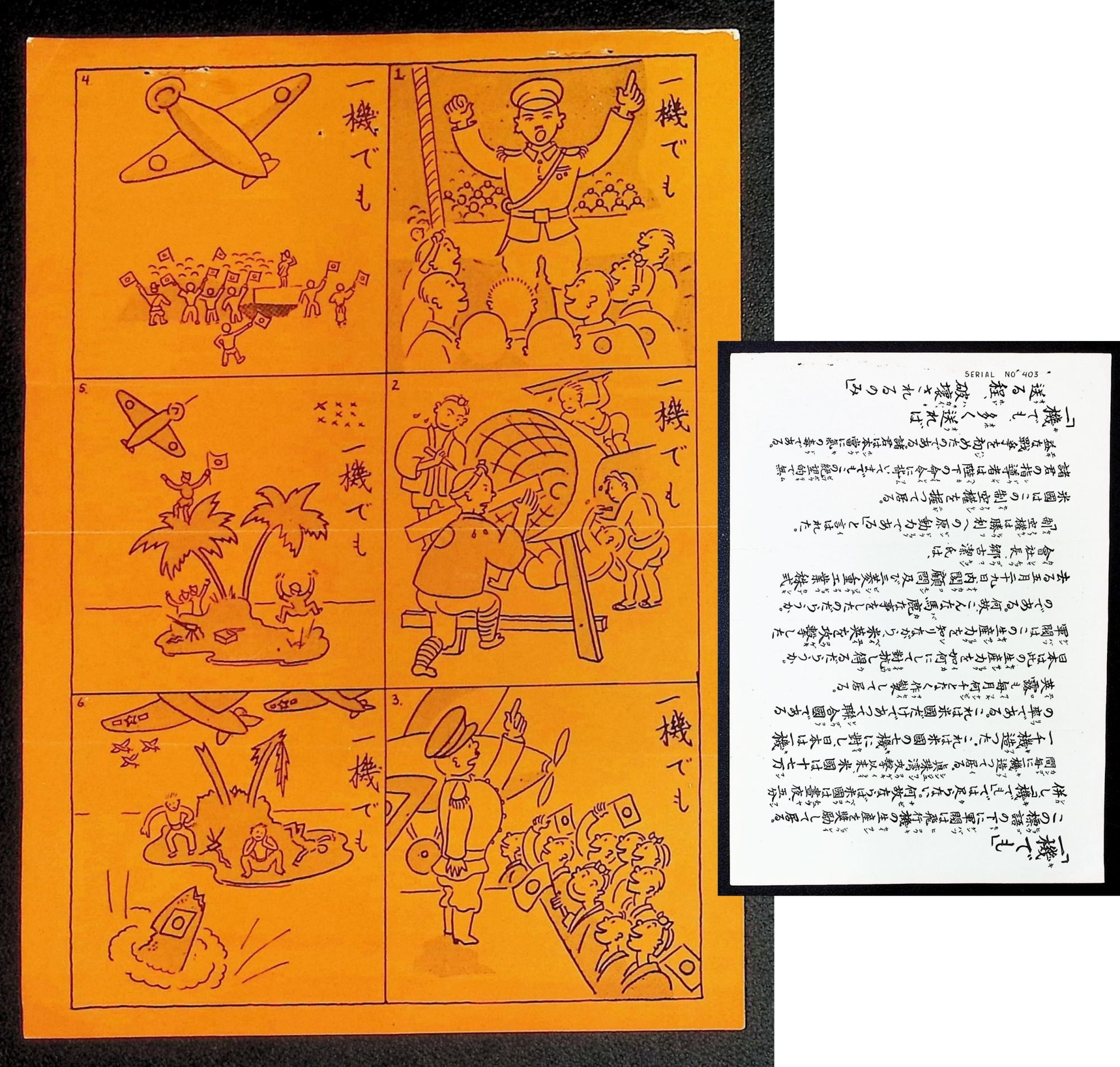
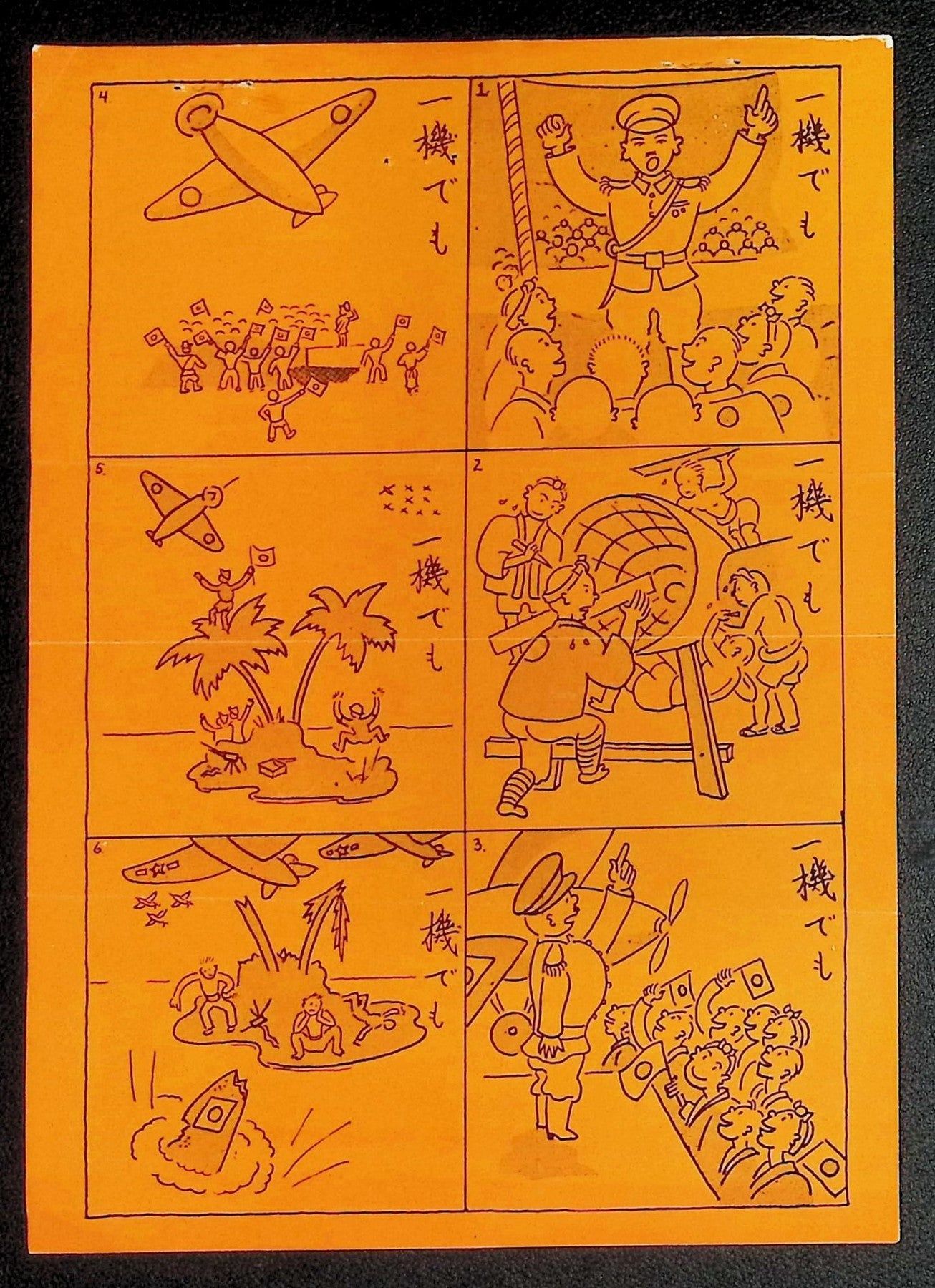
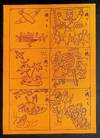
A striking Japanese-language propaganda leaflet produced for aerial distribution during the final stages of World War II. Printed in vivid orange and illustrated with six newspaper-style cartoon panels, the leaflet uses humor and visual storytelling to challenge confidence in Japan's war effort by emphasizing overwhelming American industrial and air superiority.
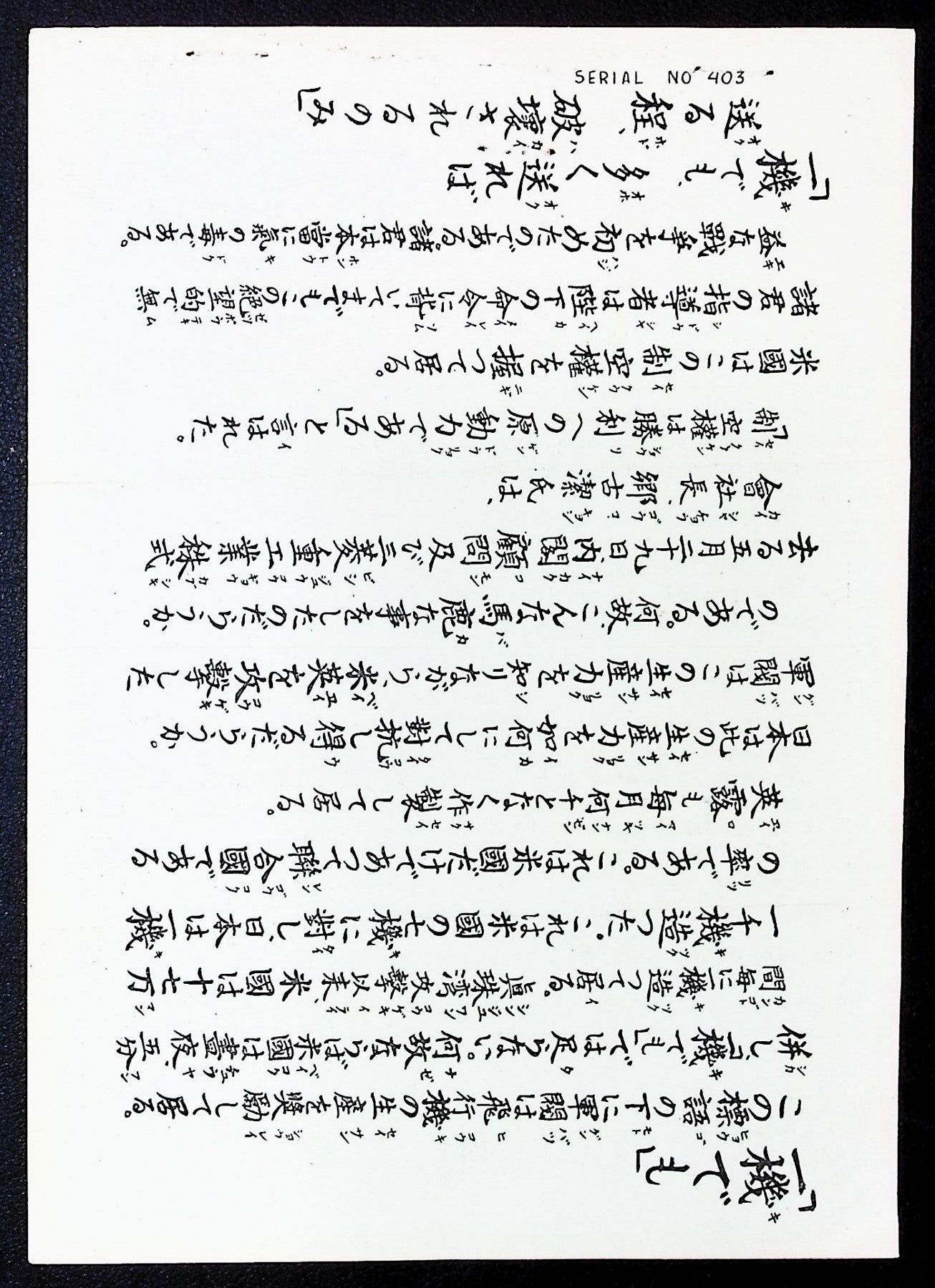
The cartoon sequence follows the construction and deployment of a Japanese fighter aircraft, ultimately depicting its destruction in the Pacific. The message directly targets the wartime slogan 'Even One More Plane,' arguing that Japan's efforts could not compete with American production capacity. Designed for broad readability, the text includes furigana reading aids and was printed on water-resistant paper suitable for field distribution.
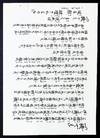
PHYSICAL DESCRIPTION: Single-sheet propaganda leaflet printed on lightweight water-resistant paper for aerial dissemination. Measures approximately 5.75 x 8 inches. One side printed in bright orange with six illustrated cartoon panels; verso printed in Japanese text with furigana and headed 'Serial No. 403.'
Original distribution folds are no longer visible. Nearly invisible staple holes at the upper edge with faint adhesive residue from military bundling, as issued.
CONDITION: Near Fine. Original military distribution evidence remains visible in the form of tiny staple holes at the upper edge and faint adhesive residue. No significant tears, losses, staining, or distracting creasing. An exceptionally attractive example of a fragile wartime leaflet. Paper remains clean with bright color and strong visual appeal.
ATTRIBUTION NOTE -
Serial No. 403 is generally attributed to the Far Eastern Liaison Office (FELO) operating under General MacArthur's Southwest Pacific Area command. However, attribution remains a matter of scholarly discussion. A historian associated with the PSYOP Veterans Association reports that surviving OWI-Saipan records identify this issue as an Office of War Information leaflet. Pending independent verification of those files, we describe the leaflet as FELO/SWPA - probable; OWI-Saipan - possible.
The balance of currently available evidence favors FELO/SWPA origin. The leaflet's format, serial numbering, waterproof paper, Japanese-language comic-strip presentation, and furigana closely match documented FELO production practices. The leaflet is recorded in the Sandberg-Hallgren FELO series and is referenced by Allison B. Gilmore in Psychological Warfare in the Pacific: The Allied Propaganda Campaign against Japan, which identifies 'FELO, SWPA, Serial No. 403' among known FELO issues. Additional comparative examples appear in Australian War Memorial holdings and the Hover Archive of FELO Japanese-language propaganda leaflets. The PSYOP Veterans Association, however, lists the leaflet as OWI, reflecting the overlapping and cooperative nature of Allied psychological warfare operations during the final years of the Pacific War.
HISTORICAL SIGNIFICANCE -
Serial No. 403 reflects the increasingly sophisticated psychological warfare campaigns employed by Allied planners during the final years of the Pacific War. Using comic-strip imagery, industrial statistics, and accessible Japanese text with furigana, it sought to undermine confidence in Japan's war effort by emphasizing overwhelming American air and industrial superiority.
Distributed by air to military and civilian audiences, the leaflet demonstrates how graphic design, mass communication, and military strategy converged in one of the largest propaganda campaigns of the Second World War.
SUBJECTS: Allied Propaganda, Japanese Surrender Appeals, Far Eastern Liaison Office (FELO), OWI-Saipan Operations, Air Superiority Campaigns, U.S. Navy Airdrop Leaflets, Pacific Theater Intelligence, WWII Communication History, Military Ephemera, World War II History, Propaganda Studies, Psychological Warfare, Pacific War Collectibles, Military Ephemera, World War II History, Psychological Warfare, Propaganda Studies.



![Blind Horse Books [ABAA - FABA] logo](https://d3525k1ryd2155.cloudfront.net/bookseller_images/1354016-logo.jpg)

