Skip to content
Have questions? Liber Antiquus is online now!
Virtual Book Fair Exclusive

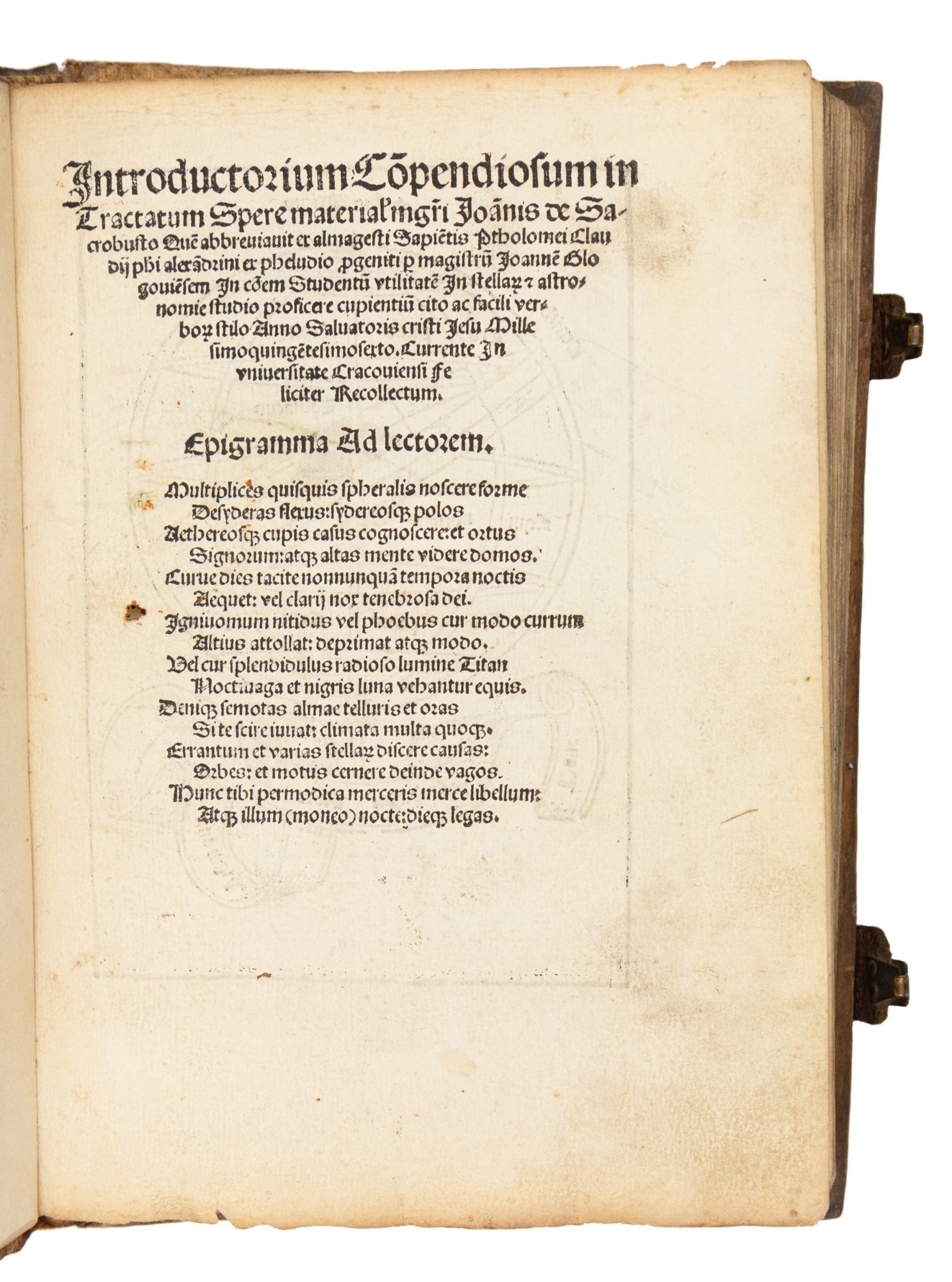
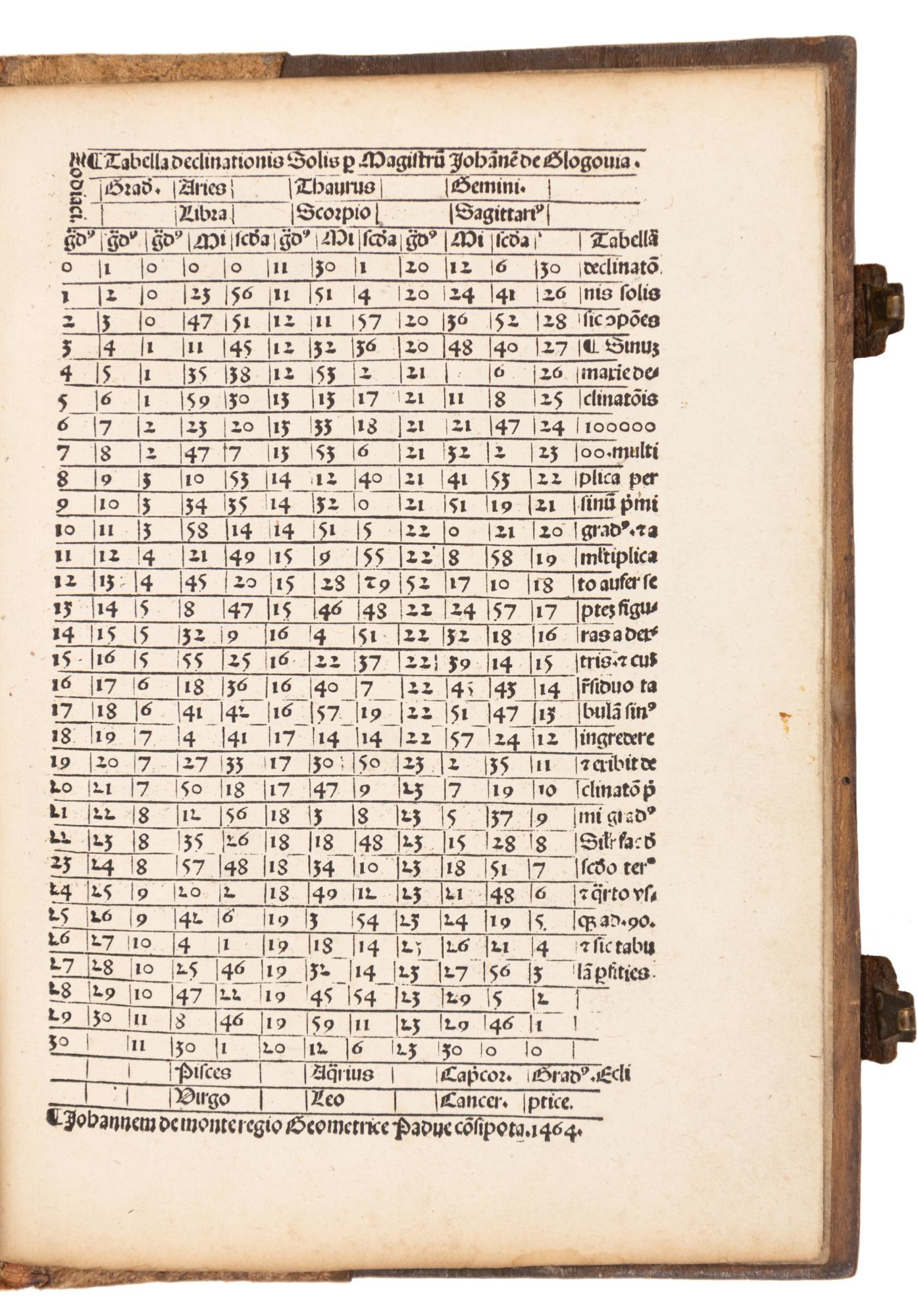
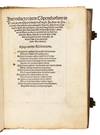
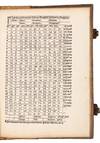
Introductorium Compendiosum in Tractatum Spere Materialis magistri Joannis de Sacrobusto. Quem abbreviavit et almagesti Sapientis Ptholomei Claudii philosophi Alexandrini ex Pheludio progeniti a magistrum Joannem Glogoviensem feliciter recollectum. [With a table of the declination of the Sun, with canon, on m6 recto]

ASTRONOMY. Johann von Glogau (Głogów) (1445-1507)

$45,000
Offered by Liber Antiquus
  • Condition: Fine
  • Edition: FIRST EDITION of Johann of Głogów’s commentary on the Sphere
  • Binding: Hardcover
  • Publisher: [Jan Haller], 28 April
  • Location: Krakow
  • Date: 1506
  • Seller SKU: 5225

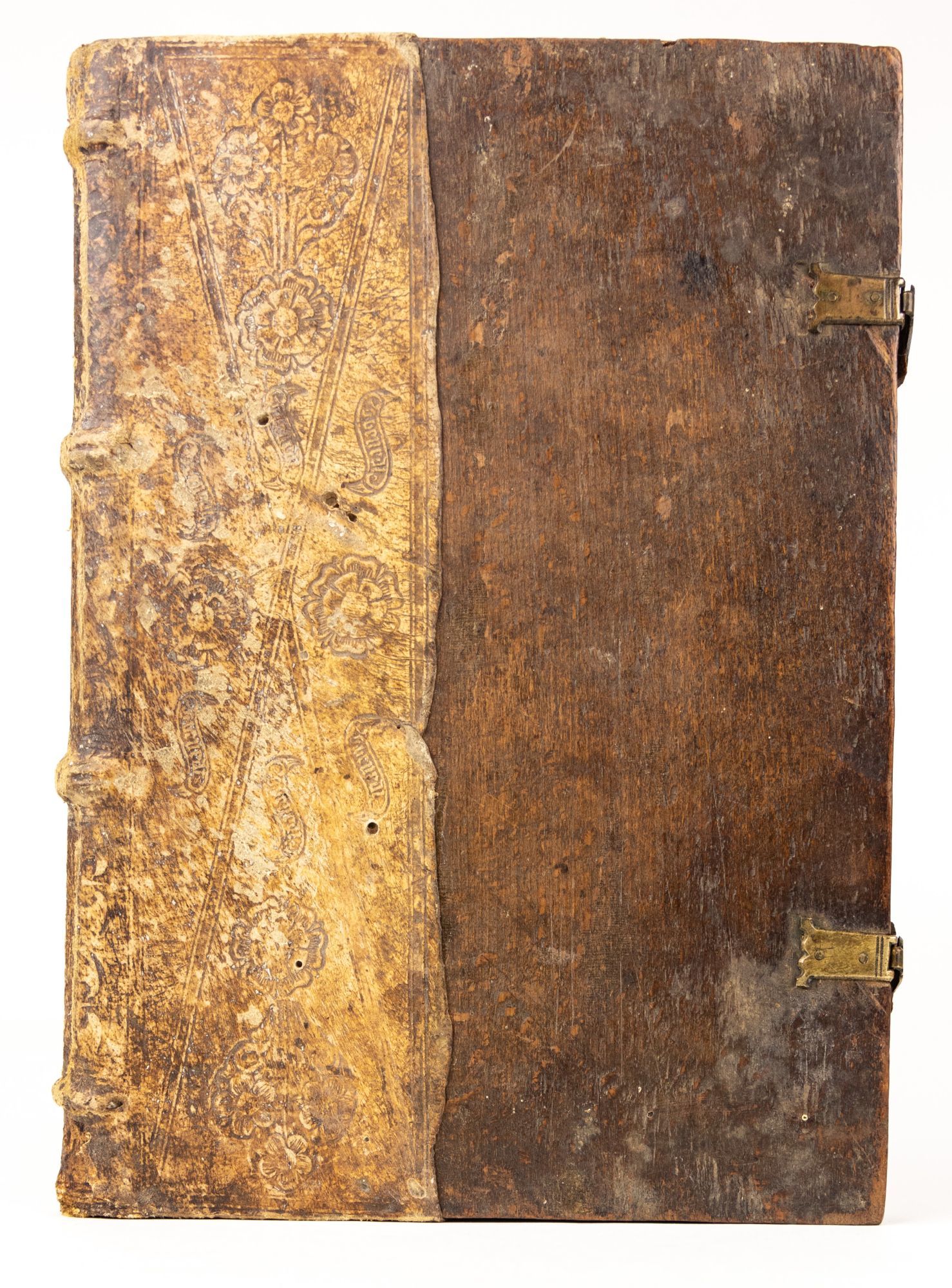
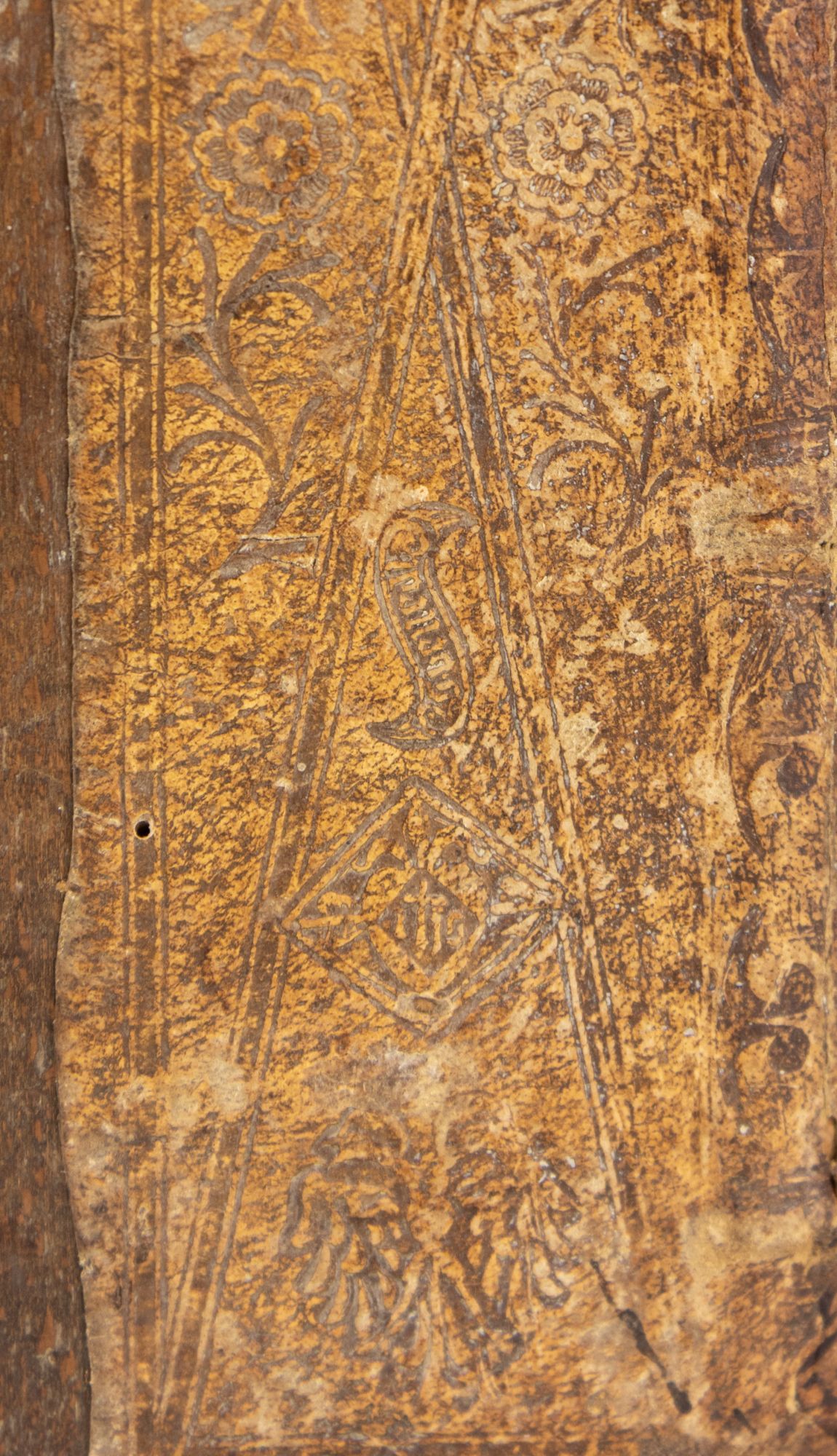
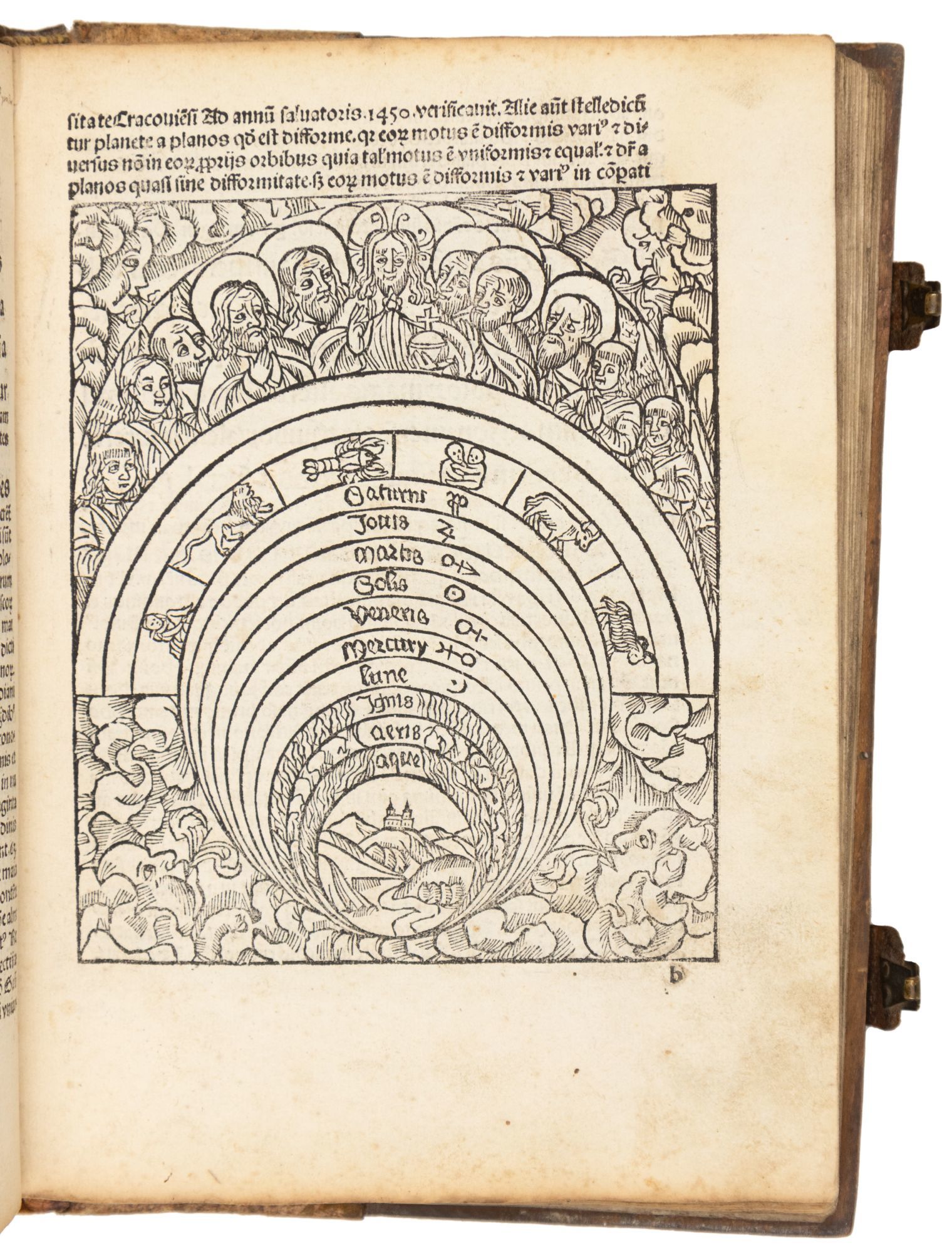
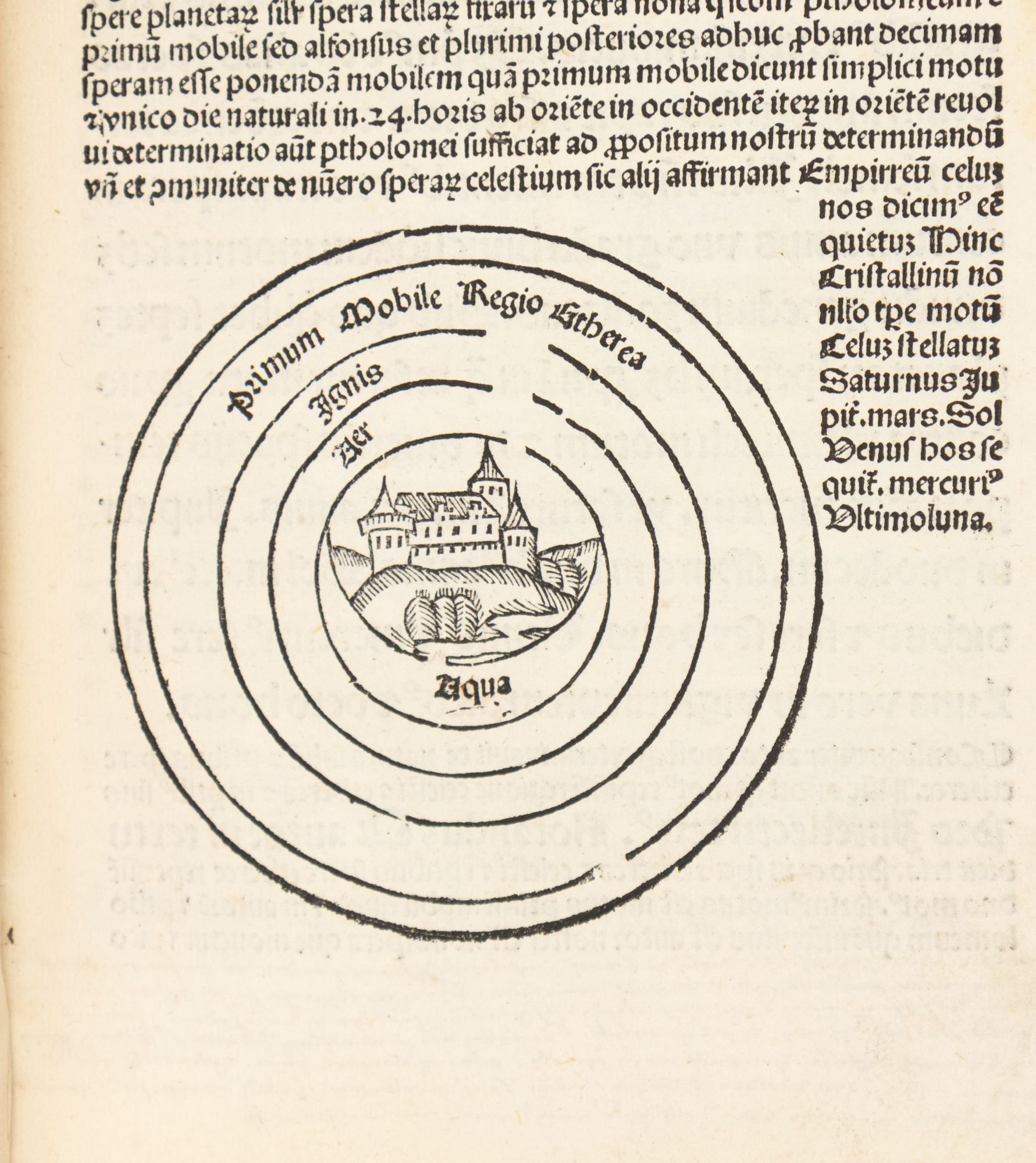
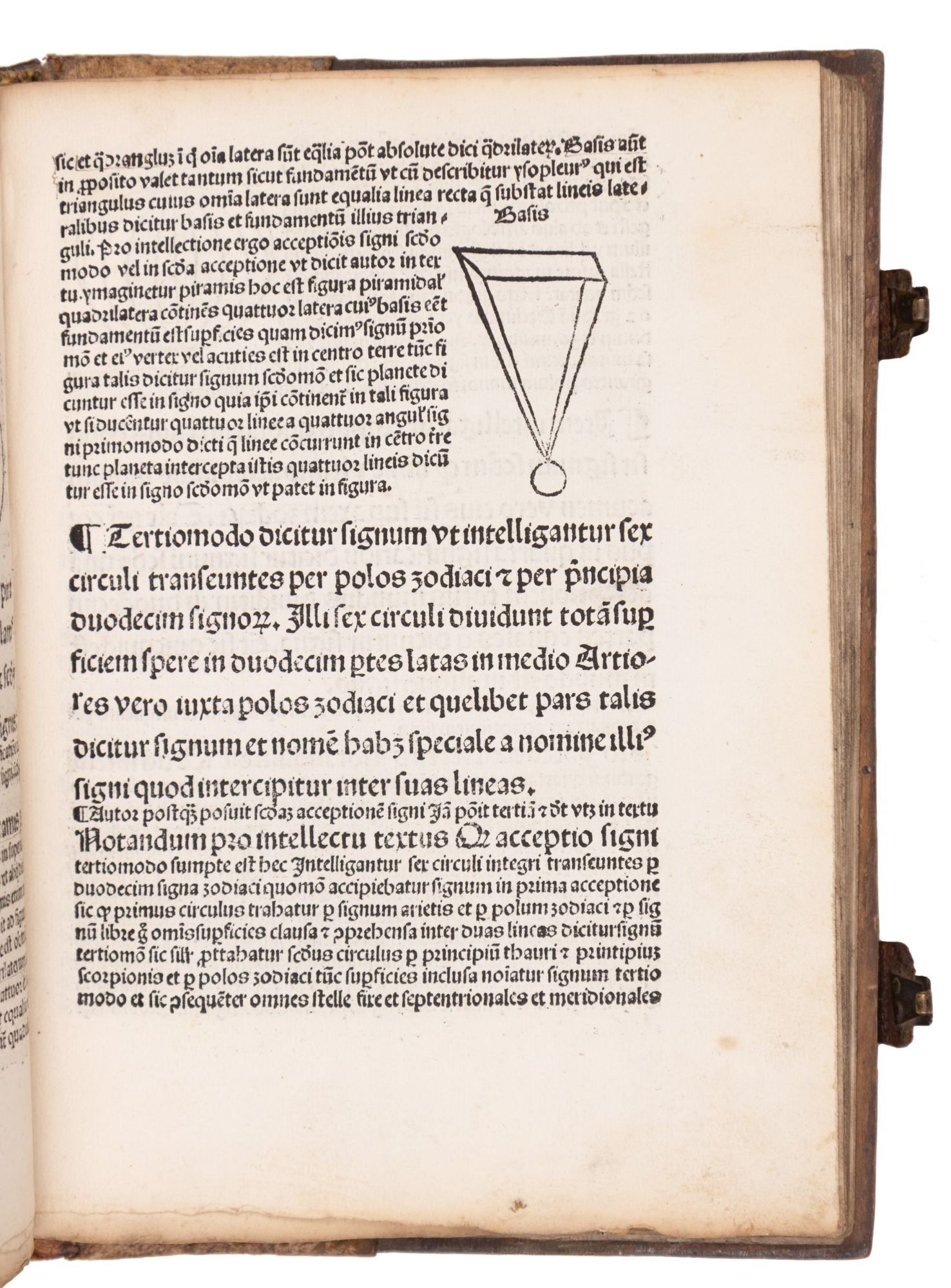
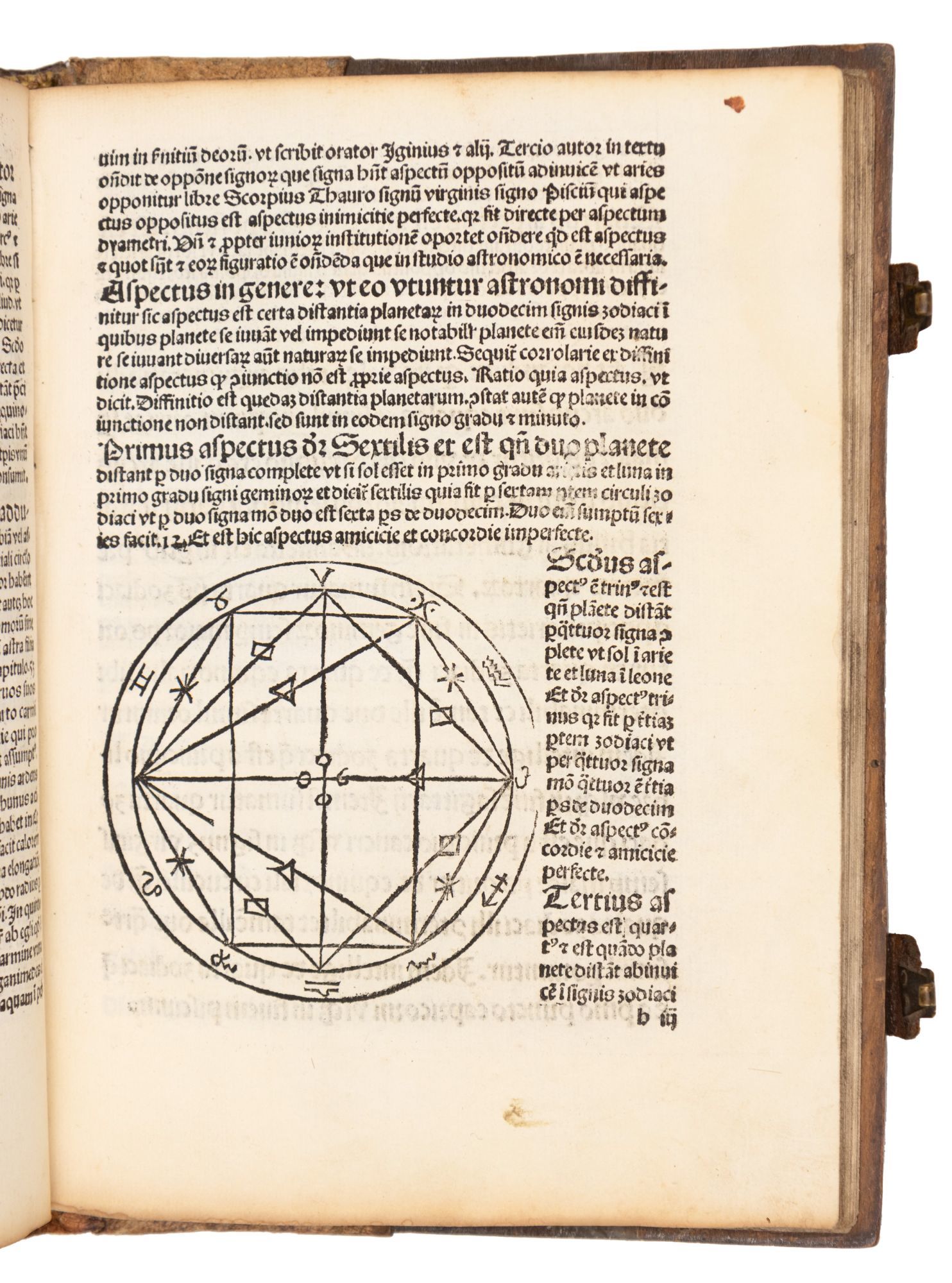
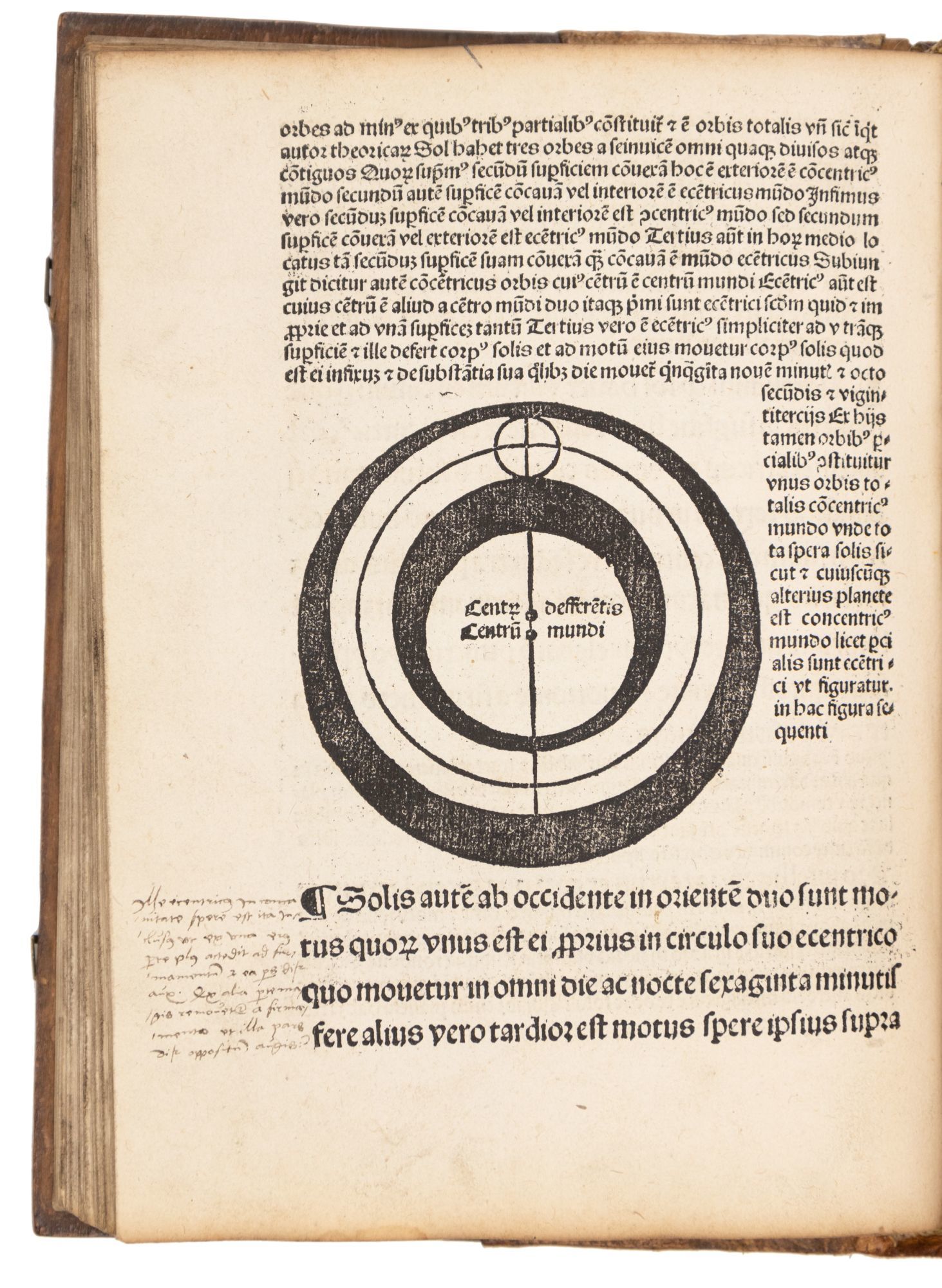
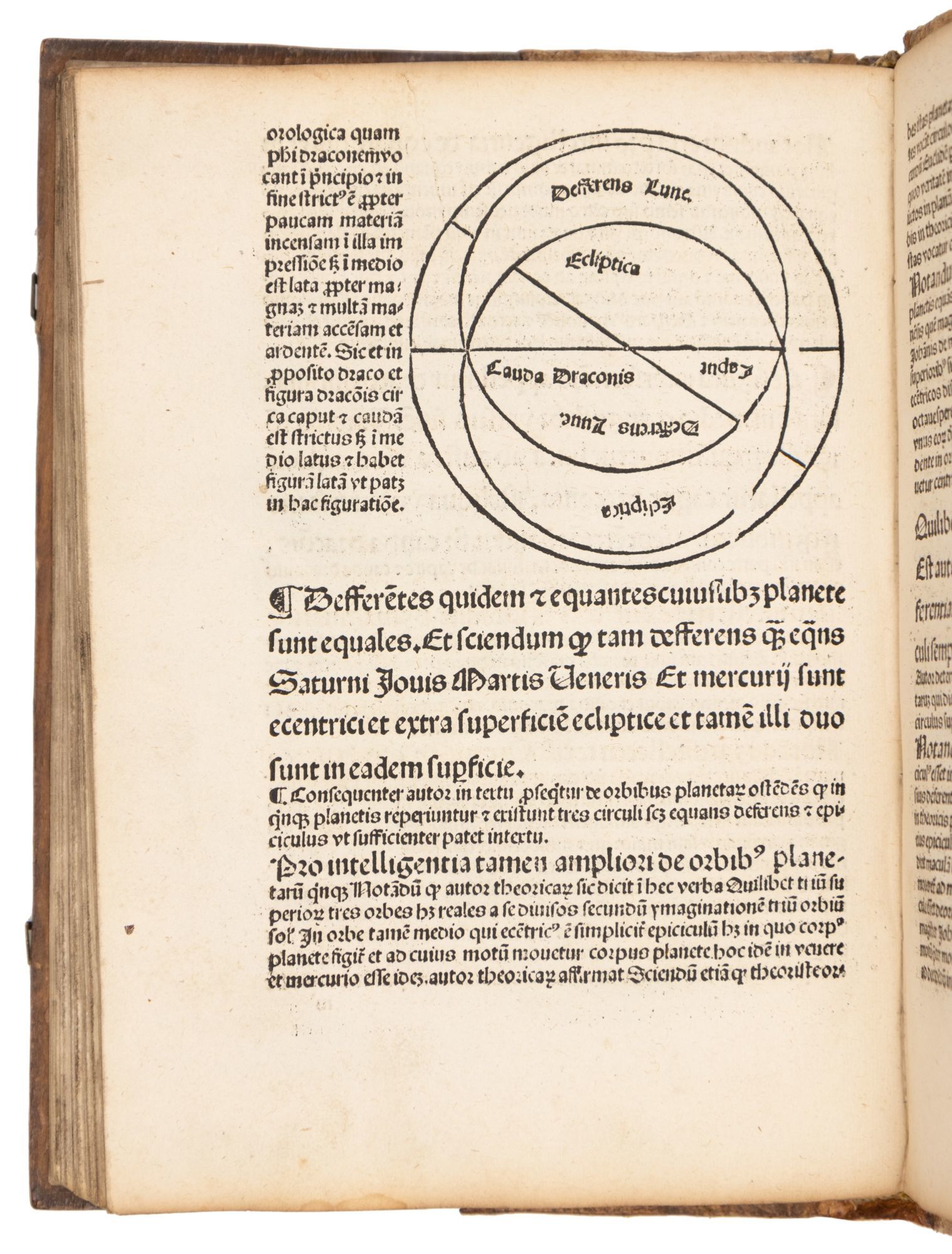
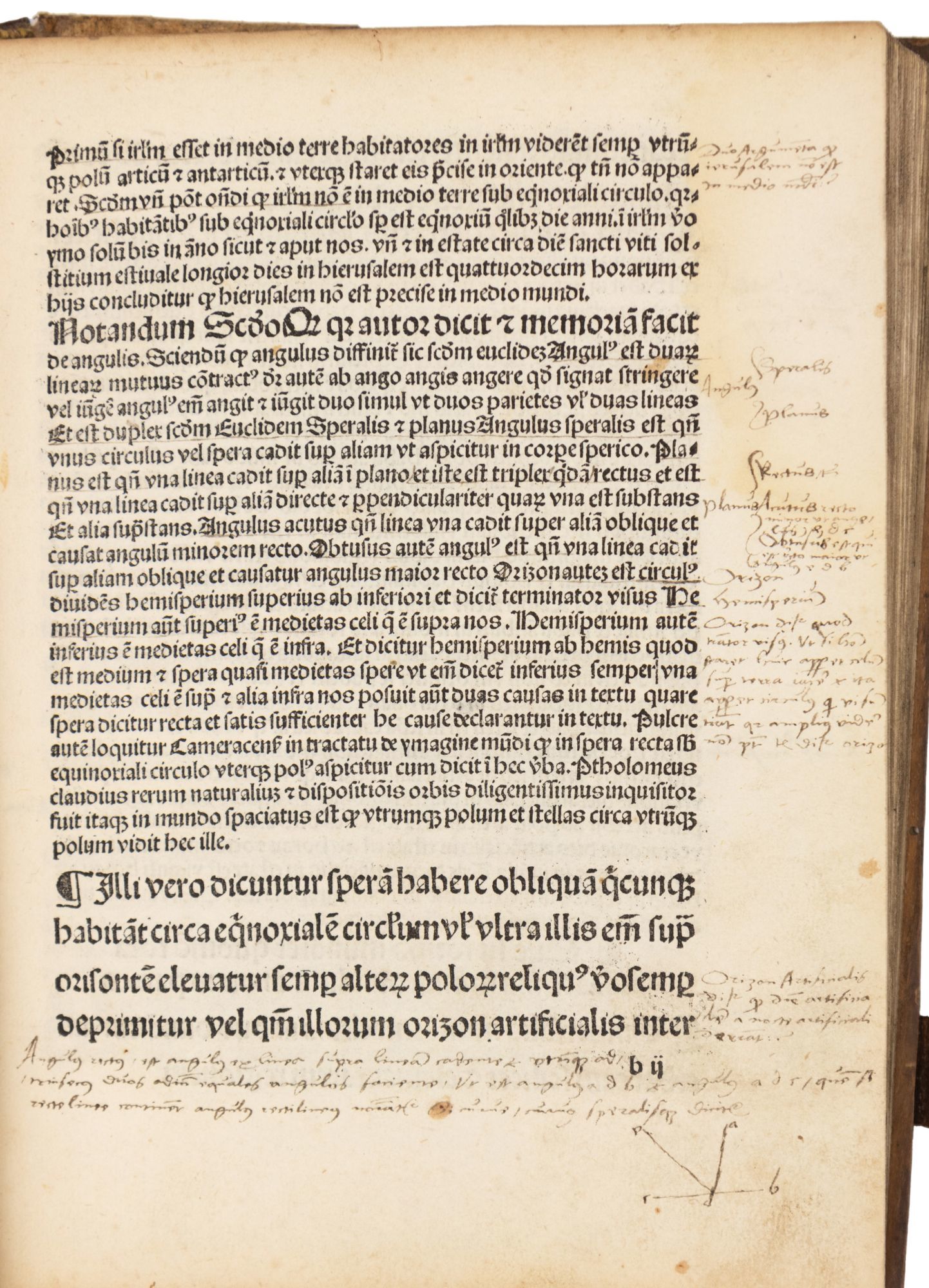
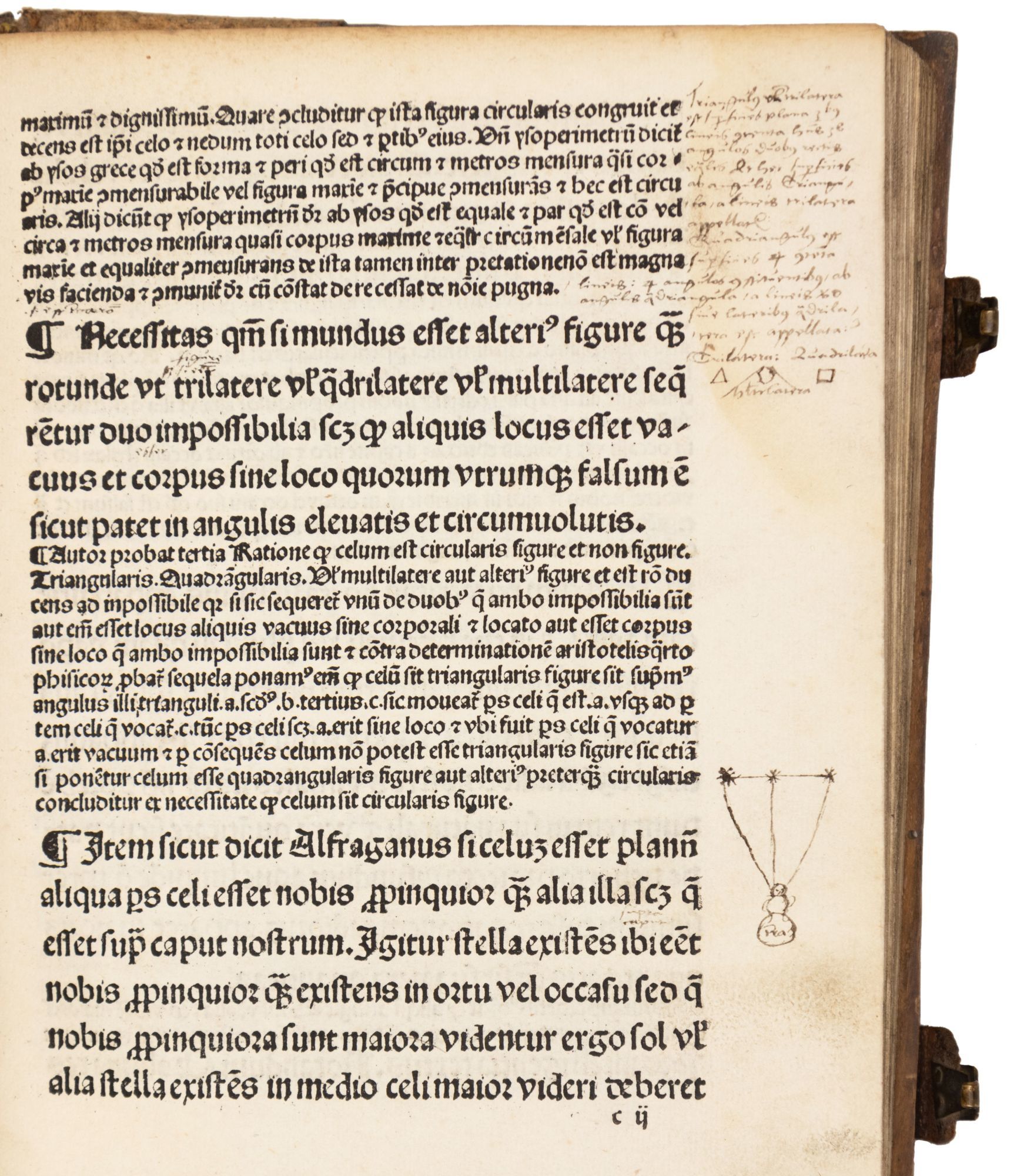
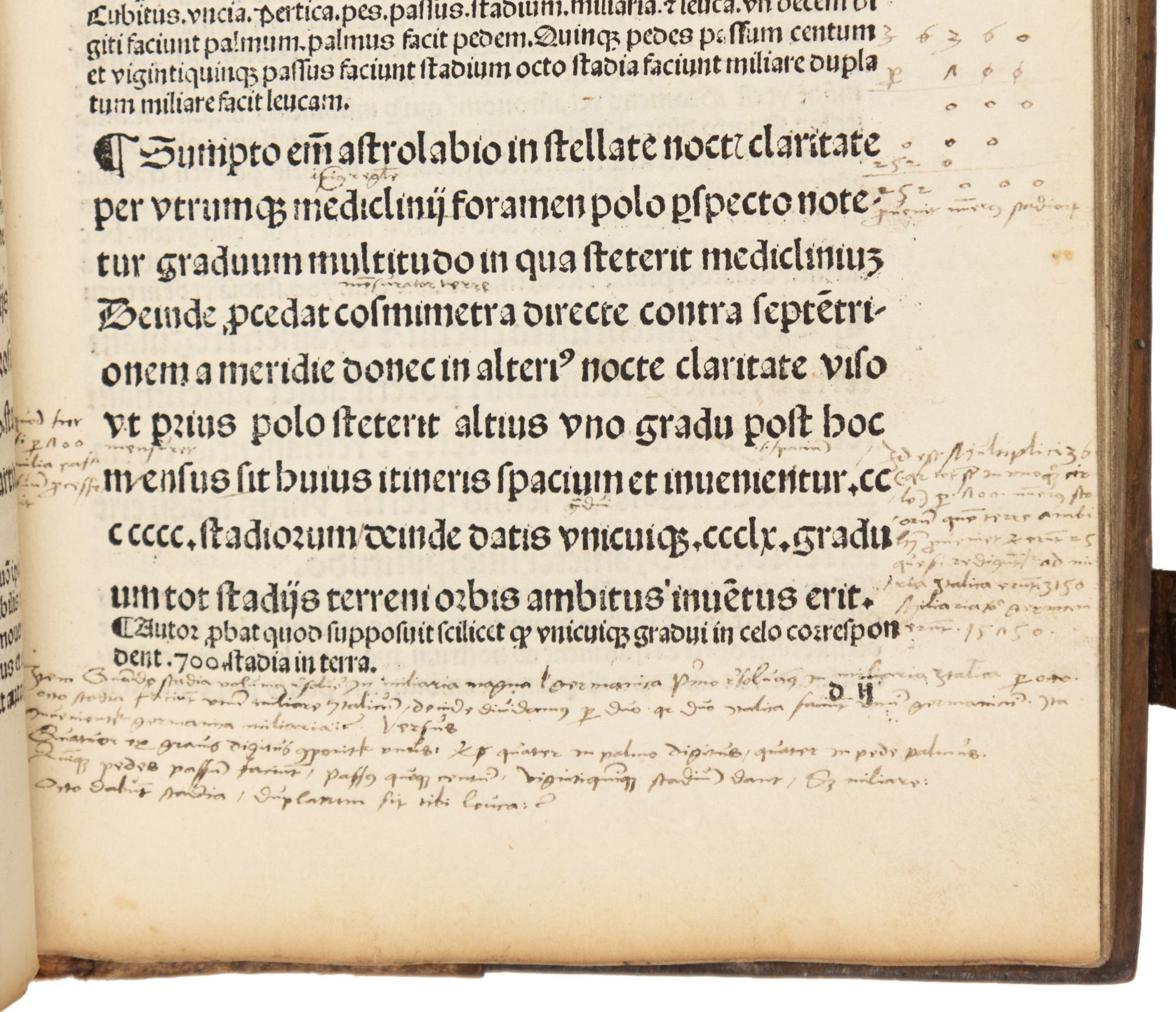
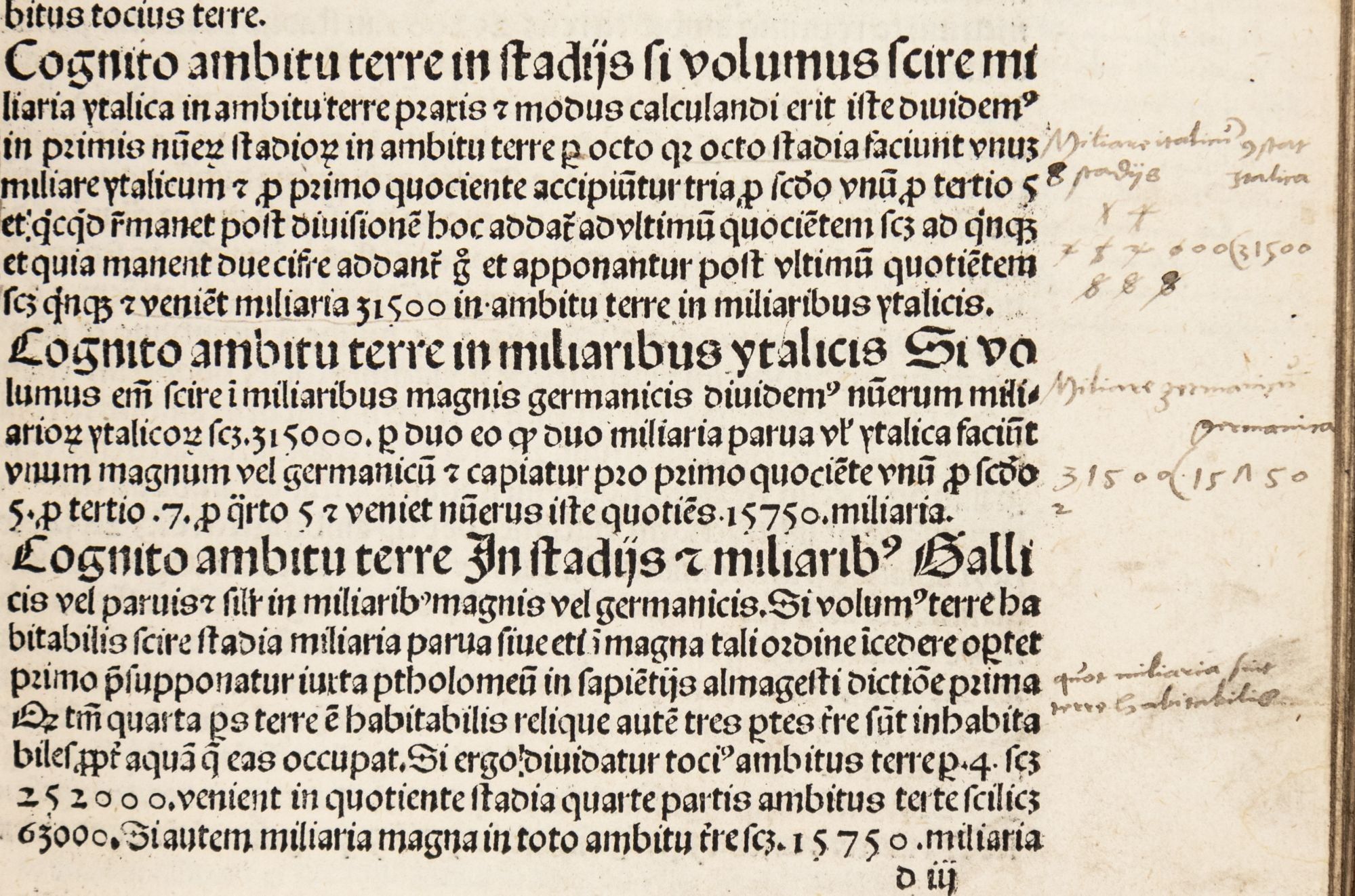
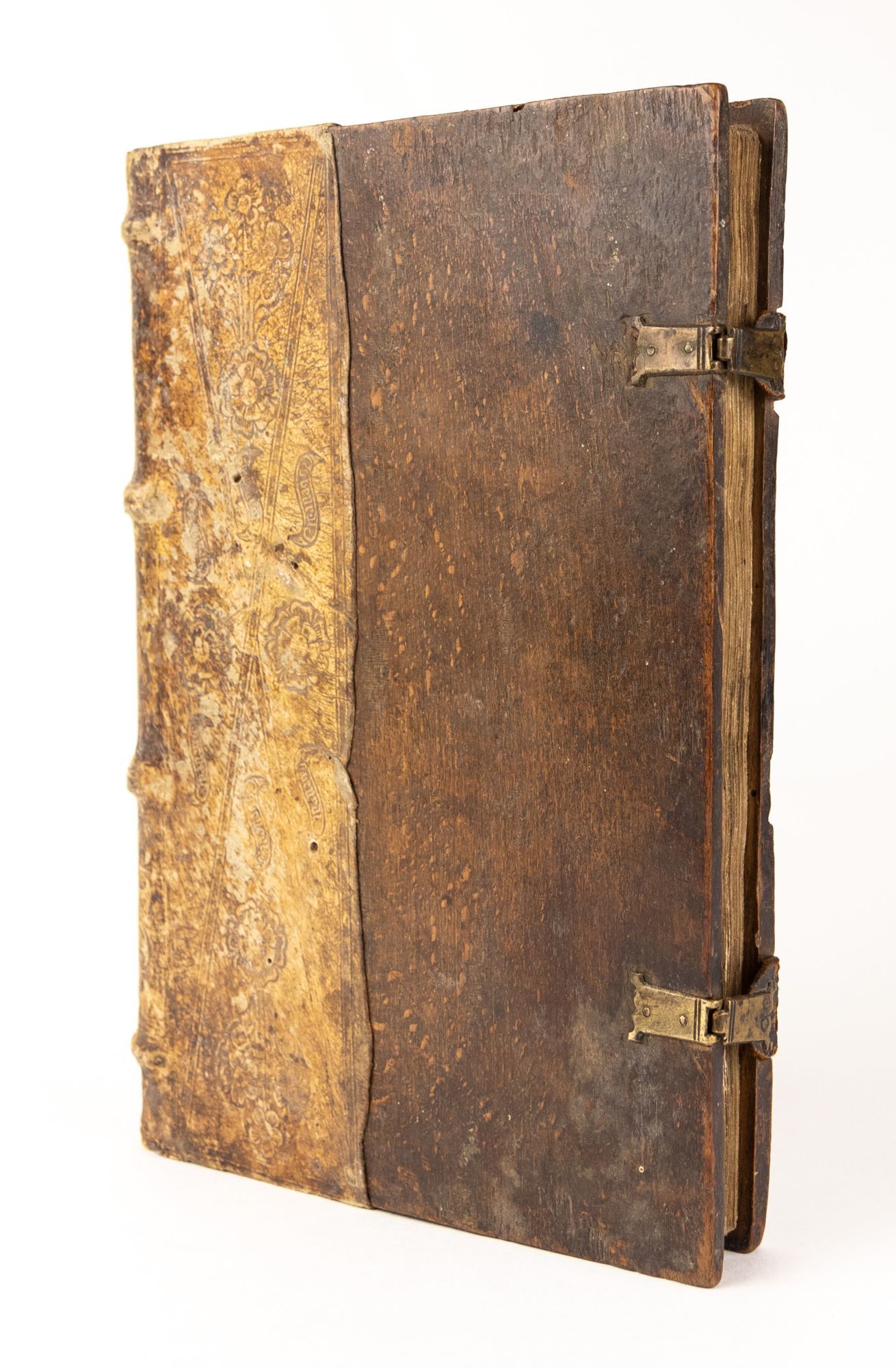
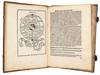
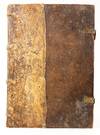
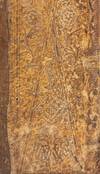
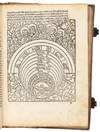
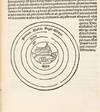
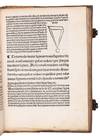
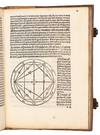
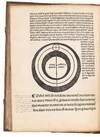
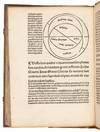
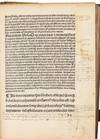
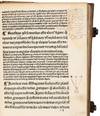
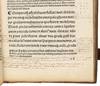
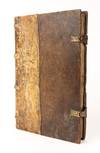
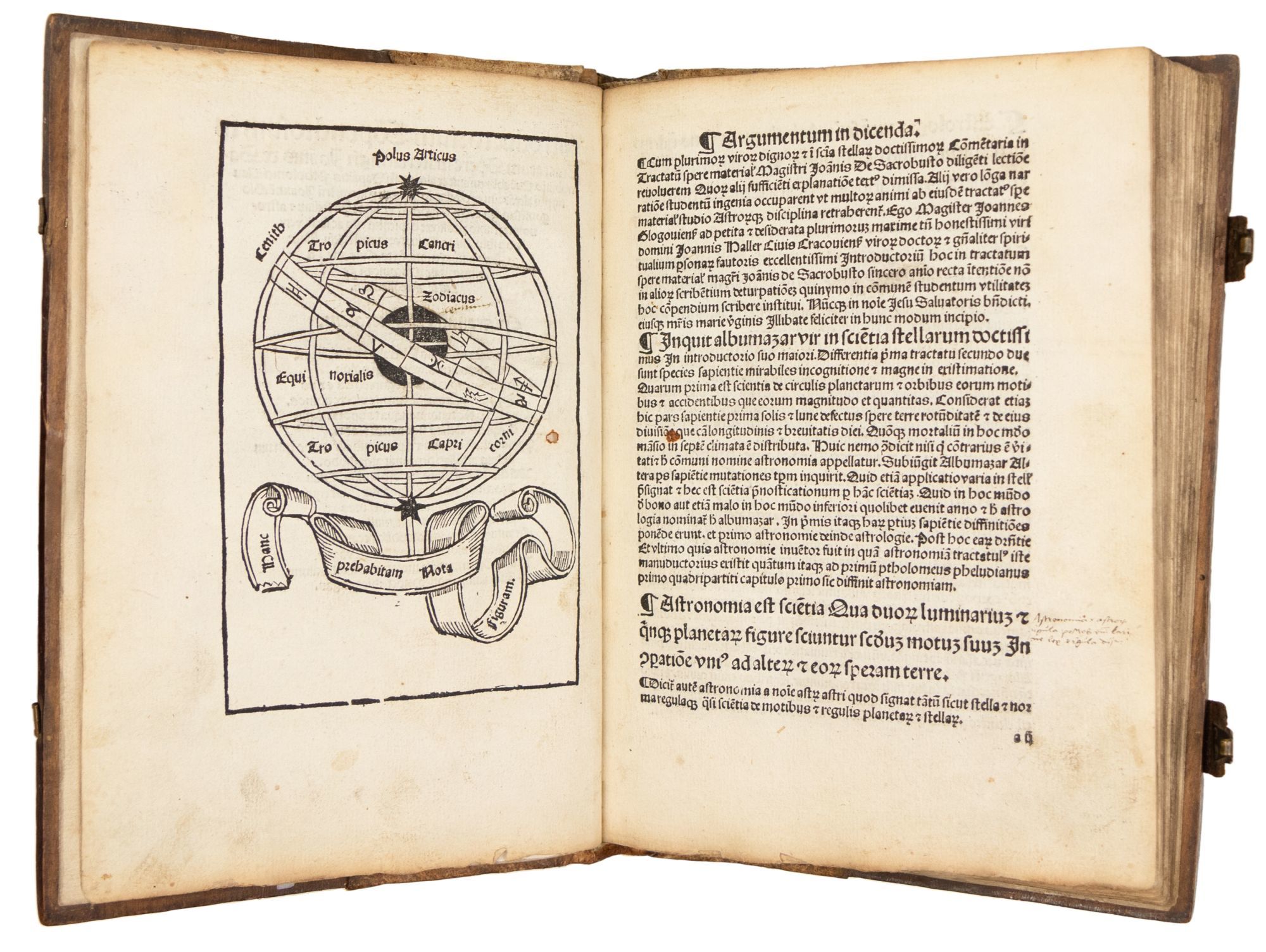
Krakow: [Jan Haller], 28 April, 1506. FIRST EDITION of Johann of Głogów's commentary on the Sphere of Sacrobosco. Hardcover. Fine. Illustrated with a full-page woodcut of an armillary sphere on the verso of the title page and another large woodcut on B1 recto, showing the spheres of Earth, the elemental zones, the spheres of the planets, and above them, the zodiac. This diagram of Creation is overseen by Christ as Pantocrator flanked by saints. Other, smaller diagrams (including one showing retrograde motion) appear in the text. This is an excellent copy, bound in its first binding of strictly contemporary quarter pigskin over quarter-sawn wooden boards. The pigskin is ruled and tooled in blind with fine floral tools, blind-stamps of a double-headed eagle, a banner, and a diamond with Christ's monogram IHS in the center. Both clasps and catch-plates are preserved and are in good working order. This is a large copy with numerous deckled edges preserved and printed on heavy paper. A contemporary owner has made annotations in the margins in a neat hand. The fine woodcut armorial bookplate of the jurist (I. U. D.) Ludovicus Romanus, dated 1575, is affixed to the front pastedown. The book was printed by Jan Haller, who, three years later, in 1509, printed Copernicus' first book, a translation from the Greek of Theophylactus.

"John of Głogów was one of the most important lecturers in Cracow at the time Copernicus was a young student there. Although Głogów taught only one course, in the summer of 1492, that Copernicus might have taken, Copernicus heard lectures from various of the masters that Głogów had trained."(Owen Gingerich)

Głogów began his studies at the University of Krakow in 1462, at the age of 16. In 1468 he achieved his magister atrium degree and began to teach. From 1468 until his death almost forty years later, Głogów taught grammar, Aristotelian logic, physics, physiology, geography, and astronomy at his alma mater.

In the course of his long career, Głogów authored many books on astronomical and astrological subjects, many of which were reprinted after his death in 1507. They include astrological calendars, almanacs, iudicia (including forecasts for comets in 1472, and for lunar eclipses in 1476 and 1504), and a special horoscope for King Matthias Corvinus of Hungary in 1485. He also composed tracts on the 48 constellations, a Summa Astrologiae in three parts, tables for the motions of the planets calculated for Cracow, a tract on comets, an introduction to ephemerides -and another to the reading of astronomical tables, a theoricae of the moon, as well as two tracts concerning the human body: the first focused on the development of the body in utero; the second on the period of fetal gestation.

Głogów also composed a praxis on Regiomontanus' 'Tabulae directionum et profectionum' of 1490. In the late 1480's, Głogów authored a short tract (tractatulus) on Sacrobosco's sphere, a forerunner to the full commentary of 1506.

The New World:

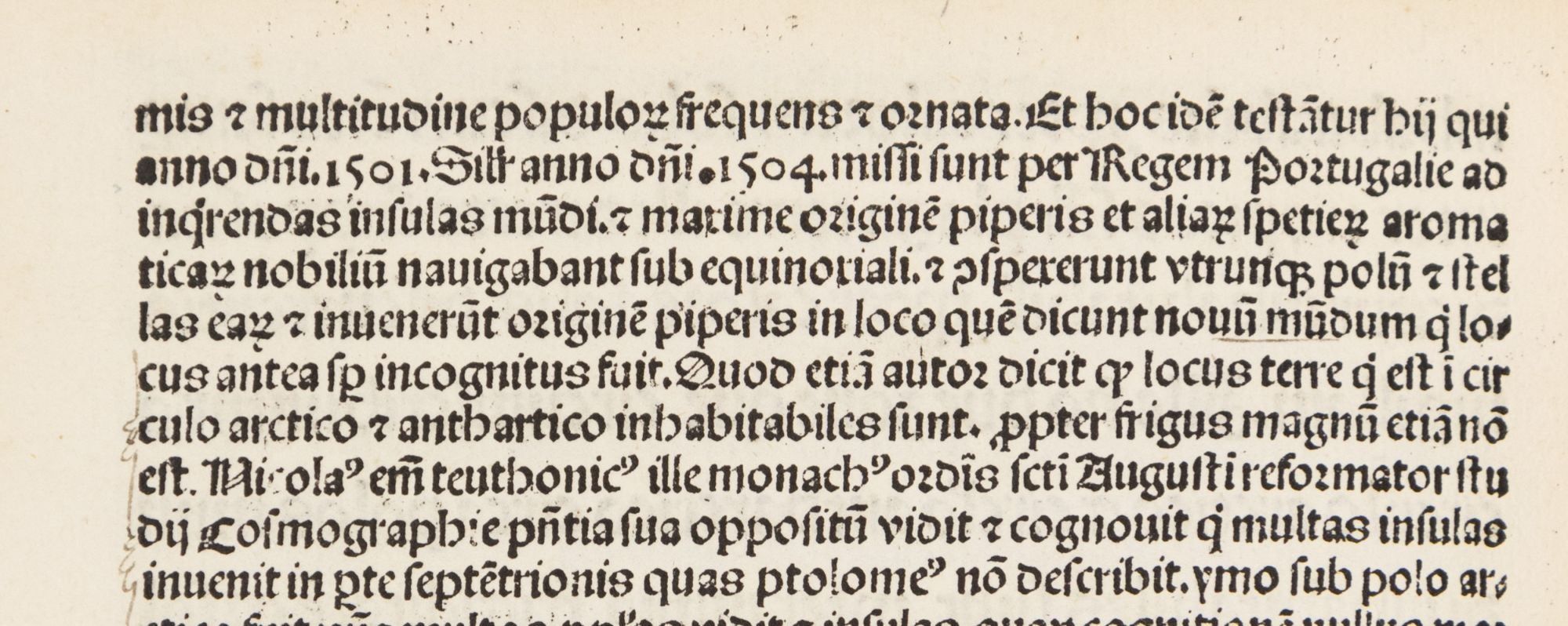
Głogów's commentary is of particular importance as an Americanum, for it is the first book printed in Poland to describe the discovery of the New World. We know that Głogów was intensely interested in world geography. According to Dr. Teresa Borawska, Głogów lectured on the discoveries of Columbus in 1494. Głogów's copiously annotated copy of the 1486 Ulm edition of Ptolemy's Geography, edited by Nicolaus Germanus (on whom see below), is still preserved in Cracow (Biblioteka Jagiellon ́ska, Inc. 821) The passage, derived from reports of the Amerigo Vespucci's expeditions to South America, was printed a year before Martin Waldseemüller published a Latin translation of one of those reports in a booklet intended to accompany his world map, the first map to use the name America to identify the New World.

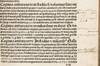
"The passage on the New World begins on folio g2 recto, and refers to Vespucci's (putative) expeditions of 1501 and 1504. Refuting Sacrobosco's assertion that the torrid zones between the two tropics and the area beyond the Arctic circle are uninhabitable due to the extreme temperatures, the commentator cites the island of Trapobana (Ceylon), which is situated on the equator and yet densely populated, and continues: "And the same thing is confirmed by those who in the year 1501 and similarly in the year 1504 were sent by the King of Portugal to discover the origin of pepper and other aromatic spices. They sailed beyond the equator and saw both celestial hemispheres and their stars and they found the origin of pepper in a place that they called the New World, which was hitherto unknown.

"Glogau goes on to state, though erroneously, that Dom Nicolaus Germanus (ca. 1420-ca. 1490), the Benedictine cartographer and editor of Ptolemy, had traveled to the Arctic regions, where he had seen 'many people and islands which were unknown to any mortal man and were not described by the ancient cosmographers'. Although not himself an explorer, Nicolaus Germanus was responsible for the dissemination of important new cartographical information and concepts, mainly through the publication in Ulm in 1482 of his edition of Ptolemy (based on his own manuscript atlases), the first to include his five modern maps and the first to show Iceland and Greenland. Glogau's description of him here as 'Reformator studii Cosmographie' shows that his achievements were already recognized by his contemporaries."(Christie's 1998).

Offered by Liber Antiquus

Liber Antiquus
Specializing in Architecture And Art, Astronomy, English Literature, Incunabula, Jesuit, Natural History, Reformation, Science and Voyages And Travel.
Welcome. For the past 24 years, I have been selling printed books from the dawn of printing to the Early Modern Period. I also sell manuscripts from the Middle Ages to the Enlightenment.

I am extremely proud to offer these books to both institutional and private clients worldwide. I take great pride in my work and I sincerely appreciate my clients' patronage. It is a dream job, a great honor, and a tremendous pleasure.

If you should find yourself in the Washington DC area, please call me to schedule an appointment. I can be contacted directly at 202-907-7429 or by email at [email protected]

I look forward to hearing from you.

Sincerely,

Paul M. Dowling
Liber Antiquus, Early Books & Manuscripts
Contact the Seller
Paul Dowling
7306 Brennon Lane
Chevy Chase, Maryland 20815
Phone/Text: (202) 907-7429
Items are shipped by FEDEX 2nd Day or Overnight, based on your preference. Institutions are billed net 30 or by individual arrangement, based on your budget and fiscal year restrictions. Please do not hesitate to ask for accommodations. All books may be returned, arriving in the condition in which they were sent, within 7 business days if found wanting.
tracking-