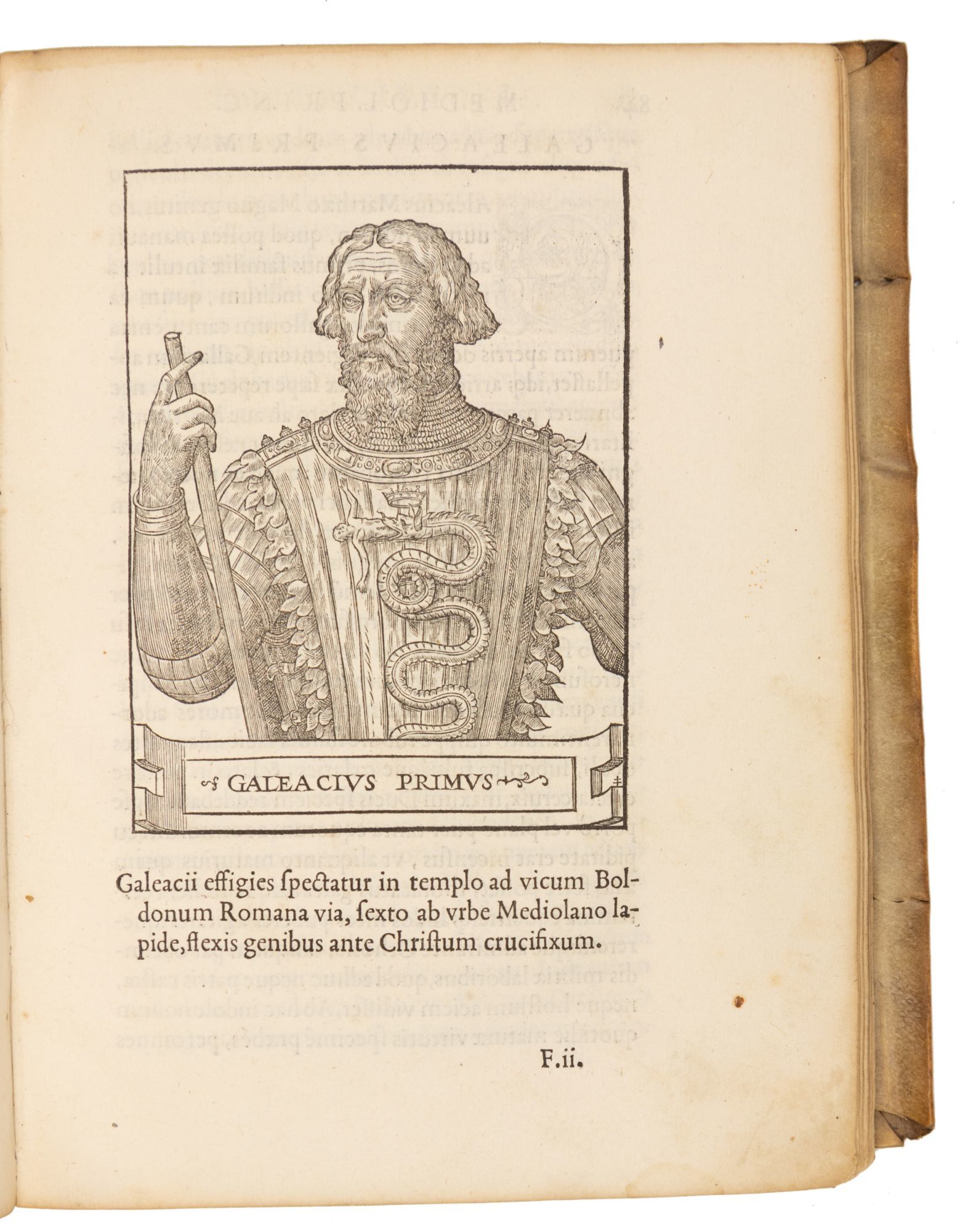
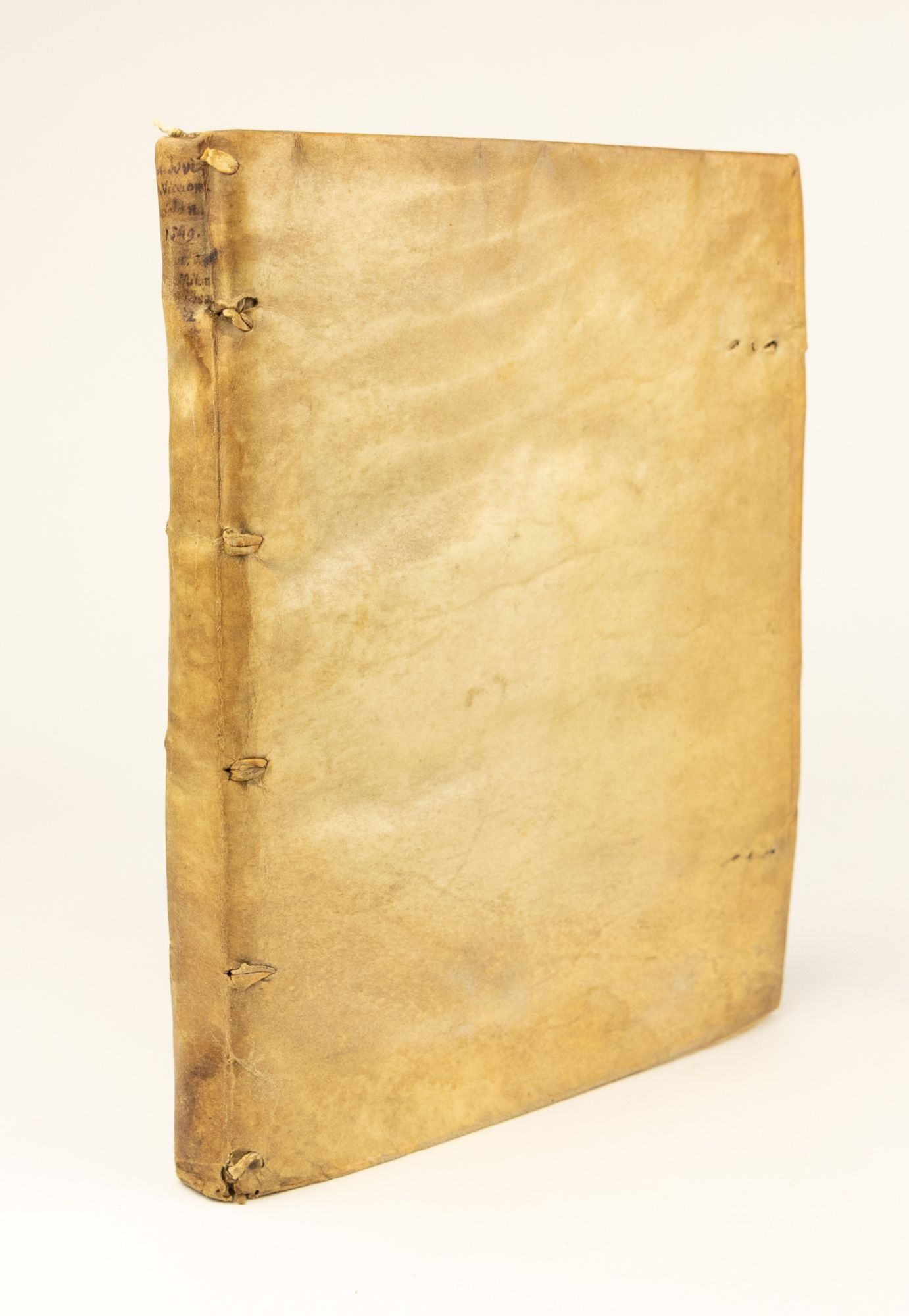
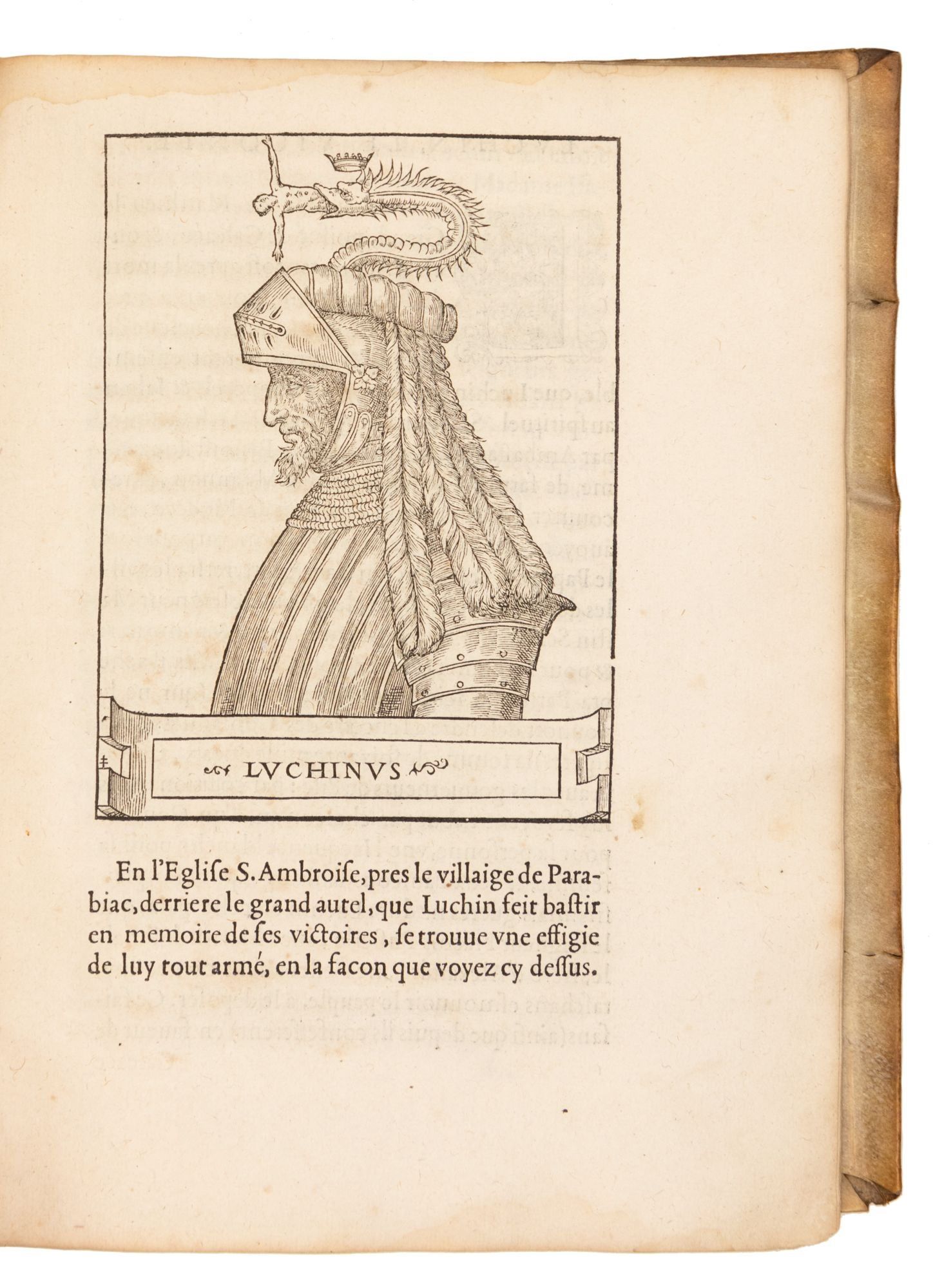
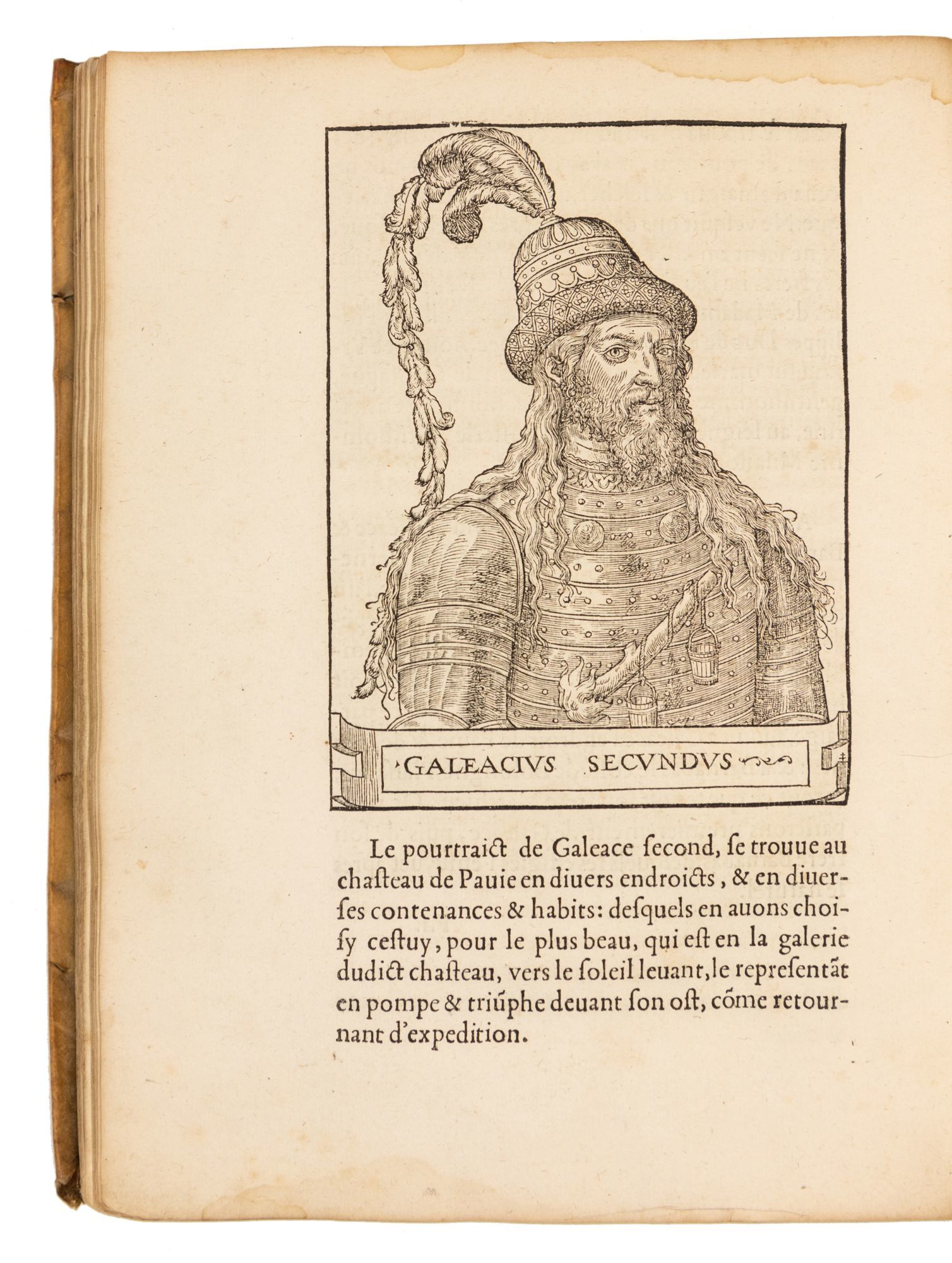
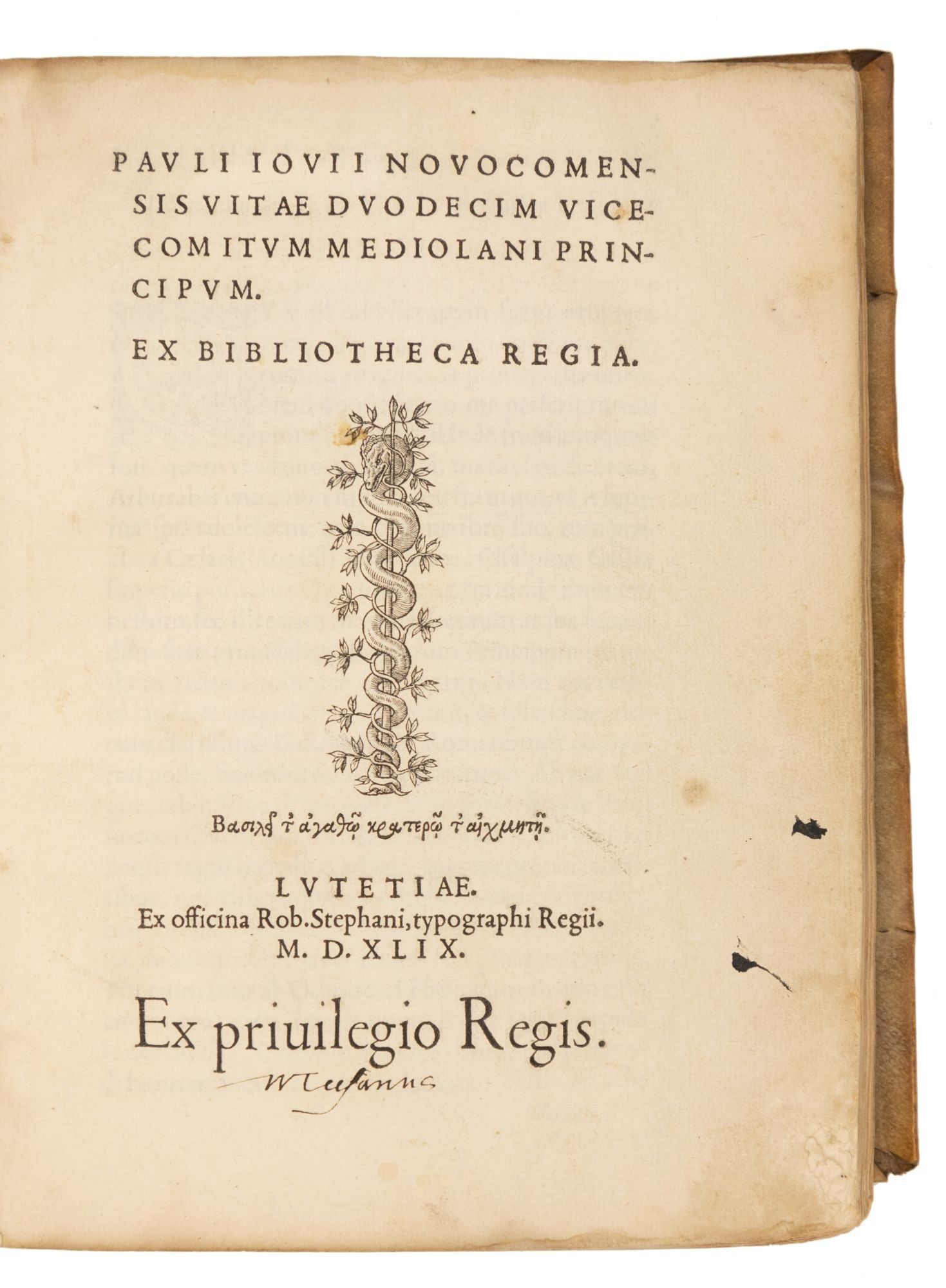
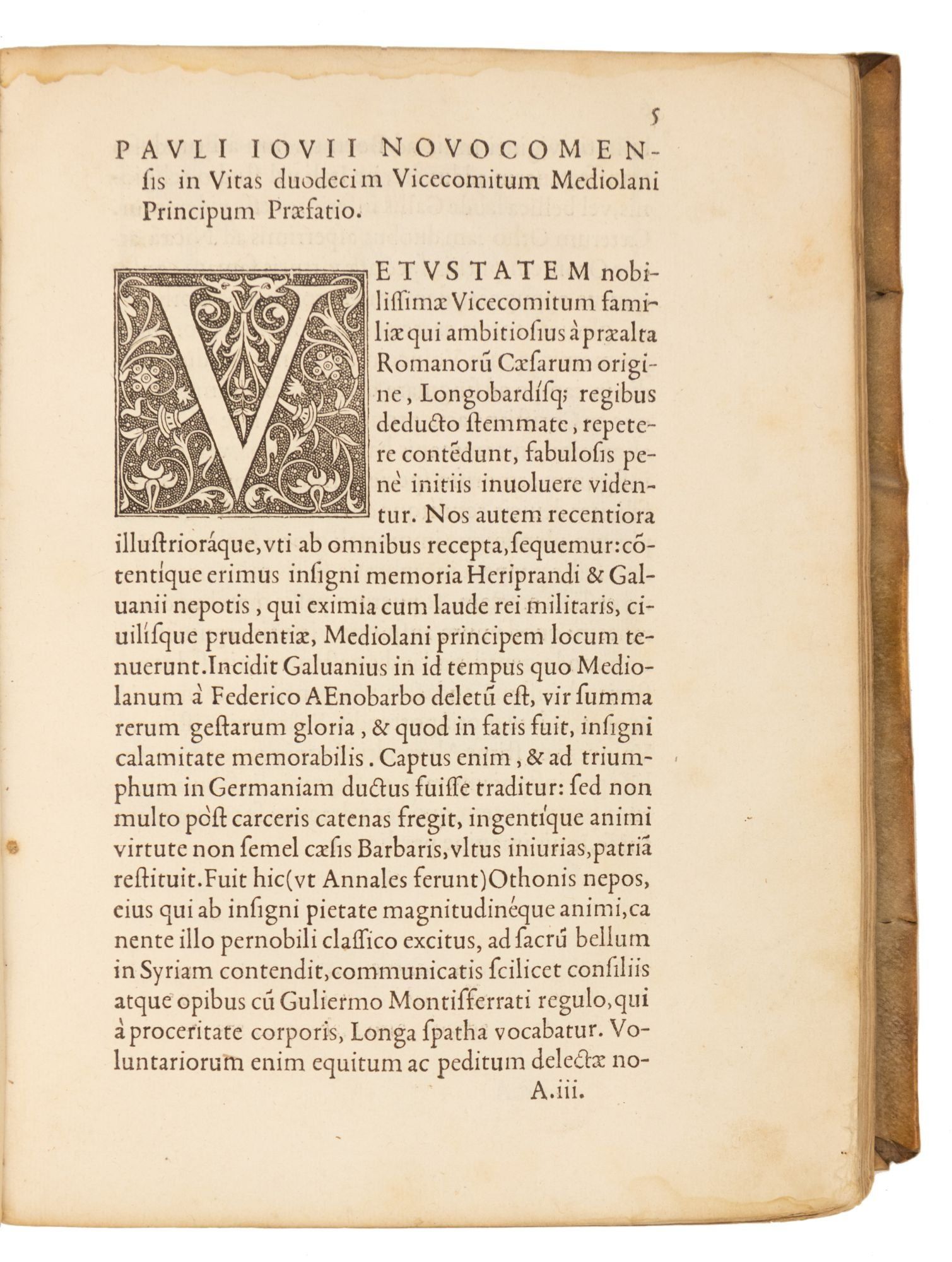
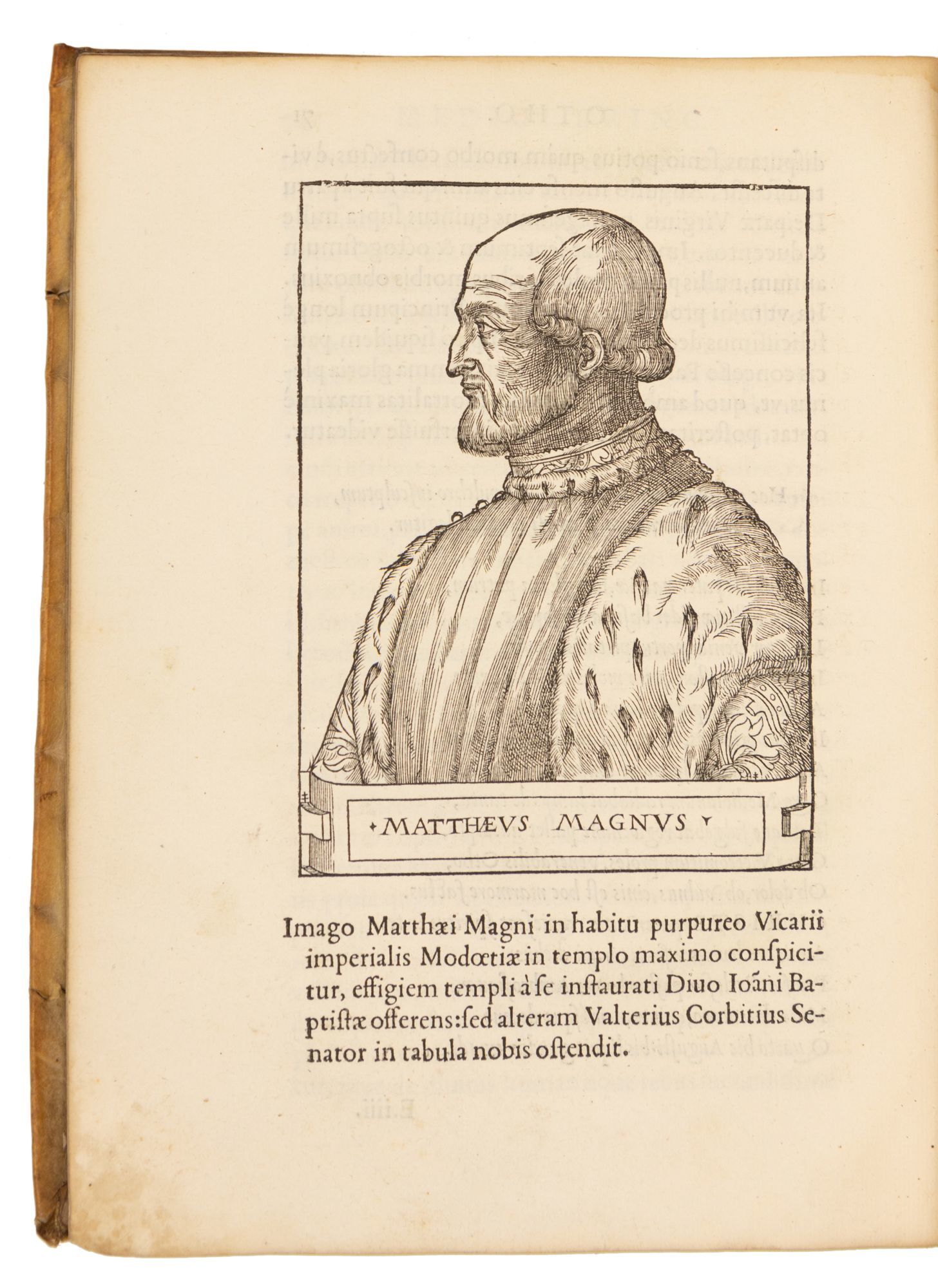
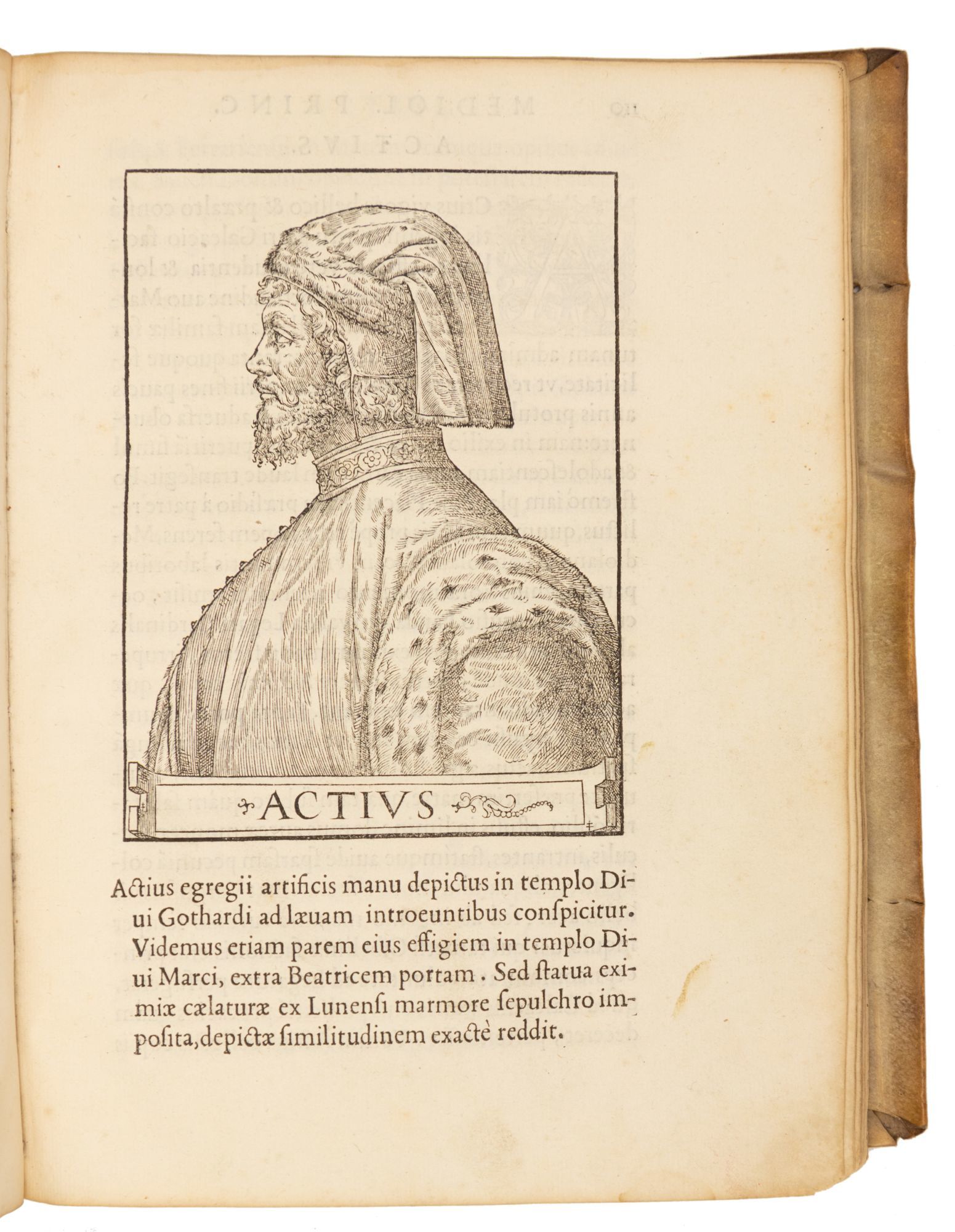
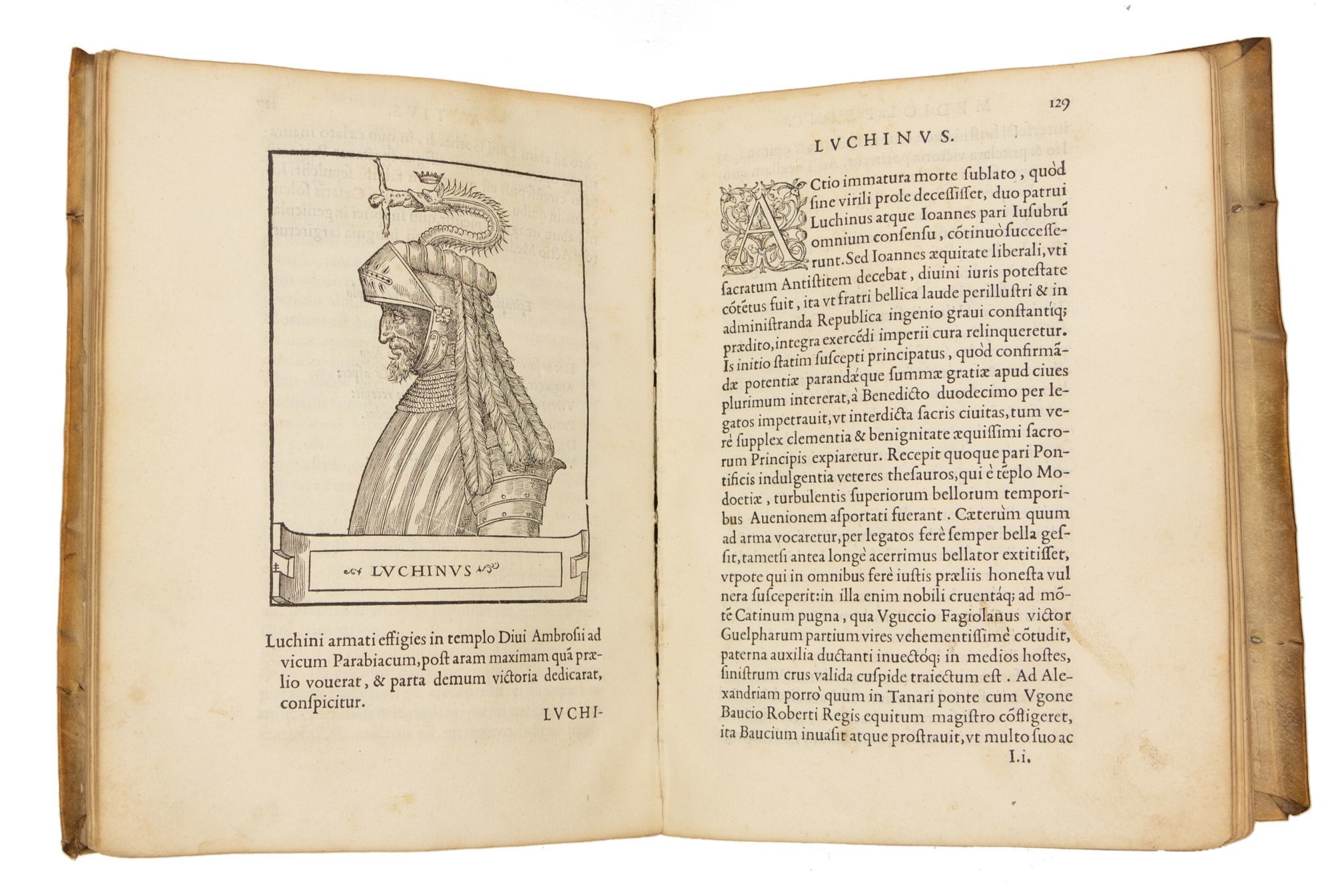
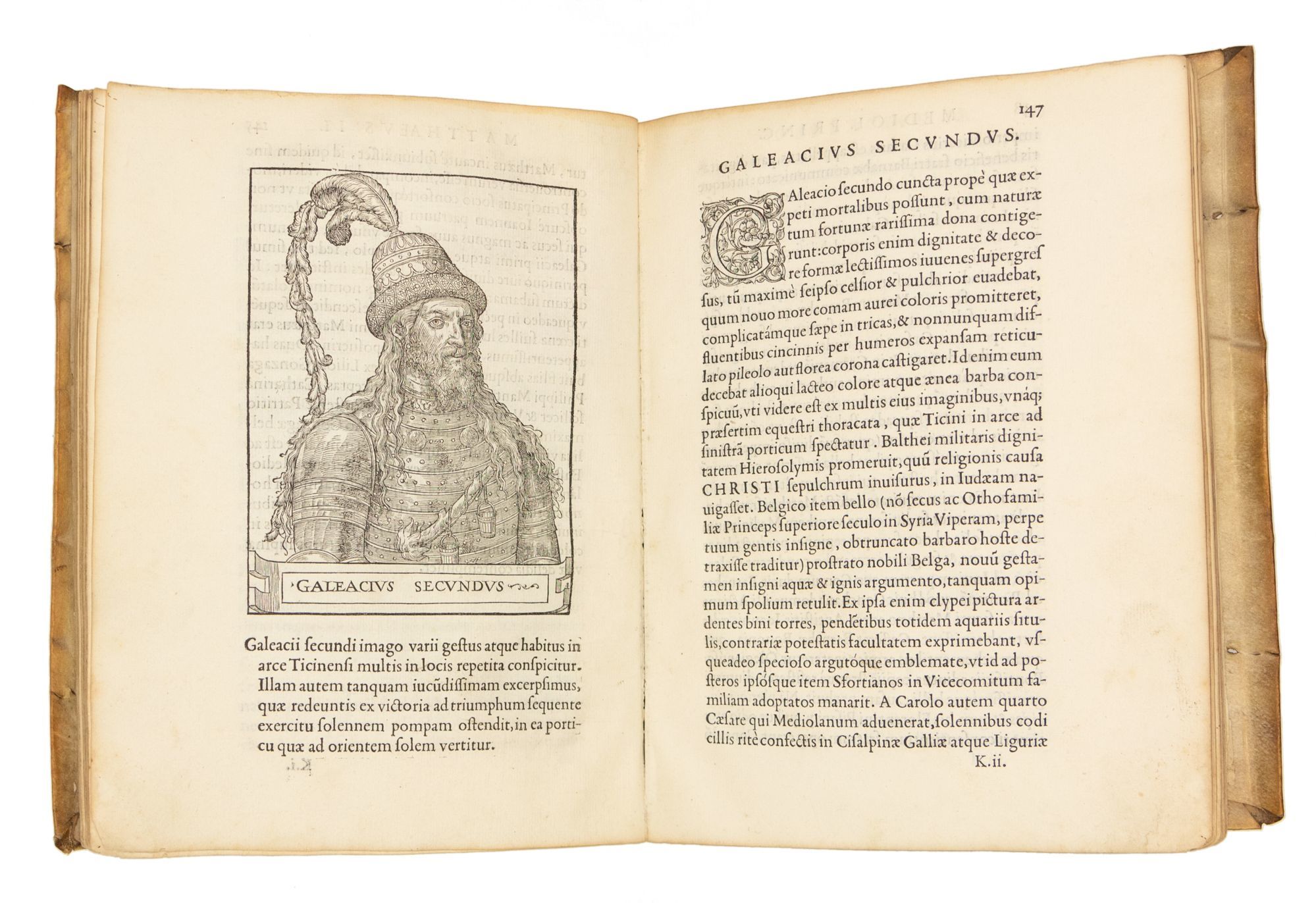
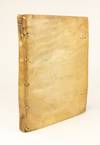
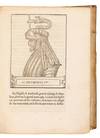
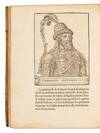
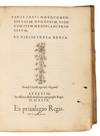
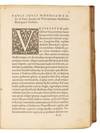
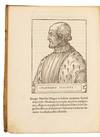
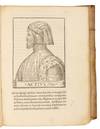
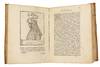
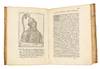
Paris: Ex officina Rob. Stephani, typographi Regii, 1549. FIRST EDITIONS. Hardcover. Fine. Bound in contemporary limp vellum. Fine, broad-margined copies with minor faults: I. Text-block separating from first sewing support at front. Title lightly soiled at edges, 2 small ink spots; first 5 lvs with minor fraying at lower corner; slim, light dampstain along upper margin of gathering A, lower margin of gathering B; small stain in margin of leaf K8. II. Light dampstain at head, leaves D1-3 with small stain lower margin. Final lvs. with minor fraying at lower corner. The first edition of Paolo Giovio's lives of the Dukes of Milan is an exceptional product of Robert Estienne's Parisian press. It is illustrated with ten large woodcut portraits, attributed to the renowned typographer and illustrator Geoffroy Tory (1480-1533), author of "Champ-fleury"(1529) a landmark in French Renaissance. The book is printed in types by Tory's contemporary, Claude Garamond (1480-1561).
The text is one of the great historiographic texts of the Italian Renaissance: Paolo Giovio's lives of the powerful rulers of Milan, the Visconti, and reflects Giovio's larger project: the establishment of a collection of portraits of famous figures of history in his villa on Lake Como.
"The 1549 'Vitae' is the last of only five illustrated books issued by Robert Estienne. The distinguished humanist Paolo Giovio (1483-1552) wrote these biographical sketches of the dukes of Milan to accompany paintings of them then in existence. The present woodcut portraits are reduced copies of illuminated portraits in the original manuscript (now preserved in the Bibliotheque Nationale), which were in turn copied from the sources specified by Giovio in his text." (Schreiber, The Estiennes, p. 94)
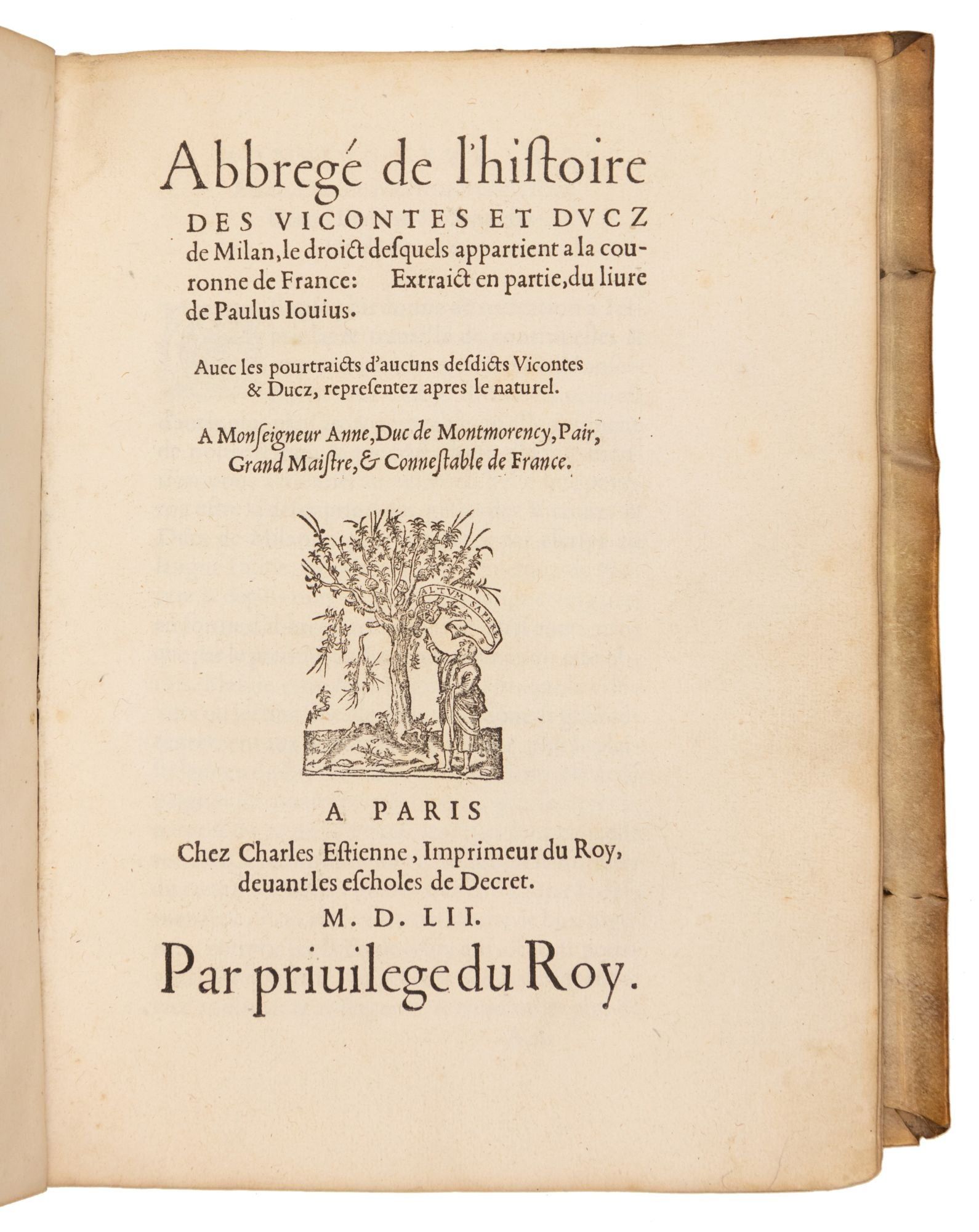
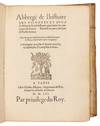
The title-page, produced after the death of King François I (d. 1547), the patron of both Estienne and Giovio, features the basilisk device used by Estienne as Royal Printer. The book is bound here with Robert's brother Charles Estienne's French abridgment of the book, which is illustrated with the same woodcuts.
"The Visconti, a celebrated Italian family of Lombardy, which acquired sovereign power at Milan in the thirteenth century. The founder of their grandeur, and the first of Giovio's subjects in this series of biographies, was Ottone Visconti, who became archbishop of Milan in 1262. He was violently opposed by a party of the Milanese, the Torriani, whom he defeated in battle in 1277. He died in 1295.
"His nephew, Matteo Visconti the Great, born in 1250, was chosen in 1288 "captain of the people" for five years. He obtained sovereign power, and waged war against the Torriani, who drove him out of Milan in 1302; but he was restored in 1311. He was the leader of the Ghibelines, and was involved in a quarrel with Pope John XXII, who excommunicated him in 1322. He died in the same year. According to Sismondi, "he raised himself above all the princes of his time by his political talents".
His son, Galeazzo I, born in 1277, became in 1322 lord of Milan, which was then under the papal interdict. His capital was attacked in 1323 by an army of crusaders, who were incited by the pope. He was aided by Louis of Bavaria, and defeated the crusaders in 1324. Died in 1328.
"Azzone Visconti, born in 1302, was a son of Galeazzo, and became sovereign of Milan and Lombardy in 1329. He is said to have been an able, liberal and just prince. He was the first lord of Milan who coined money in his own name. Died in 1339, without issue.
"Luchino Visconti, uncle of Azzo and son of Matteo, was born in 1287. He became lord of Milan in 1339, and enlarged his dominions by the annexation of Parma, Pavia, and other towns. He died in 1349 and was succeeded by his brother Giovanni, who was born in 1290.
"Giovanni had been appointed Archbishop of Milan about 1317. He acquired Bologna by purchase in 1350, and died in 1354. His power was inherited by three nephews, Matteo II, Galeazzo, and Bernabò, the first of whom died in 1355.
"Bernabò, born in 1319, became master of Bergamo, Brescia, Crema, Cremona. He also ruled Milan jointly with Galeazzo. He was notorious for his cruelty and audacity, and defied the power of the pope, who excommunicated him. Urban V preached a crusade against him, and united the emperor Charles IV with other monarchs in a league against him in 1363. Bernabò resisted them with success. Died in 1385.
"Galeazzo II, born about 1320, became lord of Como, Pavia, Novara, Vercelli, Asti and Tortona, in 1354. He was cruel and tyrannical. He died in 1378, leaving a son, Gian Galeazzo, the first Duke of Milan, who was born in 1347.
"Gian Galeazzo was ambitious and perfidious. Having deposed his uncle Barnabo in 1385, he obtained his dominions. By force or fraud he made himself master of Verona, Vicenza, Bologna, and Padua. In 1395 he purchased the title of Duke of Milan from the emperor. He aspired to be king of Italy, when he died in the midst of his glorious career in 1402.
"Giovanni Maria, the eldest son of the preceding, born in 1389, became duke in 1402. He was feeble and depraved. During his reign the limits of the duchy were greatly reduced. He was assassinated in 1412.
"Filippo Maria Visconti, born in 1391, was a brother of Giovanni Maria, whom he succeeded. His army, commanded by the famous general Carmagnola, re-conquered Lombardy. He was cruel, cowardly, and suspicious. He put to death his own wife. About 1426, Venice, Florence and Alfonso of Aragon formed a league against him. He waged war for many years against these powers and the pope Eugene IV. He died in 1447.
"Filippo Maria's daughter and heir, Bianca Maria, married Francesco I Sforza, who became duke of Milan after the fall of the short-lived Ambrosian Republic." (Thomas).