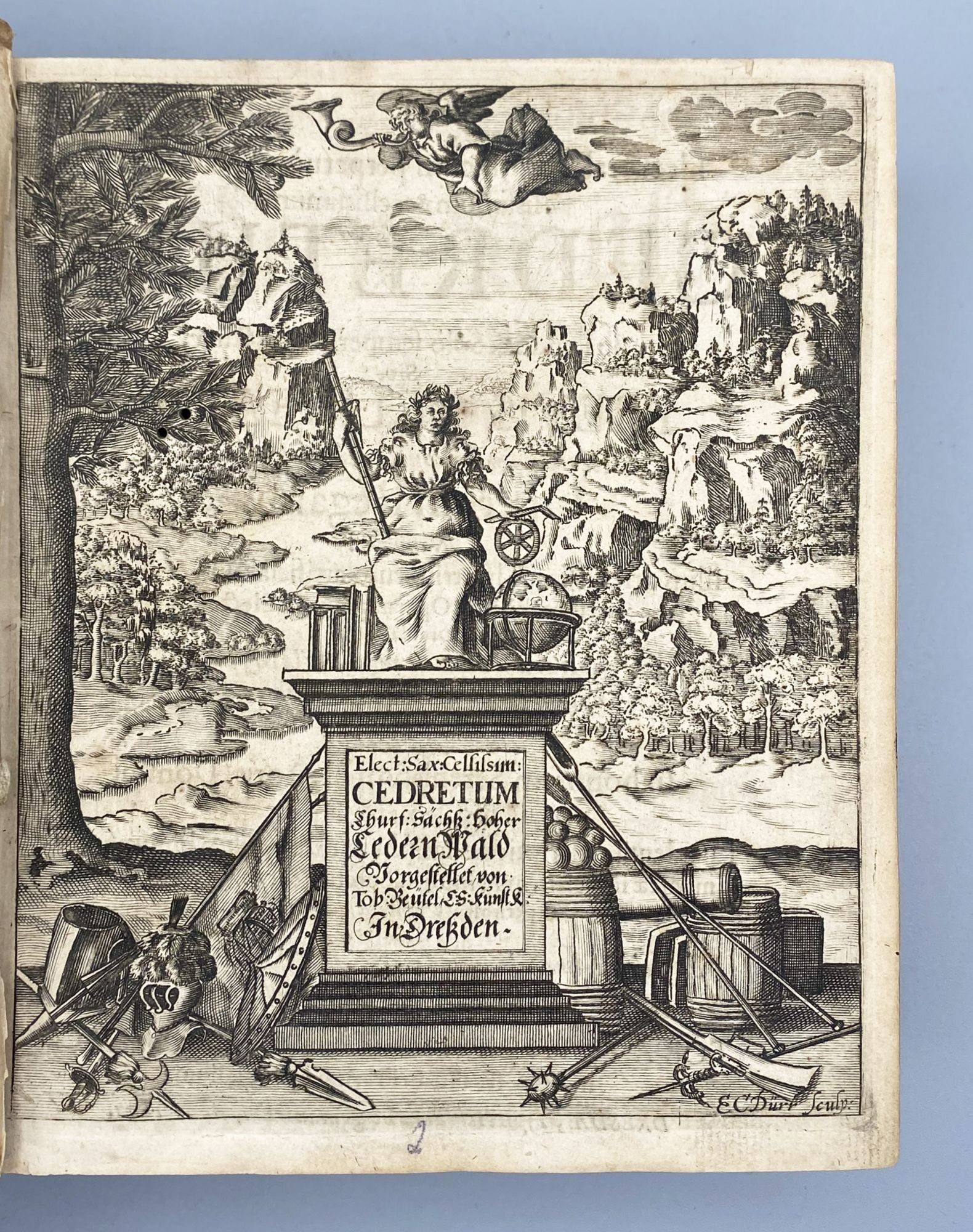
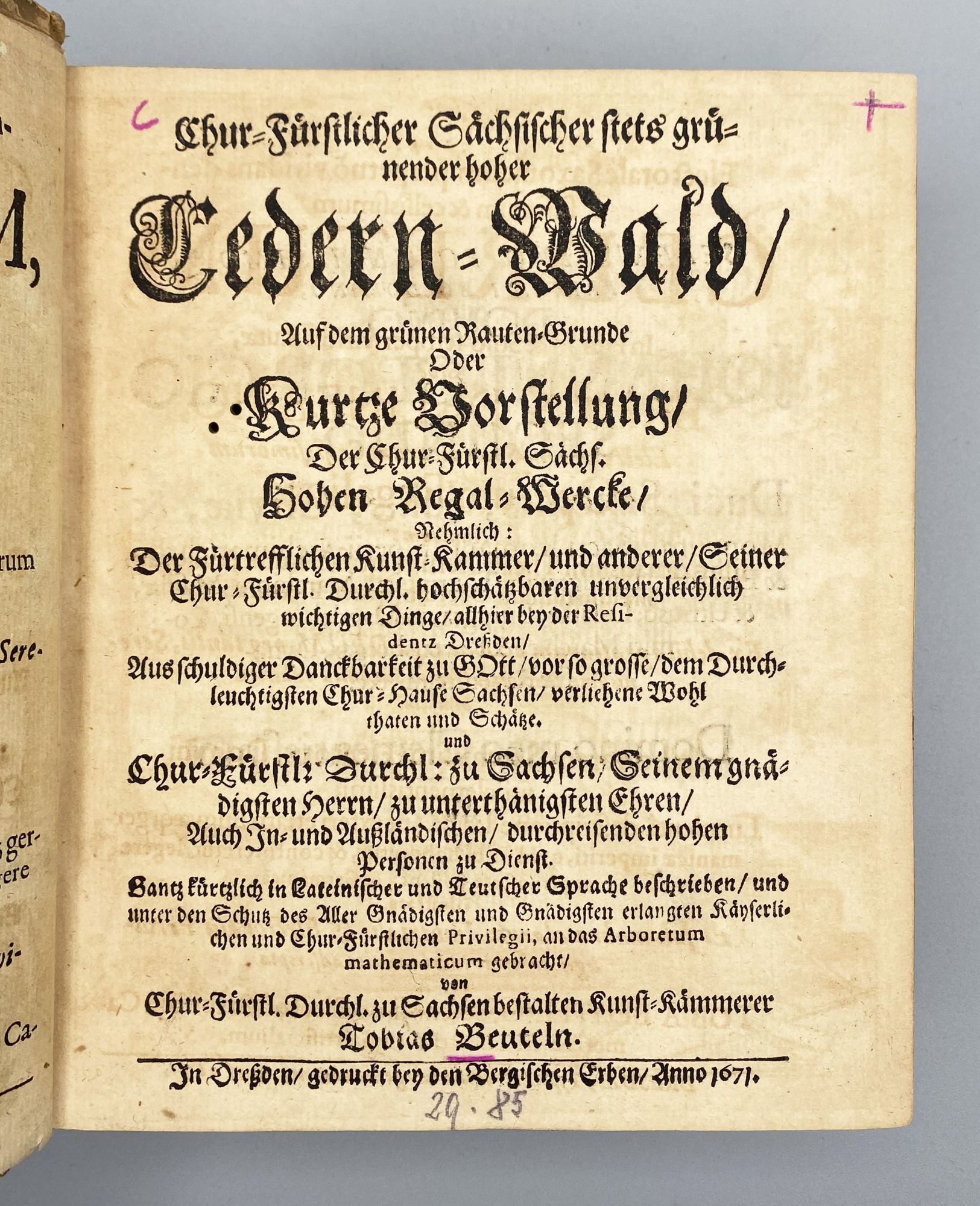
Dresden: Anna Bergen and Heirs, 1671. Contemporary gilt ruled purple paper over thin wooden boards (worn, front cover detached, spine exposed), GILT ARMS OF JOHANN GEORG II DUKE OF SAXONY on the front panel and unidentified gilt German arms on the rear (both worn), edges sprinkled red and blue.
With: Beutel, Tobias. 1627-1690.
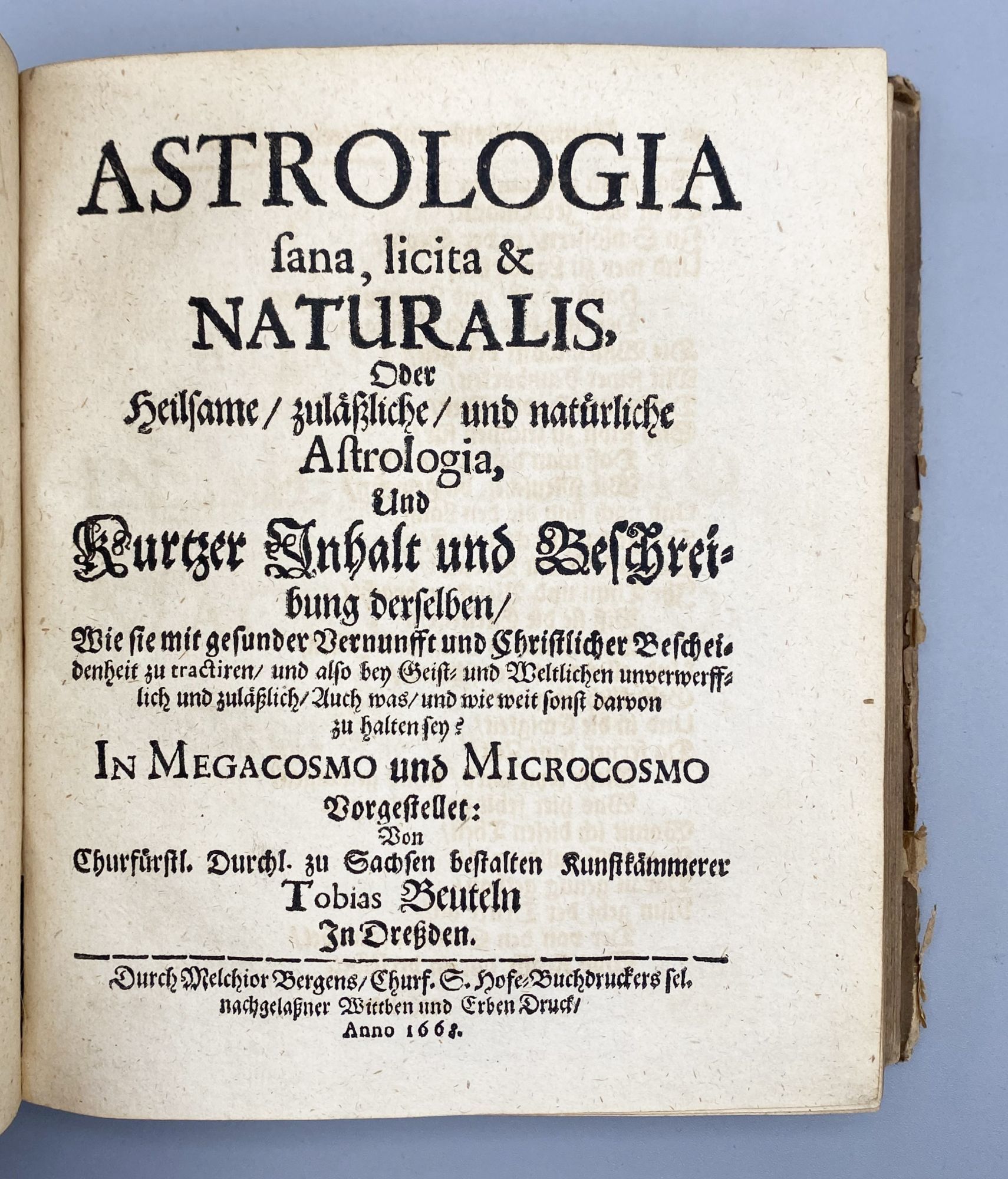
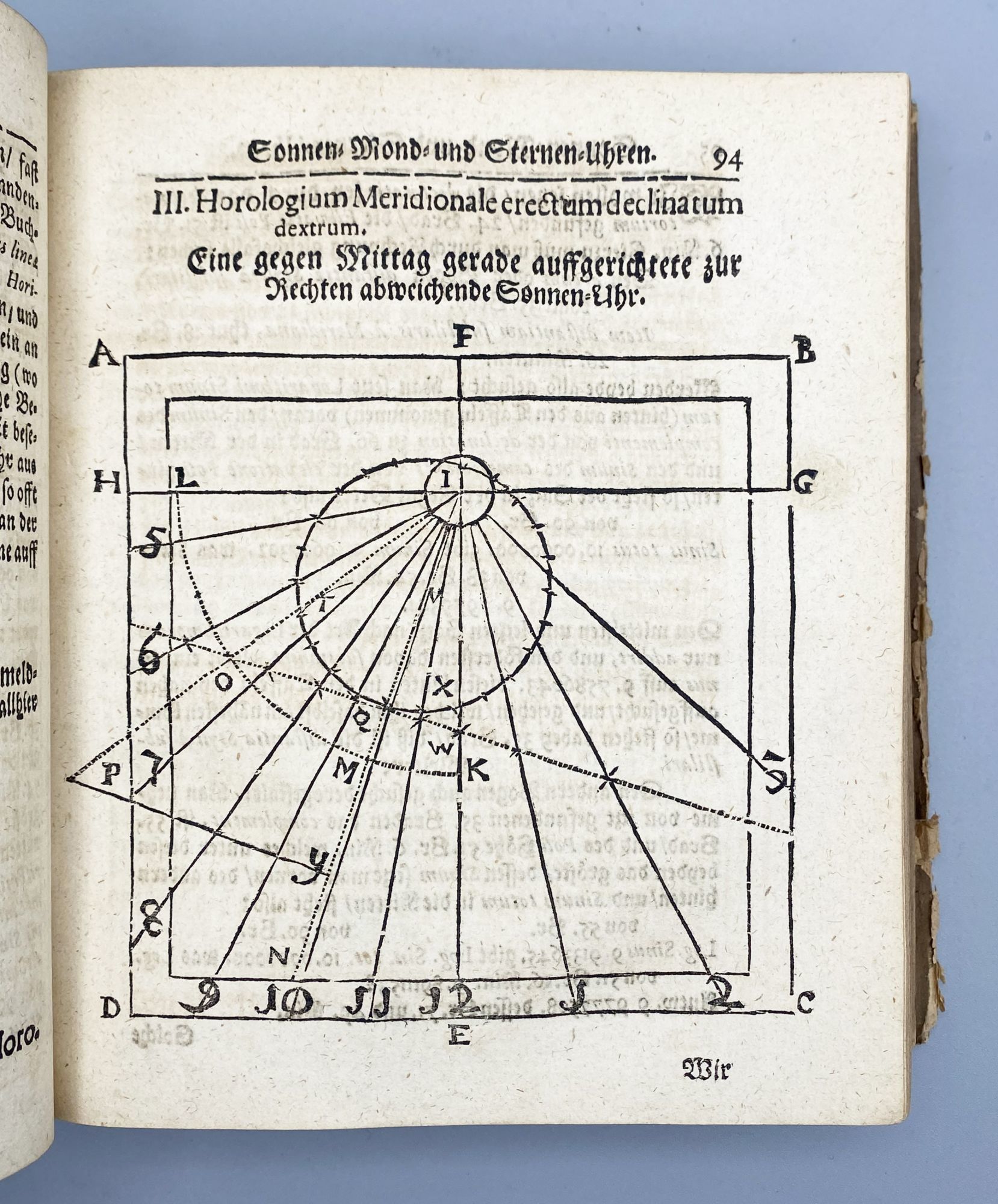
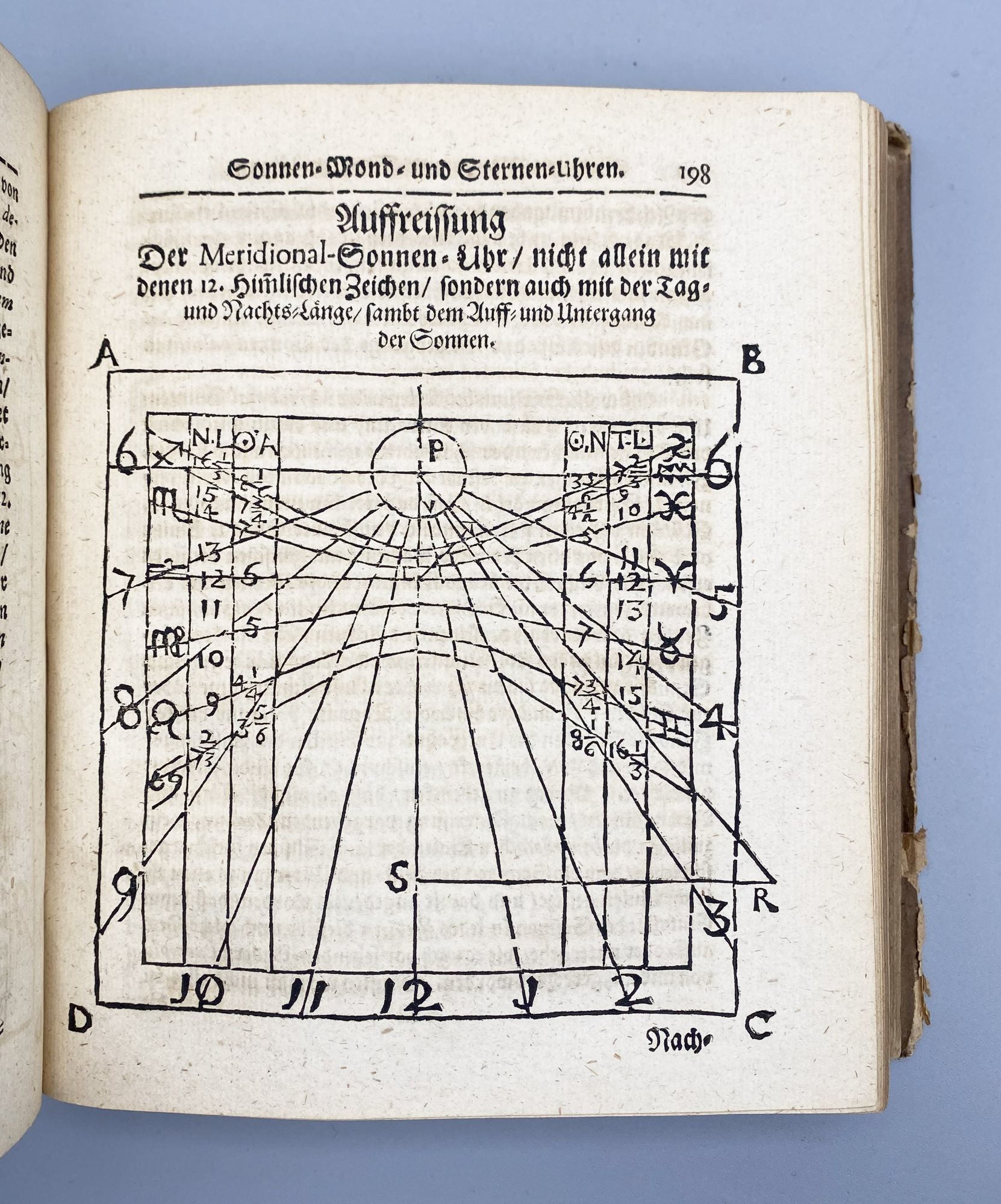
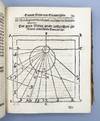
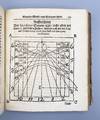
Arboretum Mathematicum…Himmels-Figuren…Finsternüßze, Sonnen-Mond- und Sternen-Uhren…und…Longitudines & Latitudines. Dresden, Anna Bergen and Heirs 1669. 4to. [xxiix], XXXXVI, [3], 41, [2], 42-311, [4], 312-435, [4], 436-663, [12]p. (without the errata leaf). THREE FULL-PAGE AND SIXTY NEARLY FULL-PAGE ASTRONOMICAL WOODCUTS.
Ad I: First Edition of THE FIRST COMPLETE CATALOG OF THE VAST DRESDEN KUNSTKAMMER, compactly housed in seven rooms. These are described here, in order, for the convenience of the visitor — first mechanical tools, second drinking vessels (agate, crystal, topaz), third paintings, caskets, jewel cases and books, fourth scientific and mathematical instruments, fifth magic mirrors and horns, sixth naturalia and seventh statues, turned ivories and automata.
Established in 1560, it “was apparently the second foundation of its kind north of the Alps” (Menzhausen). The 1587 manuscript inventory lists well over 10,000 objects. 17th-century acquisitions brought in antiquities, natural curiosities, Mughal textiles, Japanese ceramics, Turkish guns, Chinese porcelain, south american weapons…. Pieces were stored in drawers and cupboards or mounted on walls. the anatomical specimens were interwoven with branches of exotic trees and shrubs in a pleasure garden. Beutel (1627-1690) also guides us through the armory, library, pharmacy, theater, shooting range, mint, menagerie, aviary, game rooms and hunting lodge, with their emblematic inscriptions emblazoned on doors and ceilings.
Augustus the Strong (r. 1697-1733) reorganized the whole into specialized modern museums. The celebrated canvasses (Dürer, Tintoretto, Lucas Cranach, Titian, Hans Bols, Lucas van Leyden, Arcimboldo’s Seasons…), bronzes (Giambologna) and natural history collections went to the Zwinger; the rock crystal, Columbian ore studded with emeralds, carved and mounted shells to the Green Vault and the anatomical specimens to Wittenberg University. I have found three U.S. copies. In good condition (two minor worm holes).
¶Murray, Museums: their History I: 207-8 & II: 213; Menzhausen, “Elector of Augustus’ Kunstkammer” in The Origins of Museums edd. Impey & MacGregor 91-9; Schlosser, Kunst- u. Wunderkammern der Spätrenaissance 84 & fig. 68; Schaer, Tous les savoirs du monde 297,75; Balsiger, The Kunst- und Wunderkammern 90 & 631-3; VD17 3:635357D.
Ad II: Only Edition — an instructional manual for the geometry of astrology. The Mathematical Grove provides the horoscopes of historical figures and politically powerful contemporaries, including the dedicatee, Emperor Leopold I, as well as more than forty full-page tables of logarithms and celestial data. Beutel also gives the longitude and latitude of some five hundred locations around the globe, from Potosí and Cuzco to Angola and Peking. The whole is thoroughly alphabetically indexed.
¶Cantor, Geschichte der Mathematik III: 38; Thorndike, A History of Magic and Experimental Science VIII: 330; Poggendorff, Handwörterbuch zur Geschichte der exacten Wissenschaften I: 181; VD17 12:196863V.
Neither work is in Alden’s European Americana.