- Condition: Fine
- Edition: FIRST EDITION
- Binding: Hardcover
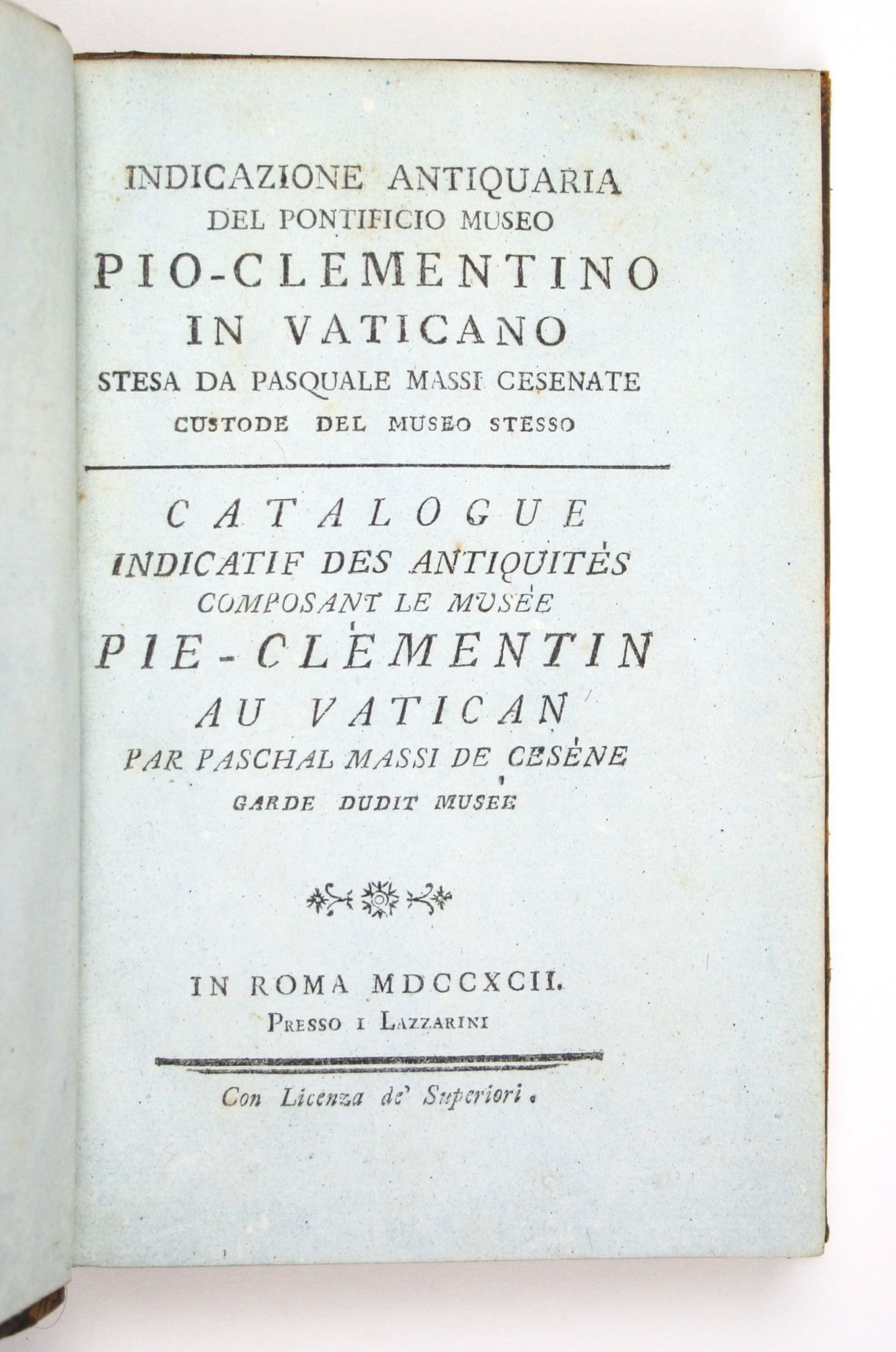
- Publisher: Presso Lazzarini
- Location: Rome
- Date: 1792
- Seller SKU: 3602
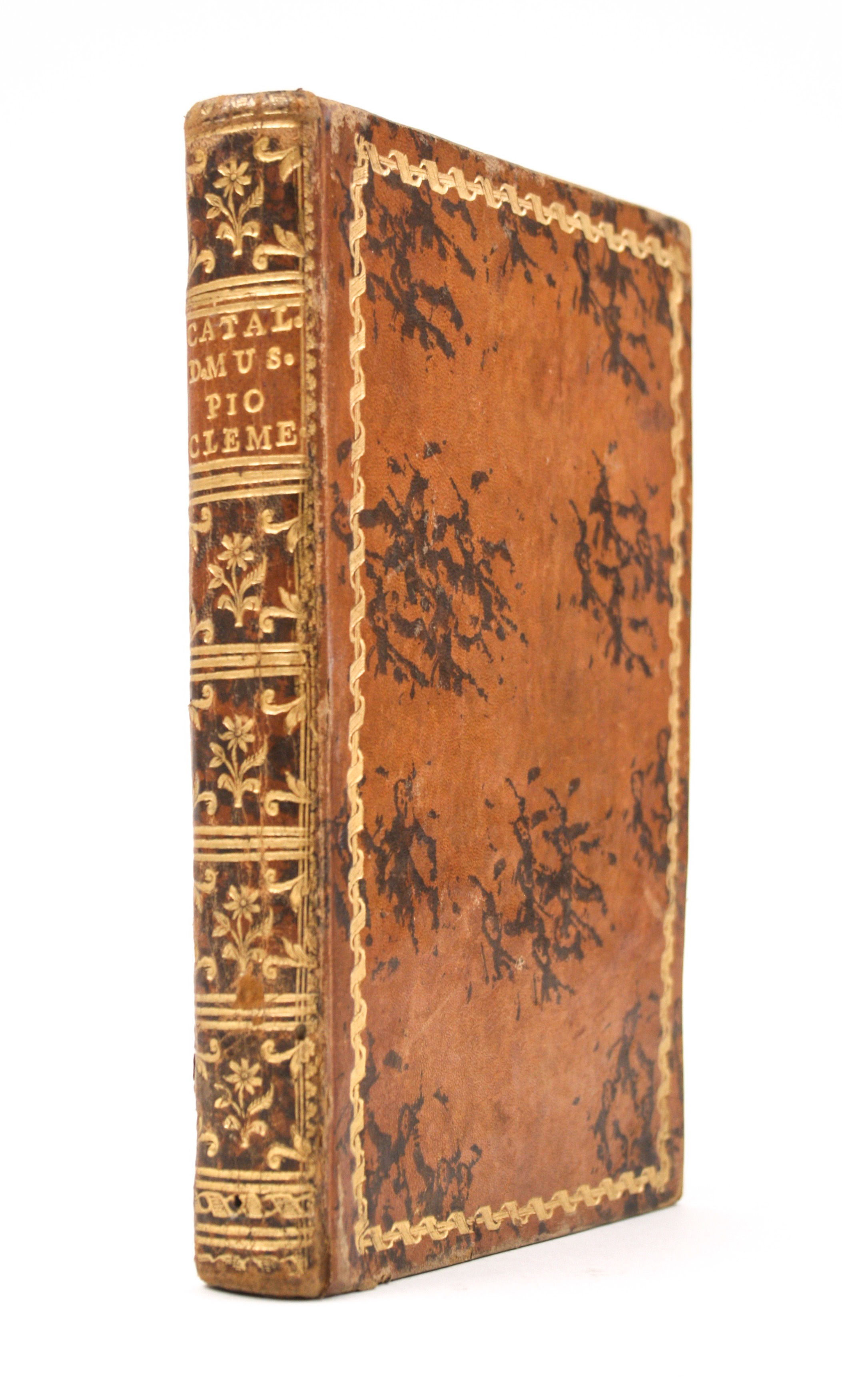
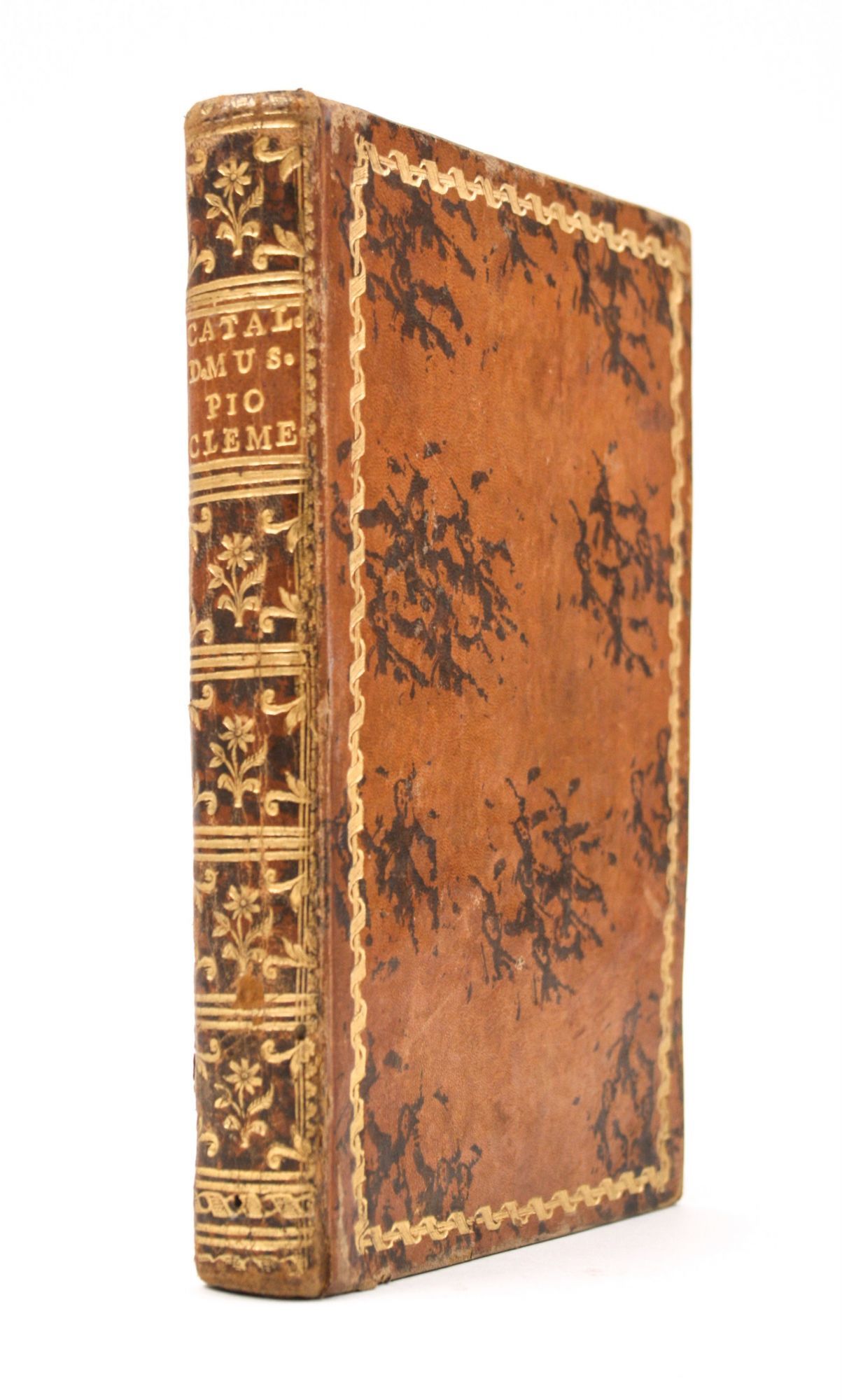
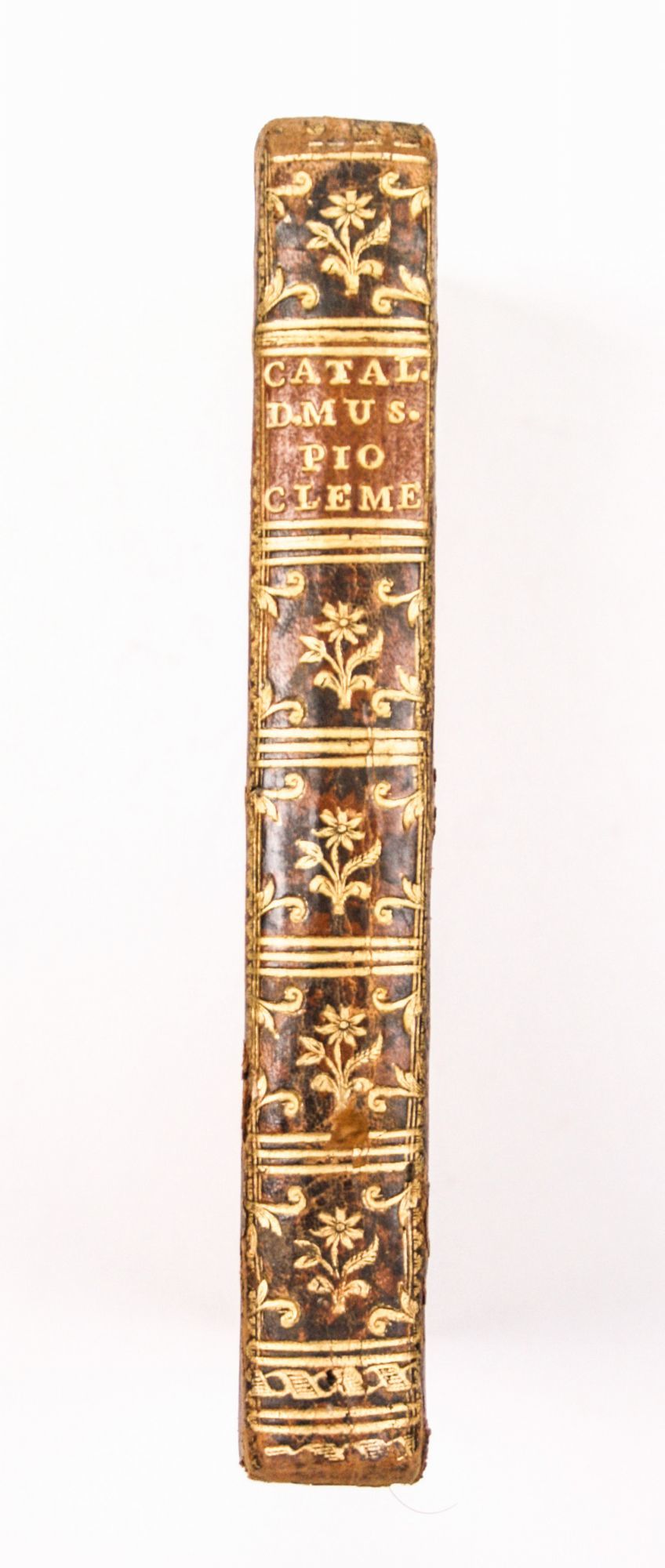
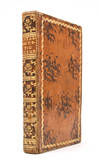
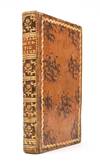
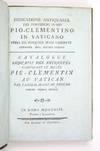
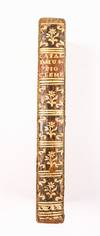
Rome: Presso Lazzarini, 1792. FIRST EDITION. Hardcover. Fine. Printed on blue paper. In contemporary mottled calf, the spine and boards tooled in gold. A very fine copy of the very rare first catalogue of the Museo Pio-Clementino - founded by Pope Clement XIV in 1771 and greatly expanded his successor by Pius VI-, written for the use of visitors by the keeper of the museum, Pasquale Massi of Cesena. Rare. The Museo Pio-Clementino was the first major curatorial museum within what are known today collectively as the Vatican Museums. In 1771, Pope Clement XIV had Michelangelo Simonetti adapt the Belvedere Pavilion to accommodate the papal collection of ancient art. When Clement's successor, the avid art collector Pius VI, was elevated to the pontificate in 1775, the pace of acquisition increased dramatically and very soon the collections outgrew the rooms arranged for them by Simonetti. In 1776, Pius VI called for a radical restructuring of the existing museum and the construction of new, grand spaces to house the ever-expanding collection.
Massi's catalogue, a room-by-room guide of the museum with descriptions of all of the artifacts and artworks housed therein, is an invaluable record of how the greatly expanded museum of antiquities looked in the late 18th century, with its newly constructed series of rooms and the recently installed masterpieces of ancient sculpture -the fruits of some of the most important excavations in Italy, including the excavation of Hadrian's villa at Tivoli.
In addition to providing a record of the arrangement of the exhibits, Massi's catalogue, in which he provides details of provenance, acquisition, and attribution of each artwork described, serves as a history of the museum's formation, and preserves valuable information about the art trade and the function of archaeology in the late 18th century. Massi has used a system of numbers and letters to indicate which works were added to the museums by Julius II and his various successors, above all Clement XIV and the then-current pope, Pius VI.
In his introduction, Massi tells us that he has designed his guide for portability and easy reference by tourists, by arranging the descriptions of the objects in each room in the form of a walking itinerary. Since it is necessary at two points to retrace one's steps, Massi's guide leads us along one side of each room as we proceed through the galleries. When it is time to reverse our course, he leads us along the opposite side of the rooms already traversed, thus keeping us engaged and entertained as we retrace our steps through the vast complex.
Our tour begins at the new entrance to the museum, in the corridor of Cleopatra, also known as the corridor of the inscriptions, just within the new entrance to the museum. We then pass through two vestibules. The first one is square, with frescoes by Giovanni da Udine in the vault. In it we encounter the tomb of the Scipios and the Belvedere Torso. The second vestibule is round and in its center is a large bowl made of pavonazzetto. From here we proceed through a corridor into the porticoed, octagonal courtyard of the Belvedere, the site of Julius II's first installation of ancient sculpture, transformed by Simonetti in the 1770's. Massi then leads us through the hall of the animals, the gallery of statues, the gallery of busts, and the "loggia scoperta" (the room of masks).
We make our way back through these galleries to arrive at the series of rooms created by Simonetti in the 1780's. The first of these is the hall of the muses. We then enter the breathtaking Sala Rotonda (with its immense, newly installed, ancient porphyry basin from the Domus Aurea), through which we make our way to the Sala of the Greek Cross, where we find the newly installed ancient porphyry sarcophagus of Constantine's daughter, Constantia. From here Massi takes us, via Simonetti's new staircase, up past the unfinished hall of the biga, to Bramante's vast gallery of the candelabra, which is itself divided into numerous rooms with vases, statuary, and jewelry. Exiting by the stairs we visit the library and trace our way back through the new wing and via the Belvedere courtyard (where we marvel at the Laocoön and the Belvedere Apollo) to the cortile, the great open court of he complex, where our tour ends.
Liber Antiquus
Specializing in Architecture And Art, Astronomy, English Literature, Incunabula, Jesuit, Natural History, Reformation, Science and Voyages And Travel.
Welcome. For the past 24 years, I have been selling printed books from the dawn of printing to the Early Modern Period. I also sell manuscripts from the Middle Ages to the Enlightenment.
I am extremely proud to offer these books to both institutional and private clients worldwide. I take great pride in my work and I sincerely appreciate my clients' patronage. It is a dream job, a great honor, and a tremendous pleasure.
If you should find yourself in the Washington DC area, please call me to schedule an appointment. I can be contacted directly at 202-907-7429 or by email at
[email protected]
I look forward to hearing from you.
Sincerely,
Paul M. Dowling
Liber Antiquus, Early Books & Manuscripts
Items are shipped by FEDEX 2nd Day or Overnight, based on your preference. Institutions are billed net 30 or by individual arrangement, based on your budget and fiscal year restrictions. Please do not hesitate to ask for accommodations. All books may be returned, arriving in the condition in which they were sent, within 7 business days if found wanting.